
Real Madrid’s Dramatic Athens Win Highlights Mourinho’s Midfield Dilemma
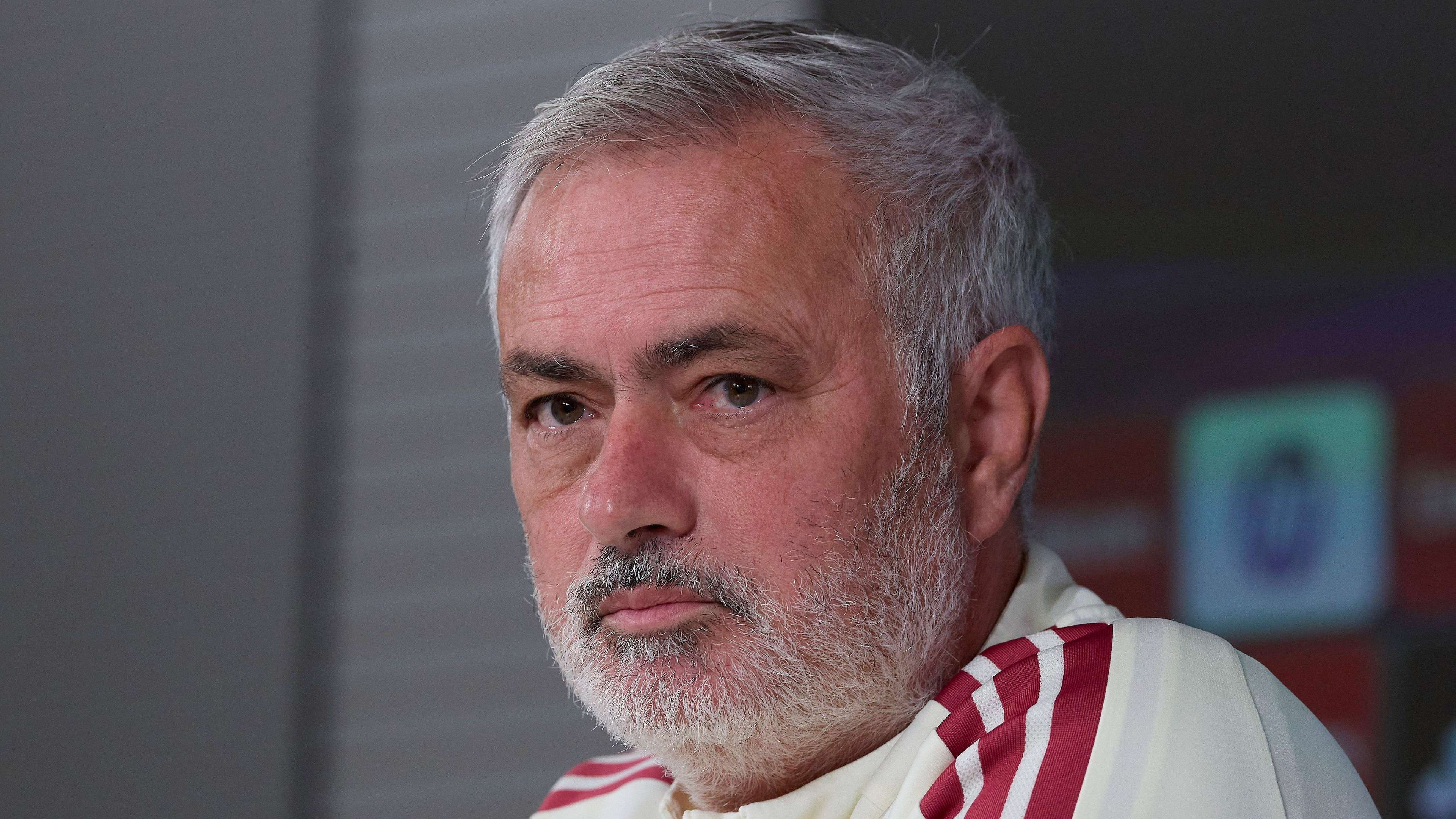
Real Madrid’s thrilling victory over AEK Athens delivered late drama, but the result did not disguise the questions raised by the team’s performance. José Mourinho’s side showed impressive determination to recover after falling behind twice, yet their attacking play often lacked structure, control and creativity. The absence of Arda Güler was especially noticeable, renewing debate over whether Madrid need another creative midfielder to improve their balance.
For supporters searching for a football prediction ahead of Madrid’s next fixtures, the Athens match offers both encouragement and a warning. The team has the quality and resilience to change a game late, but relying on individual bursts and sheer persistence is a risky strategy against stronger opponents. Mourinho’s choices in midfield could prove as important as his attacking options.
Güler’s Absence Leaves a Creative Gap
Mourinho left Güler out of the travelling squad, a decision widely interpreted as an effort to manage the Turkish playmaker’s workload before the upcoming LaLiga meeting with Valencia at Mestalla. The eventual win may make the decision seem justified on paper, but Madrid’s performance showed how much the side can miss Güler’s ability to connect midfield with attack.
Güler offers more than a final pass. His awareness helps him identify spaces before they open, while his close control and range of passing can give teammates time and better angles to make their runs. Without him, Madrid struggled to build attacks with the same precision. Their forward movement relied more heavily on speed, direct dribbling and individual initiative than on carefully constructed combinations.
That distinction matters. A team can have several dangerous attackers and still lack a reliable way to get them the ball in advantageous positions. Güler’s presence can help balance Madrid’s attack by adding a player who is comfortable receiving between the lines, slowing the tempo when needed and choosing when to accelerate play.
The Issue Is Bigger Than Vinícius Júnior
Vinícius Júnior’s difficult evening may attract attention, but focusing solely on the Brazilian would overlook the broader tactical problem. As Spanish newspaper AS suggested, his performance was part of the picture rather than the whole explanation. Madrid’s structure left the team short of an additional midfielder, placing greater pressure on the forwards to create opportunities by themselves.
Choosing another winger can add width and one-on-one threat, but it may also leave the central areas underpopulated. When Madrid could not progress through the middle, AEK were able to disrupt their rhythm and make the visitors’ attacks more predictable. Vinícius found little room to beat his markers, Kylian Mbappé had limited influence away from the finishing areas, and Diomande offered less danger from the right than Madrid needed.
The question for Mourinho is not simply whether to select one attacker over another. It is whether the team’s best attacking players can function effectively without enough support behind them. Against compact or energetic opponents, an extra midfielder could provide passing options, protect possession and help Madrid move the ball into the final third with greater purpose.
AEK Expose Madrid’s Midfield Balance
AEK Athens were more than passive hosts. They pressed with confidence, attacked space quickly and made Madrid work defensively. Aboubakary Koita stood out for his direct running and technical ability in transition, while Jasinovic and Mayer also caused problems during a spell in which the visitors struggled to recover their shape.
The gaps between Madrid’s lines became an issue as AEK moved forward. Eduardo Camavinga grew into the contest and contributed energy, but his natural instinct to roam can make him a different kind of presence from Aurélien Tchouaméni in the holding role. Camavinga’s mobility is valuable, yet Madrid still need clear positional discipline when opponents break through the first line of pressure.
That balance is particularly important for a side built to attack quickly. If the holding midfielder is pulled away from the centre, the defenders can be left exposed to runners arriving through open channels. Madrid’s comeback demonstrated their attacking strength, but the match also showed why midfield protection and attacking creativity cannot be treated as separate concerns.
Bellingham and Dumfries Spark the Comeback
Jude Bellingham helped change the momentum as his influence grew. The England international moved constantly, drifting wide when the play required it and making forceful runs into the penalty area. His willingness to take responsibility gave Madrid a more aggressive presence, although greater urgency did not always lead to cleaner execution.
Madrid also found opportunities down the flanks. Mourinho’s players targeted areas where AEK appeared vulnerable, and right-sided runs from Denzel Dumfries gave the attack fresh energy. One of the clearest examples came in the move for the 2-2 equaliser: Bellingham delivered an excellent pass into space, Dumfries surged beyond Koita and squared the ball for Mbappé to finish.
That sequence captured both the promise and the limitation of Madrid’s performance. The team had the pace and individual quality to exploit a defensive weakness, but its most effective moments came from a decisive pass and a powerful run rather than sustained control of the match.
What the Result Means for Madrid’s Next Tests
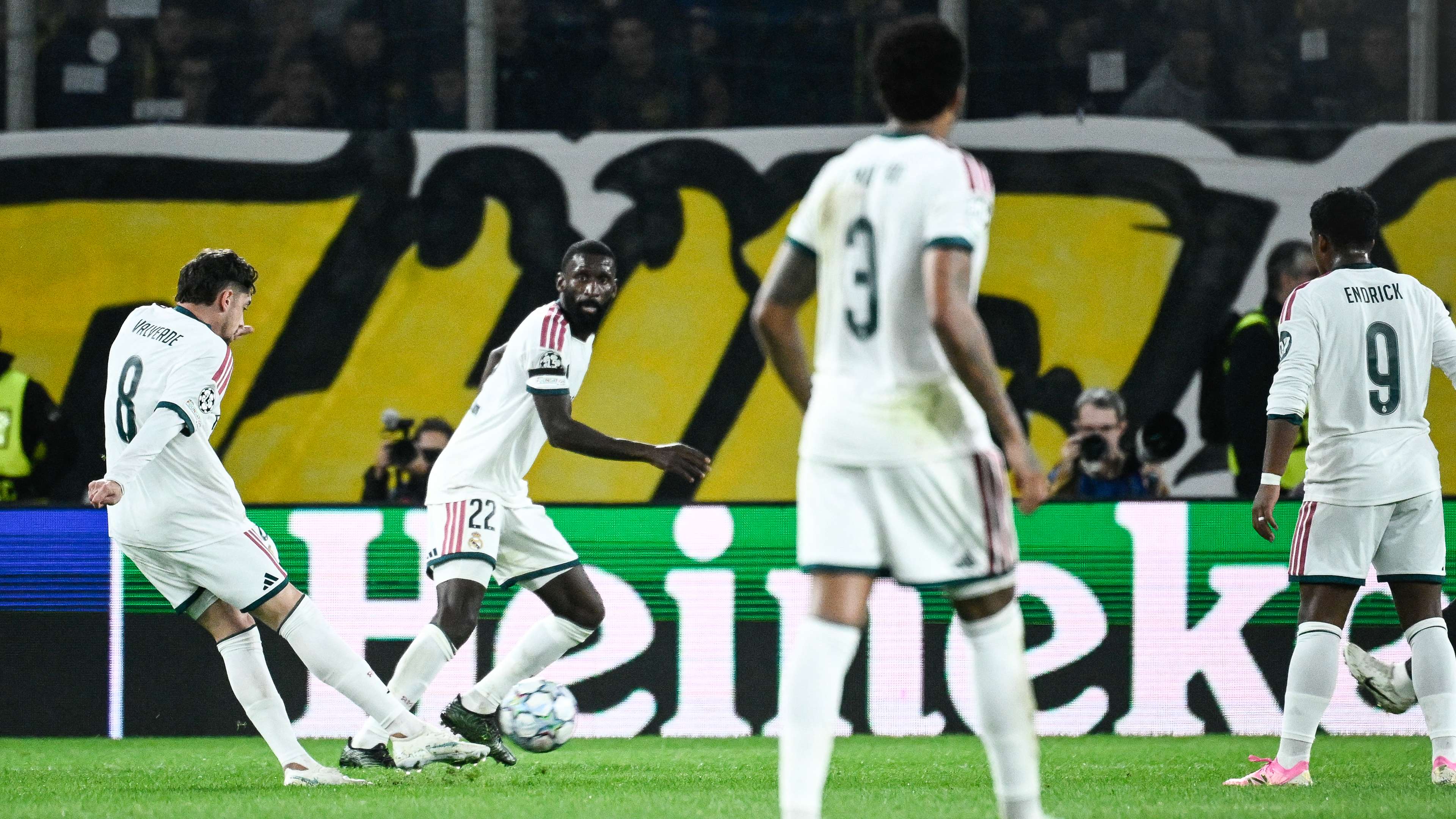
Real Madrid deserve credit for refusing to accept a draw after AEK took the lead twice. Their late push reflected character, fitness and belief—qualities that often separate title contenders from teams that fade under pressure. Federico Valverde was among those capable of making an impact as the contest opened up, while the team’s persistence ultimately carried it over the line.
Still, a dramatic scoreline should not be confused with a complete performance. Madrid’s comeback was driven by determination and attacking quality, but the match exposed a shortage of control in central areas. Against opponents who defend more effectively or punish transitions with greater precision, the same midfield imbalance could have a heavier cost.
For the upcoming Valencia fixture, the key prediction is that Mourinho will face a selection decision with consequences beyond one player’s inclusion. Resting Güler may preserve his freshness, but Madrid need a dependable source of creativity whether he starts or not. An additional midfielder—or a clearer structure that gives the existing midfielders defined roles—could help the team protect its defence while creating better service for Vinícius and Mbappé.
The Athens win is valuable, but it is also a useful warning. Real Madrid have the resilience to survive chaotic matches; to control them, they may need more balance, more midfield support and the kind of inventive passing Güler provides.