
Vinícius Júnior’s Real Madrid Form: Can the Brazilian Star Find His Way Back?
Vinícius Júnior is facing a difficult spell at Real Madrid, with recent performances and disciplinary trouble adding to the pressure surrounding one of football’s most closely watched forwards. His display at Rome’s Stadio Olimpico drew criticism from sections of the Madrid fanbase, while a subsequent four-match suspension has kept the debate about his form and temperament in the spotlight.
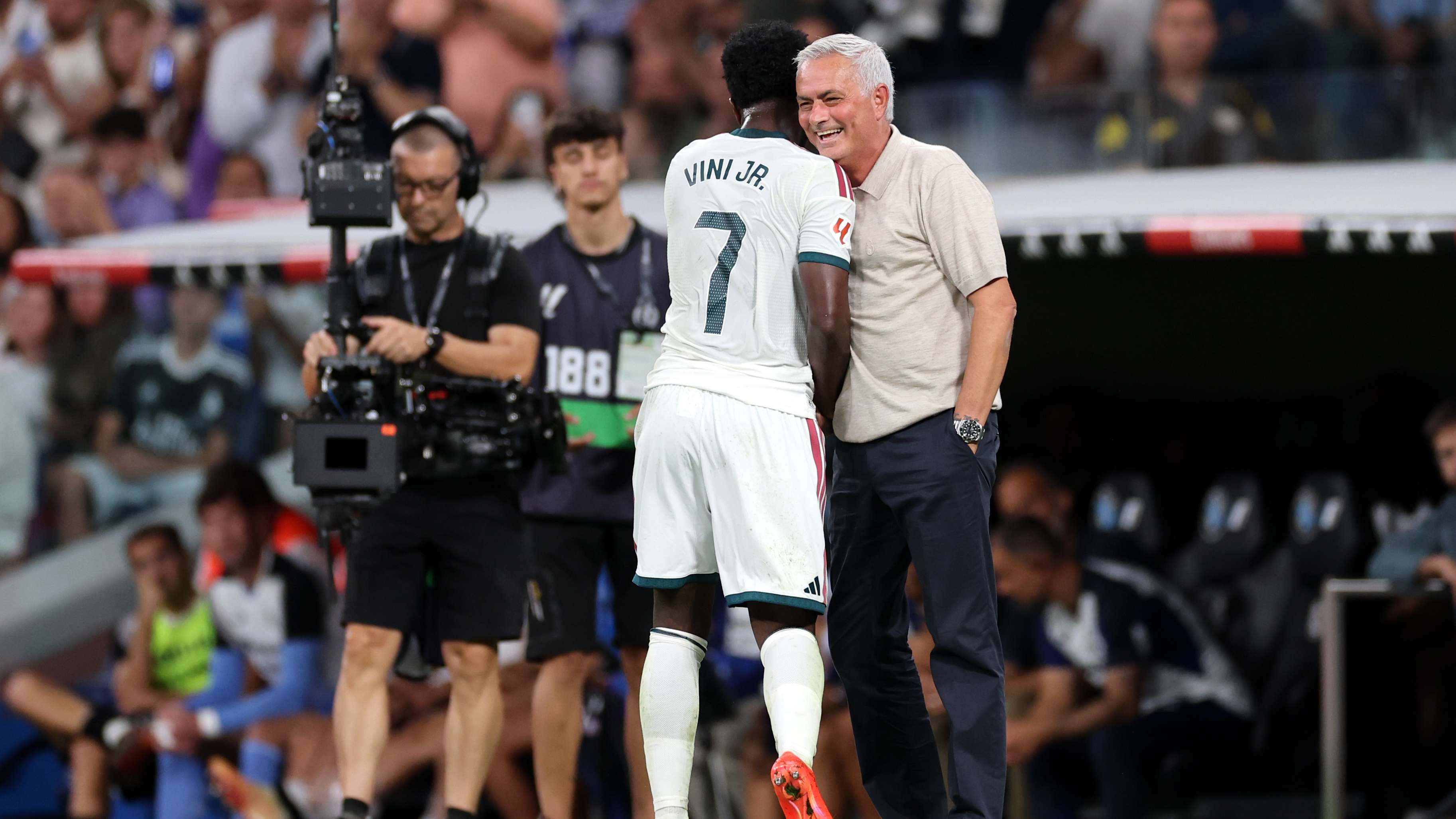
Yet José Mourinho has continued to defend the Brazilian publicly. Speaking at Valdebebas on Saturday ahead of Real Madrid’s meeting with Sevilla at the Santiago Bernabéu, the Portuguese coach praised Vinícius not only for his talent but also for his ability to cope with intense scrutiny.
“He is a wonderful boy,” Mourinho said. “I greatly appreciate his ability to live and endure while keeping his smile. I appreciate that enormously. If I were in his position, perhaps I would not be here now, and perhaps last summer I would have forced the club to allow me to move to a competition or a country and opponents who respect me.”
A Challenging Run for a High-Profile Forward
Periods of inconsistent form are part of a long season, but the spotlight is especially bright on a player as prominent as Vinícius. At Real Madrid, every performance is measured against the club’s demanding standards, and every difficult result can quickly trigger questions about selection, confidence and the team’s direction.
The Brazilian’s recent outing in Rome became a focal point for criticism. A disappointing display does not define a player’s ability, but it can intensify existing concerns when supporters are already looking for signs of improvement. The four-match ban has added another complication: instead of responding immediately on the pitch, Vinícius must wait for his opportunity to return and rebuild momentum.
That absence matters because rhythm and confidence are particularly important for an attacking player whose game depends on acceleration, close control and quick decisions in one-on-one situations. A suspension can interrupt that rhythm, while the public reaction to it may add further pressure. The challenge for Vinícius is therefore both practical and psychological: prepare to return at full intensity while filtering out the noise surrounding his performances.
Mourinho’s Public Support Sends a Message
Mourinho’s comments offered a clear show of support at a time when criticism could easily dominate the conversation. His praise focused on Vinícius’ resilience and character, suggesting that he sees the player’s ability to remain positive as a strength in itself. For a footballer dealing with boos, headlines and disciplinary consequences, that kind of backing can help restore perspective.
The coach’s remarks also highlighted the unusual pressures faced by elite players. Vinícius is expected to perform consistently while competing under intense attention, and his actions are often discussed well beyond the match itself. Mourinho’s suggestion that he might have considered leaving in similar circumstances was striking. It pointed to the emotional cost that can accompany life at the highest level, even for players who have achieved major success.
At the same time, public support does not remove the need for a response on the field. Real Madrid supporters will want to see the Brazilian convert encouragement into sharper decision-making, productive movement and a greater influence in decisive moments. The most convincing answer to criticism is usually a strong performance, delivered consistently over time.
Why Vinícius Remains Important to Real Madrid
When at his best, Vinícius gives Real Madrid a direct attacking outlet. His speed can stretch a defensive line, create space for teammates and force opponents to adjust their shape. He can also turn a seemingly quiet spell into a dangerous attack with a burst down the flank or an incisive run behind the defence.
Those qualities make his current form an important issue for the team, not merely a personal storyline. Real Madrid need reliable options in the final third, particularly during a congested schedule when injuries, suspensions and changes in form can affect the balance of the side. A confident Vinícius can make the team more unpredictable; a frustrated or hesitant one may find it harder to influence matches.
There is also a tactical dimension to his recovery. Opponents often devote extra defensive attention to Madrid’s most threatening attackers, which can leave space elsewhere. If Vinícius moves the ball quickly, varies his runs and combines effectively with nearby teammates, he can remain valuable even when he is not scoring. His contribution should be judged not only by goals but also by the chances, space and pressure he creates.
Sevilla Match Adds Another Layer to the Story
Real Madrid’s meeting with Sevilla at the Santiago Bernabéu provides an immediate backdrop to the discussion, although Vinícius’ suspension means he cannot use the match itself to answer his critics. The contest still matters for the wider team: Madrid will be expected to control the game, create clear chances and maintain momentum at home.
For supporters, the match may also offer clues about how the team adapts without the Brazilian available. Other attackers will have an opportunity to take on greater responsibility, while Madrid’s coaching staff must find ways to preserve pace and penetration. That could involve changing the shape of the attack, using different players in wide areas or asking midfielders to advance more frequently.
Any prediction about Vinícius’ next phase should remain measured. A suspension and a poor performance can create a difficult narrative, but they do not automatically signal a lasting decline. His age, experience and established quality give him a strong platform from which to recover. The key questions are how quickly he regains confidence and whether he can turn his natural ability into consistent end product.
What Comes Next for the Brazilian Star?
Vinícius’ immediate task is to use his time away from competitive action productively. Training, fitness and preparation will be essential, but so will a calm approach to the criticism. Returning with a clear focus—rather than trying to settle every debate in one match—could help him rebuild steadily.
For Real Madrid, managing the situation will require balance. The club must support a key player while maintaining standards and accountability. Mourinho’s defence offers encouragement, but the next chapter will ultimately be shaped by Vinícius’ performances once he is available again.
The puzzle of the Brazilian’s form is not solved yet. Still, his ability to trouble defenders remains clear, and the support of an experienced coach may help him navigate this difficult stretch. If he responds with patience, discipline and renewed attacking confidence, the current setback could become a temporary interruption rather than a defining moment in his Real Madrid career.