
Michael Olise’s Red Card Sparks Debate After Bayern Munich’s Dramatic Draw With Viking
Michael Olise’s dismissal against Viking has become one of the most discussed moments of Bayern Munich’s 3-3 draw, with reactions continuing to emerge in Norway. The French winger’s loss of discipline came during a chaotic second-half passage, and it may have had a lasting impact on a match Bayern appeared close to winning.
Bayern had fought back from an early two-goal deficit to lead 3-2 when Olise was sent off. Despite their advantage, the German side could not see out the result: Viking scored a 90th-minute equaliser to claim a draw and deny Bayern two valuable points in the UEFA Champions League league phase. The result, and the circumstances surrounding Olise’s red card, have prompted fresh questions about the winger’s decision-making under pressure.
How Olise’s Red Card Unfolded
Viking made a fast start on home soil, taking a two-goal lead in the opening stages of the second round of the league phase. Bayern responded with a strong attacking display, eventually turning the contest around and moving in front. But the momentum shifted again after Olise became involved in a confrontation with Viking players.
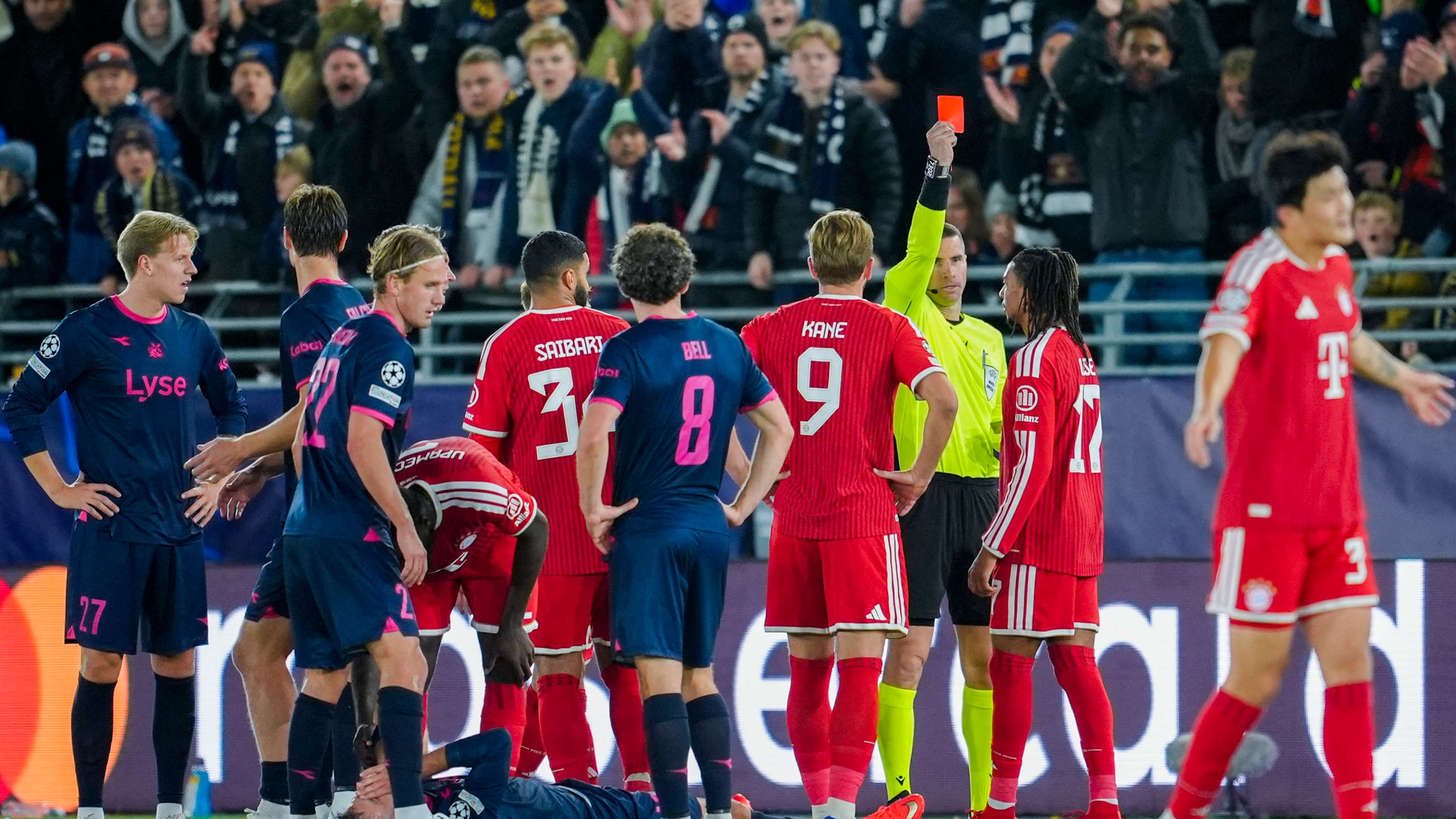
The incident began when Olise tugged the shirt of Henrik Heggheim, earning a yellow card from the referee. As players gathered around the official, the situation escalated. Olise then threw the ball toward Zlatko Tripic, striking the Viking player in the head. The referee witnessed the action and showed the Bayern winger a second yellow card, followed by a red.
Because the dismissal came through a second booking, Olise was sent off rather than shown a straight red for the ball throw. Even so, the decision left little room for debate: the referee had seen the incident, and the winger’s reaction gave the official grounds to punish him. His departure reduced Bayern to ten players at a crucial stage of a match they were leading.
Viking Player Calls the Decision “Idiotic”
Kristoffer Askildsen, who represents Viking, did not hide his view of Olise’s behaviour. According to comments relayed by Foot Mercato from an interview with TV2, Askildsen said: “When he threw the ball, I thought: what an idiot!”
The blunt remark reflects the frustration and disbelief surrounding the moment in Norway. For Viking, the incident offered a chance to put pressure on Bayern while the visitors were a player down. For Bayern, it was an avoidable setback that turned a comfortable-looking position into a tense final stretch.
Askildsen’s response also captures a broader football debate: players are expected to control their emotions even when opponents crowd the referee or provoke a reaction. Olise may have felt frustrated by the first booking or the surrounding confrontation, but throwing the ball at an opponent carried an obvious risk. At elite level, a brief lapse can change the balance of a match.
What the Dismissal Meant for Bayern’s Result
Bayern were leading 3-2 when Olise left the pitch, but the final scoreline showed how difficult it can be to protect a narrow advantage with ten men. Viking pressed for a late response, and their persistence paid off when they scored in the 90th minute. The hosts secured a memorable draw, while Bayern were left to consider how a match they had recovered could still slip away.
It would be too simple to attribute the late equaliser solely to Olise’s red card. A goal conceded in the closing moments can result from several factors, including defensive positioning, fatigue, tactical choices and the opponent’s attacking pressure. Still, the dismissal changed the conditions of the contest. Bayern had one fewer player available to help defend, retain possession and relieve pressure in the closing stages.
The dropped points may also matter in the wider context of the Champions League league phase, where every result can influence a team’s path toward the next round. A draw away from home is not automatically a poor outcome, especially after falling two goals behind. Yet Bayern’s comeback made victory seem attainable, making the late concession particularly frustrating.
A Moment That Could Shape Olise’s Next Steps
Olise is known for his creativity, close control and ability to influence attacking play, but this incident has shifted attention from his footballing quality to his discipline. The red card does not erase his contribution across a season, but it does provide a clear example of how quickly an emotional reaction can overshadow a player’s performance.
Bayern’s coaching staff will likely assess the incident alongside the team’s response after the sending-off. The club may need to manage any disciplinary consequences and consider how best to support Olise in maintaining composure during high-pressure matches. For the player, the immediate challenge is to learn from the episode and return to the pitch focused on his strengths.
His absence could affect Bayern’s options in their next European fixture, depending on the competition’s disciplinary rules and any further review. That makes the incident more than a brief flashpoint: it may influence selection, tactics and the team’s attacking balance in the weeks ahead.
Football Prediction: What Comes Next?
Any football prediction about Bayern’s next matches should account for both their attacking resilience and the defensive questions raised by the Viking draw. The team showed character by recovering from a two-goal deficit, but conceding a late equaliser after taking the lead will underline the need for greater control in closing stages.
Olise’s situation will also be worth watching. If Bayern can keep their focus and convert their attacking quality into more consistent game management, they remain capable of responding strongly. However, the Viking match serves as a reminder that discipline is part of performance, not separate from it. One impulsive action can leave a team short-handed, alter its tactics and invite an opponent back into a contest.
For Viking, the draw will be remembered as a hard-earned result against a European heavyweight. For Bayern, it is a missed opportunity and a warning about the cost of losing composure. Olise’s red card may dominate the headlines, but the lasting lesson is broader: in high-stakes football, the ability to stay calm can be just as important as the ability to score.