
La Cartuja Pitch Under Fire During Real Betis–Feyenoord Match
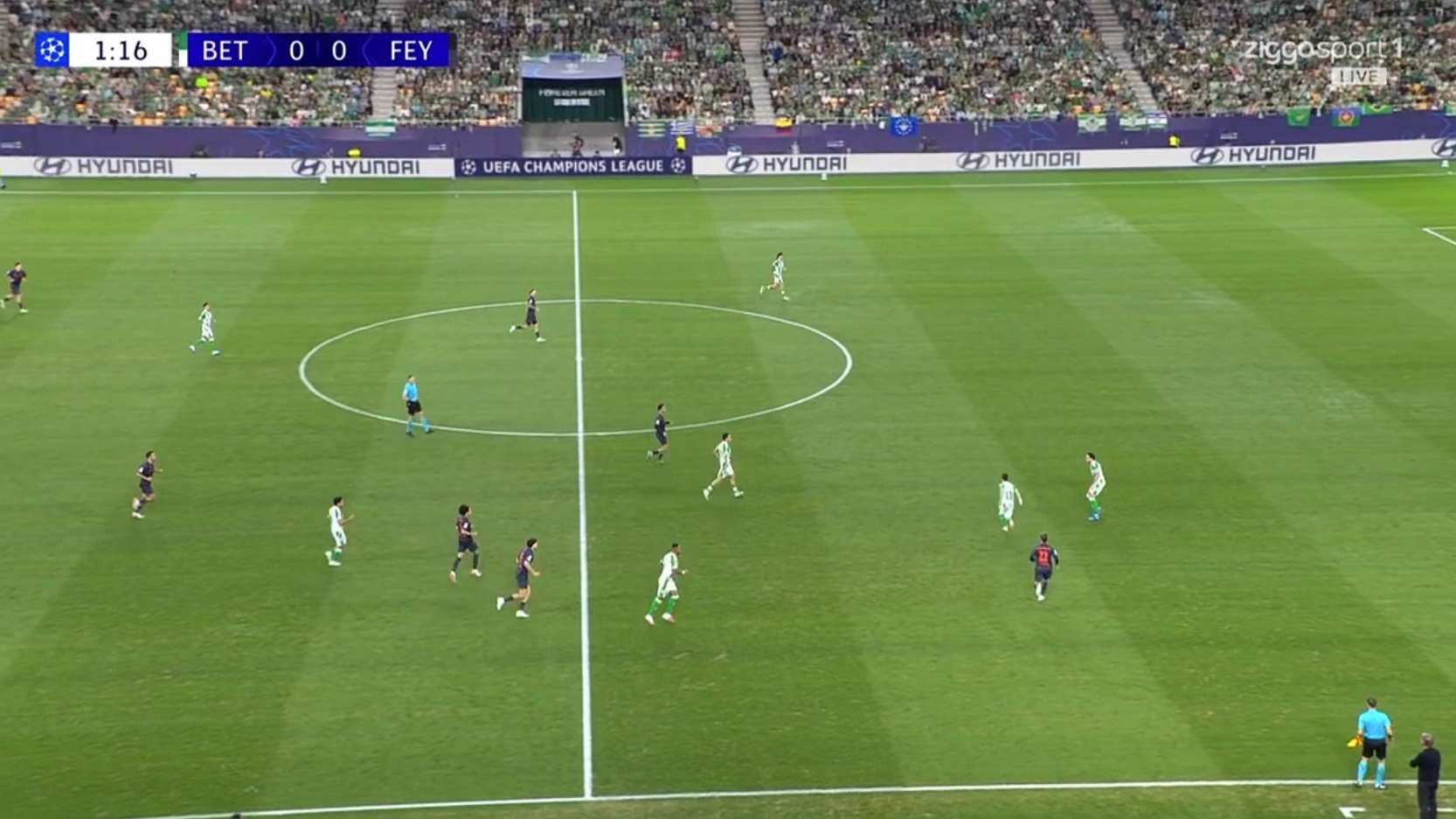
The condition of the playing surface at Estadio La Cartuja became an unexpected talking point during Real Betis’ meeting with Feyenoord, with viewers, journalists and supporters questioning whether the pitch was suitable for a high-level European football fixture. Large bare patches and loose pieces of turf were visible across the field, prompting criticism online and raising concerns about how the surface might affect the match.
Television images showed areas where the grass appeared thin or missing altogether. From the stands, the problems were noticeable; close-up camera shots made them even harder to ignore. As players moved across the pitch, sections of turf reportedly came loose, creating an uneven surface that could influence passing, ball control and the footing of both teams.
Journalists and supporters criticise the surface
Jeroen Kapteijns, a journalist with Dutch newspaper De Telegraaf, described the field on X as “a bizarrely bad pitch” for the Real Betis–Feyenoord encounter. In a follow-up post, he said the surface looked unworthy of a Champions League match, pointing to flying divots and widespread bare patches.
Supporters were similarly blunt in their assessments. One fan argued that an average third-tier amateur ground in the Netherlands had a better playing surface, while another compared La Cartuja unfavourably with Telstar’s pitch. The comments reflected the surprise of viewers accustomed to seeing top European clubs play on carefully maintained fields.
Although social media comparisons are often exaggerated in the heat of a match, the volume of criticism highlighted a genuine concern: an inconsistent pitch can change the character of a contest. A ball may slow down, bounce unpredictably or veer away from its intended path. For teams that rely on quick combinations and accurate passing, those small disruptions can have a significant impact.
Van Bronckhorst had raised concerns before kick-off
The condition of the pitch was not a surprise to everyone. Giovanni van Bronckhorst had already spoken about it at his pre-match press conference, describing the surface as below the standard Feyenoord had experienced in recent games.
“It’s not ideal,” he said, noting that the team had played on excellent grass in its previous matches. Van Bronckhorst added that he did not know what had caused the deterioration, but said the field was not what he expected at Champions League level.
His comments underlined the practical challenge facing visiting teams. Players and coaches typically prepare for a match based on the expected speed and quality of the surface. When the pitch is uneven, a team may need to adjust its approach, reduce risky passes along the ground or avoid relying on quick changes of direction. Those adjustments can be especially important in a European fixture, where a single mistake may create a scoring opportunity.
Pellegrini says Betis are affected too
Real Betis manager Manuel Pellegrini acknowledged the problem while defending the club’s groundskeeping staff. He said Betis had an excellent groundsman and hoped the pitch would be repaired soon. At the same time, Pellegrini argued that a poor surface does not give the home side an advantage, since both teams have to play on it.
That point is reasonable, but the effects of a difficult pitch are not always identical for both sides. The home team may be more familiar with the stadium and its conditions, while the visitors may have to adapt during the match. On the other hand, a surface that disrupts Betis’ own passing game could undermine the home side’s preferred style just as readily as it affects Feyenoord.
The pitch can also influence player safety. Loose turf and uneven ground may increase the risk of slipping or awkward contact, particularly during tackles, sprints and sudden turns. That does not mean every poor surface will lead to injuries, but it helps explain why teams and officials take pitch quality seriously beyond its effect on the spectacle.
Why pitch quality matters in elite football
Modern football is played at high speed, with teams expected to control the ball under pressure and move it precisely through tight spaces. A consistent surface supports those demands by allowing the ball to travel predictably and giving players stable footing. When the grass is patchy or the ground is breaking up, the match can become less about technical execution and more about coping with unpredictable bounces.
That can affect tactical decisions. Coaches may favour longer passes, direct attacks or a more cautious build-up if they believe short passing is unreliable. Goalkeepers may also have to judge shots and back-passes on a surface where the ball could take an unexpected hop. In close matches, those factors can shape momentum and influence the outcome.
For supporters seeking a football prediction, however, pitch conditions should be treated as one factor among many—not a guarantee of a particular result. Team form, injuries, tactics, fatigue and individual quality remain central. A difficult surface might reduce the effectiveness of a possession-based side or increase the likelihood of mistakes, but it does not automatically favour the opponent. Any prediction should account for how both teams are likely to adapt.
What happens next for La Cartuja?
Pellegrini’s confidence that the surface could be repaired will now place attention on the work required before Betis’ next home fixtures. Groundskeeping teams may need to replace damaged sections, stabilise loose areas and assess whether the underlying conditions are contributing to the problem. Repairing visible patches is only part of the task: the pitch must also be safe and consistent enough to withstand training and competitive use.
The criticism also raises broader questions about stadium scheduling and pitch maintenance. Heavy use, weather, drainage and the time available between events can all affect grass quality. Without further information, it is not possible to identify the precise cause at La Cartuja, but the condition on display made clear that maintaining an elite-level surface can be a complex operational challenge.
For Betis and Feyenoord, the immediate priority was to complete the match while adjusting to the conditions. For viewers, the poor pitch became a story in its own right—one that served as a reminder that football is shaped not only by players and tactics, but also by the ground beneath them. The key question now is whether La Cartuja can be restored quickly enough to meet the expectations of future fixtures.