
Anthony Gordon Embraces the Chaos After Barcelona’s Champions League Defeat to PSG
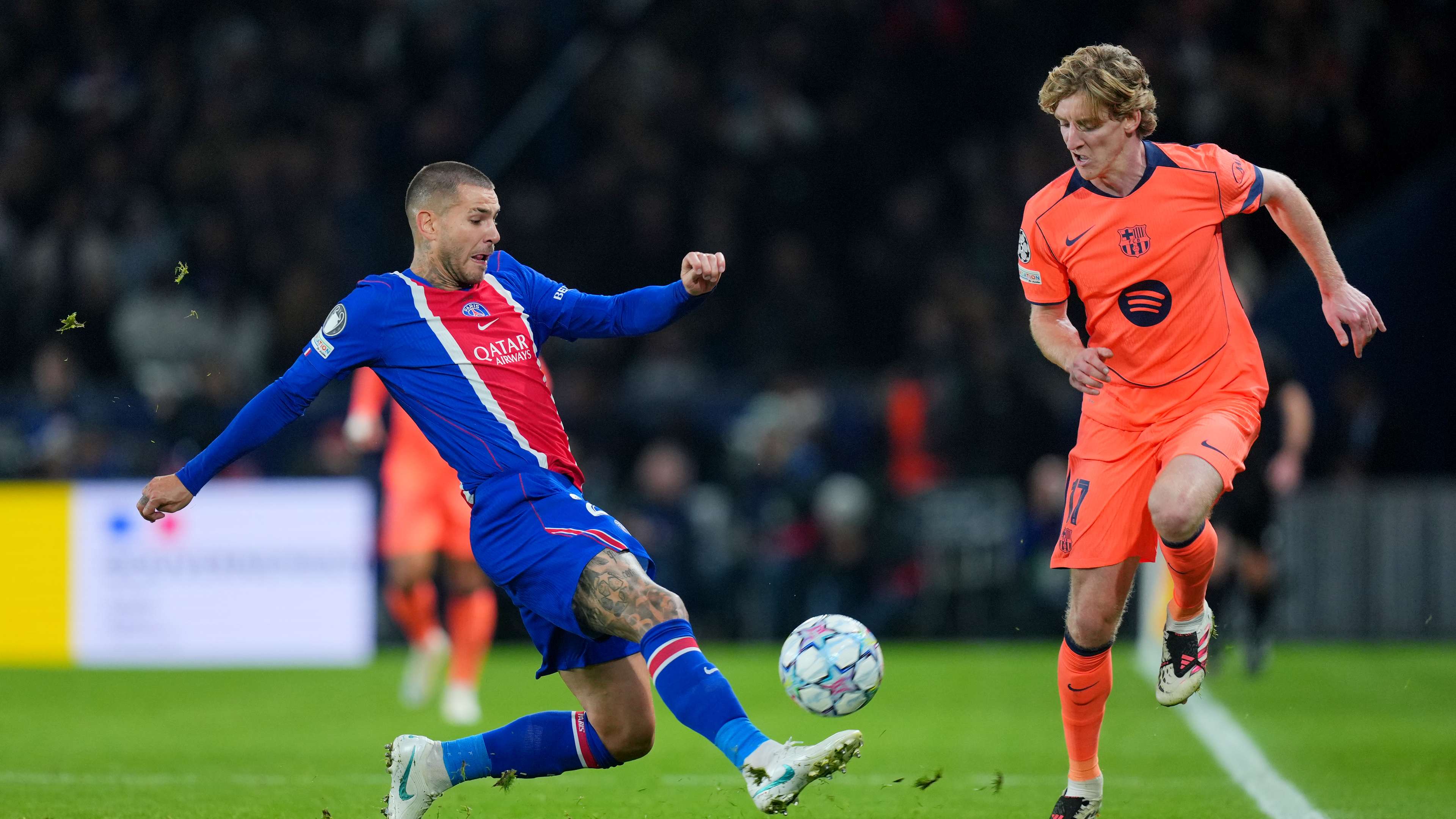
Anthony Gordon offered a candid assessment of Barcelona’s demanding Champions League clash with Paris Saint-Germain, admitting that the fast-paced contest left him exhausted almost from the opening whistle. Despite the physical toll of the 4-2 defeat at the Parc des Princes, the Barcelona forward said he prefers football played at that intensity because it is exciting and creates more attacking opportunities.
Gordon’s comments came after he started against PSG in a match that delivered six goals, relentless transitions and little time for either side to settle. Speaking to CBS after the final whistle, the England international described the atmosphere and tempo as chaotic—and made clear that the spectacle came at a considerable cost to the players.
Gordon Says the Match Was Exhausting From the Start
Asked how the Barcelona players had experienced the contest, Gordon did not disguise how difficult it had been. He said he felt extremely tired within the first ten minutes, with the fatigue increasing as the game progressed. The forward acknowledged that the occasion was important, but his answer also underlined the unusual physical demands of a high-intensity European match.
“It was exactly as it looked,” Gordon said, describing the game as chaotic. He explained that his exhaustion continued to build as the minutes passed, even though the stakes made it a match players were determined to finish strongly.
His remarks offer a useful glimpse into what can sit behind an entertaining football spectacle. Supporters see quick attacks, pressing and chances at both ends; players must repeatedly sprint, recover, make decisions under pressure and then do it again. When the tempo remains high for long stretches, even elite athletes can feel the effects early.
Why Gordon Prefers High-Tempo Football
Although Gordon admitted the match was draining, he was clear that he would not necessarily choose a slower style. He said he prefers football played this way because it is exciting and tends to produce more chances. In his view, that approach makes for an enjoyable match for spectators, even if it demands a great deal from those on the pitch.
That perspective reflects a familiar tension in modern football. Aggressive pressing and rapid transitions can create a more open contest, with attacking players finding space before the opposition can reorganise. But the same approach can expose defensive gaps and require constant recovery runs. The result can be thrilling for fans—and exhausting for the players tasked with sustaining the pace.
For Barcelona, the challenge is to preserve the attacking ambition Gordon described while managing the risks that come with an open game. Against a side capable of exploiting space quickly, every misplaced pass or delayed defensive reaction can lead to danger. The 4-2 scoreline showed how quickly a match can turn when both teams are willing to attack and the tempo stays elevated.
PSG’s Quality Sets a High Benchmark
Gordon also spoke highly of PSG, calling the French club the best team in the world and saying they had held that status for two years. His assessment was generous, but it also recognised the scale of the task Barcelona faced in Paris. PSG’s speed, technical quality and ability to turn defensive moments into attacking opportunities made them a formidable opponent.
That praise should not be read as a prediction that PSG will automatically dominate every future meeting. Knockout football often turns on small details: a defensive adjustment, a missed chance, a change in momentum or the form of key players. Still, Gordon’s comments suggest Barcelona viewed the defeat as a demanding test against a team they believe belongs among Europe’s strongest.
The forward finished by expressing hope that the sides would meet again in the later stages of the competition. Such a rematch would give Barcelona an opportunity to respond, while offering supporters another high-profile contest between two teams with the attacking resources to produce an open game.
What the Result Means for Barcelona
A 4-2 loss is a significant setback, but it also provides Barcelona with clear areas to assess. The coaching staff will need to examine how the team handled PSG’s pressure, whether the defensive line was adequately protected and how effectively Barcelona managed the game when momentum shifted. Improving those details could be just as important as maintaining the attacking energy Gordon praised.
There is also a physical question to consider. A demanding Champions League fixture can affect preparation for domestic football, especially when the schedule offers little recovery time. Rotation, recovery work and careful management of player workloads can help teams preserve intensity across a long season rather than relying on it for one major night.
For supporters looking ahead, the result makes future Barcelona–PSG meetings difficult to call. A football prediction for a possible rematch would need to account for more than the final score: tactical changes, player availability, venue and the ability to control transitions could all influence the outcome. Gordon’s remarks point to one likely constant, however—the prospect of another fast, energetic contest if both clubs stick with their attacking instincts.
A Spectacle With a Physical Price
Gordon’s post-match interview captured both sides of modern elite football. He was honest about how tiring the game felt, yet he also defended the style that helped make it compelling to watch. His comments were not simply a reaction to defeat; they highlighted the trade-off between entertainment and exertion at the highest level.
Barcelona will now look to learn from the 4-2 loss and turn that experience into progress in the Champions League. PSG, meanwhile, will take confidence from a strong performance against a major European rival. If the teams meet again in the advanced rounds, fans can expect another intense test—one that may be just as gripping from the stands as it is exhausting on the pitch.