
Al Hilal Legend Sami Al Jaber Backs Ruben Neves for Captaincy and Challenges Salem Al Dawsari
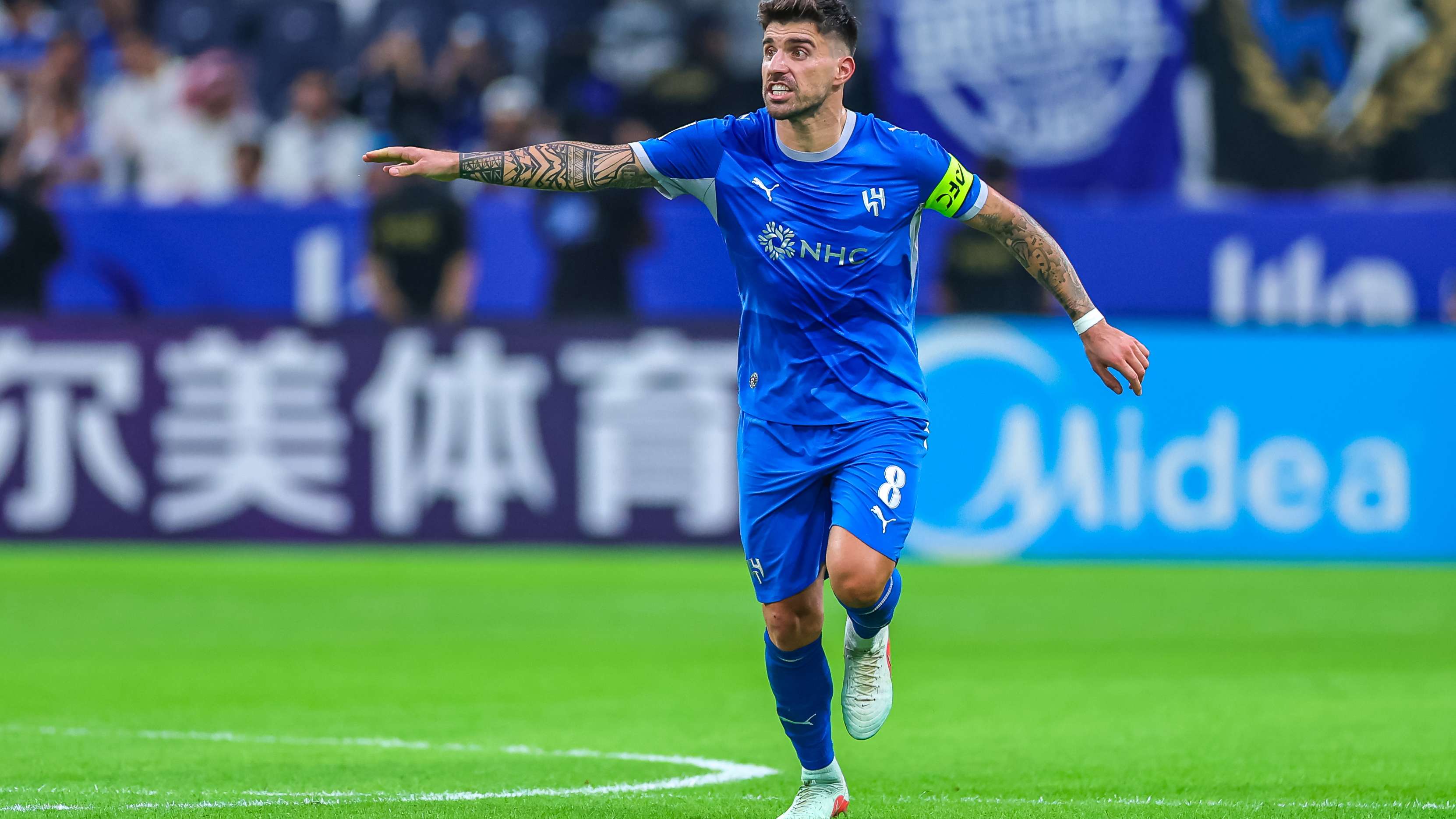
Al Hilal great Sami Al Jaber has praised Portuguese midfielder Ruben Neves and argued that his influence, experience and leadership make him a strong candidate to wear the captain’s armband. His comments came after Neves took over as captain during Al Hilal’s 2-0 victory against Qatar’s Al Sadd in the second round of the AFC Champions League Elite league phase.
Neves assumed the armband after Mohamed Kanno left the field, a moment that prompted discussion about Al Hilal’s leadership traditions and the players best suited to represent the club. Speaking on MBC’s Nadina programme, Al Jaber acknowledged the historic preference for club-developed players but suggested that Neves’s importance to the current side deserves serious consideration.
Al Jaber says Neves has the influence to lead
“In Al Hilal’s traditions, it is the sons of the club who wear the captain’s armband,” Al Jaber said. He noted that Nasser Al Dawsari is currently the only player he regards as a true product of the club, before adding that Neves’s stature and contribution give him a compelling case for the role.
The former striker’s comments point to a broader question facing ambitious teams: should captaincy be determined mainly by a player’s connection to the club, or by the leadership he demonstrates on the pitch? For Al Jaber, tradition remains important, but Neves’s role in organising the midfield and influencing the team’s play cannot be overlooked.
Neves has become a key figure since joining Al Hilal, offering composure in possession, sharp distribution and the ability to help control the rhythm of a match. Those qualities can be especially valuable in high-pressure continental fixtures, where a captain is expected to steady teammates as well as lead by example. His brief spell with the armband against Al Sadd may therefore be more than a routine substitution detail—it has added fresh fuel to the conversation about Al Hilal’s leadership hierarchy.
Salem Al Dawsari faces a more competitive attack
Al Jaber also addressed the return of Salem Al Dawsari, one of Al Hilal’s most recognisable attacking players. Rather than viewing his comeback as a potential source of tension, the club legend described the competition for places as a positive sign of the squad’s depth.
Al Ittihad legend Mohamed Noor had suggested that Al Dawsari’s return could create a crisis at Al Hilal. Al Jaber disagreed, saying the club now has an attacking group with more options than it has had for some time. In his view, the return of a proven player should raise the level of competition rather than automatically disrupt the team.
Al Jaber highlighted the range of attacking choices available, mentioning players such as Martinelli, Mendes, Atkins, Mitty and Somerville alongside Al Dawsari. With options across the flanks and central positions, Al Hilal can adjust its approach according to the opponent, the match situation and the form of individual players.
That depth could prove significant across a demanding season involving domestic football and continental competition. A congested schedule often requires rotation, and having several players capable of filling attacking roles can help a club manage fatigue, injuries and suspensions without losing its threat. It also means that established stars must continue to perform to secure their places.
“He has to fight” for his place
Al Jaber’s message to Al Dawsari was clear: return strongly and compete. He pointed to the suspension of Somerville following an incident in Al Hilal’s match against Al Gharafa as an example of how quickly opportunities can arise. Had Al Dawsari been available and selected during that period, Al Jaber believes he could have performed at a level comparable to Somerville.
“He would have looked excellent and would have been no less than Somerville,” Al Jaber said, while stressing that Al Dawsari must earn his opportunity. The comment was supportive, but it also reflected the reality of a squad where reputation alone may not guarantee a starting place.
For Al Dawsari, the challenge is to turn his return into a convincing case for regular minutes. His experience, movement and ability to create decisive moments remain valuable assets, but the competition around him gives the coaching staff several alternatives. That could encourage sharper performances from the entire forward line and give Al Hilal greater flexibility in important fixtures.
What the comments could mean for Al Hilal
Al Jaber’s remarks underline two themes shaping Al Hilal’s season: leadership and selection pressure. Neves is increasingly viewed as a central figure in the team, while the strength of the attacking options means even senior players must fight to maintain their roles. Together, those factors could help create a more demanding and competitive environment within the squad.
Supporters will be watching to see whether Neves continues to wear the armband in future matches and how the coaching staff manage Al Dawsari’s return. The next fixtures will offer an early indication of how Al Hilal balances its attacking depth while maintaining momentum in the league and on the continental stage.
Any football prediction about the club’s season remains premature, but a deep squad and a composed midfield leader are encouraging signs. If Al Hilal can turn internal competition into consistent performances, its range of attacking choices could become a major advantage rather than a source of debate.