
PSG Beat Manchester City 4-2 in a Dramatic Champions League Clash
Paris Saint-Germain delivered a statement performance at the Etihad Stadium, defeating Manchester City 4-2 in a thrilling UEFA Champions League encounter. The defending champions struck early, built a commanding lead and then had to withstand a determined second-half comeback from the hosts. The result gave PSG three valuable points and left City with plenty to consider after a night of missed chances and defensive uncertainty.
The victory moved PSG to six points in the competition, while Manchester City remained on three. More than the standings, however, the match offered a reminder of how quickly momentum can shift in elite football. PSG’s sharp counterattacks punished City’s aggressive positioning, but the English side’s response after the break showed why they remain dangerous even when trailing heavily.
PSG Punish City’s High Defensive Line
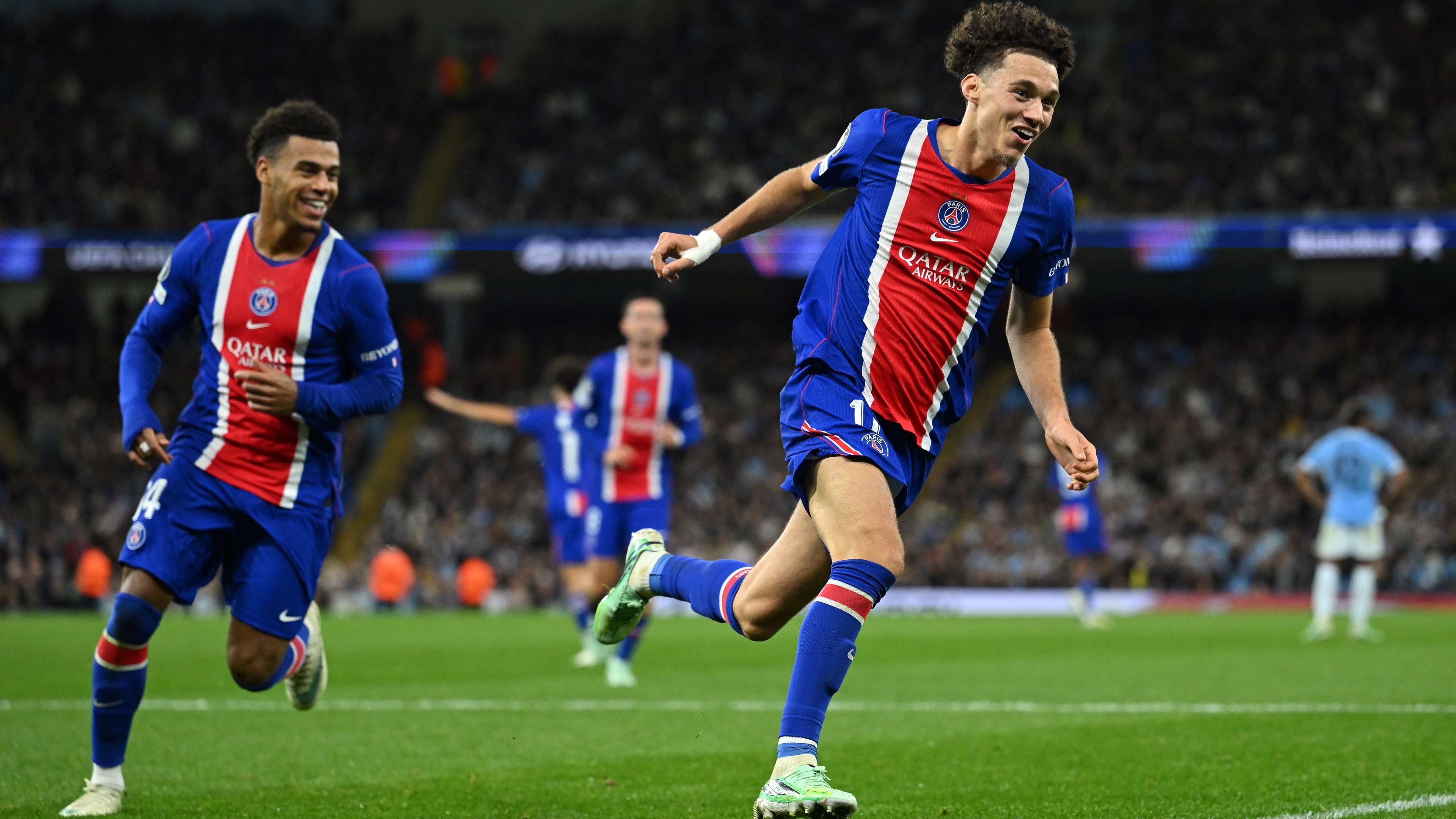
PSG needed only 13 minutes to open the scoring. With many City players committed forward, the visitors seized space on the counterattack and moved the ball quickly into the attacking third. France international Désiré Doué finished the move with a low shot toward the right side of the goal. Manchester City goalkeeper Gianluigi Donnarumma got a hand to the effort but could not prevent it from crossing the line.
The early goal exposed a potential weakness in City’s approach: when their forward press was bypassed, PSG had room to attack at pace. The visitors made that vulnerability count again just two minutes later. Ousmane Dembélé sent the ball across from the right, and Doué returned it into his path. Dembélé, formerly of Barcelona, completed the move with a header to make it 2-0.
The rapid double strike left City chasing the match before they had settled into their usual rhythm. PSG, by contrast, looked composed and purposeful, using direct runs and quick combinations to disrupt the home side’s defensive shape. For fans assessing a future football prediction, the opening spell underlined the importance of transitions: against a team as quick as PSG, possession alone does not guarantee control.
Vitinha Extends the Champions’ Advantage
Manchester City struggled to contain PSG’s movement through midfield, and the visitors added a third goal in the 32nd minute. Vitinha finished after receiving a clever back-heeled pass from Warren Zaïre-Emery, striking the ball into the City goal and giving PSG a seemingly comfortable three-goal cushion before halftime.
That goal reflected PSG’s confidence as much as their technical quality. Zaïre-Emery’s inventive pass helped unlock the defence, while Vitinha’s finish rewarded the visitors’ willingness to attack through the middle. City had periods of possession, but PSG were more incisive in the moments that mattered. Their first-half efficiency created a steep challenge for the hosts after the interval.
Haaland Ignites Manchester City’s Comeback
City returned from halftime with greater urgency and began to push PSG deeper. Their improvement produced a goal in the 53rd minute, when Erling Haaland rose to head home a high delivery from substitute Iliman Ndiaye. The finish gave the home crowd fresh hope and brought an animated reaction from Pep Guardiola, who was watching from the stands and applauded the Norwegian striker.
Haaland’s goal changed the atmosphere inside the Etihad. City attacked with more conviction, and PSG could no longer rely on the same control they had enjoyed in the first half. The hosts created pressure around the penalty area and looked capable of making the contest uncomfortable for the visitors.
But just as City’s comeback began to gather momentum, PSG restored their three-goal lead. Magnes Akliouche unleashed a powerful effort that Donnarumma managed to parry. The ball then rebounded into the goalkeeper’s own net, making it 4-1 and delivering a harsh blow to City’s hopes of a full recovery.
Late Chances Keep the Match Alive
City refused to give up. Haaland scored again in the 75th minute, finishing after a low pass from Moroccan teammate Ayoub Bouaddi to reduce the deficit to 4-2. The goal ensured a tense closing period, with the hosts searching for another breakthrough and PSG trying to protect their advantage.
Manchester City had opportunities to make the scoreline even closer. The crossbar denied Haaland, while Enzo Fernández struck the post. Antoine Semenyo also wasted several promising openings as City’s attacking pressure produced chances but not the goals needed to change the result. Those near misses highlighted the fine margins that often decide Champions League matches: City created enough danger to make PSG uncomfortable, yet failed to convert the key moments.
PSG also had an opportunity to add a fifth after Nuno Mendes conceded a penalty. However, Spanish substitute Ferran Torres sent a weak effort toward goal, and Donnarumma saved it. The miss spared City a larger defeat and gave the goalkeeper a chance to respond after an uneven night.
What the Result Means for the Champions League
PSG’s 4-2 win was built on a devastating first-half display, but the second half showed that their defensive work remains an important part of the story. City found ways to attack once they increased their tempo, and the home side’s late pressure exposed spaces PSG will want to manage more carefully in future fixtures.
For Manchester City, the defeat raises questions about defensive balance and finishing. Their aggressive approach can overwhelm opponents, but it can also leave space behind the midfield when possession is lost. Haaland’s two goals offered a positive response, yet the missed chances—particularly the efforts that struck the woodwork—will frustrate the team as it looks to recover in the competition.
PSG, meanwhile, will take confidence from their speed, creativity and ability to turn defensive transitions into clear scoring opportunities. The result strengthens their position in the group, although the penalty miss and City’s second-half surge show there is still room to improve. As the Champions League campaign develops, both teams will need to balance attacking ambition with greater precision at key moments.
For supporters following the next round, this match offers useful context for any football prediction: PSG have demonstrated they can punish open teams with rapid attacks, while City remain capable of creating a comeback through sustained pressure. Their next performances will reveal whether this was a one-off tactical lesson or a turning point in their European campaigns.