
Bayern Munich and Arsenal Share Four Goals in Champions League Thriller
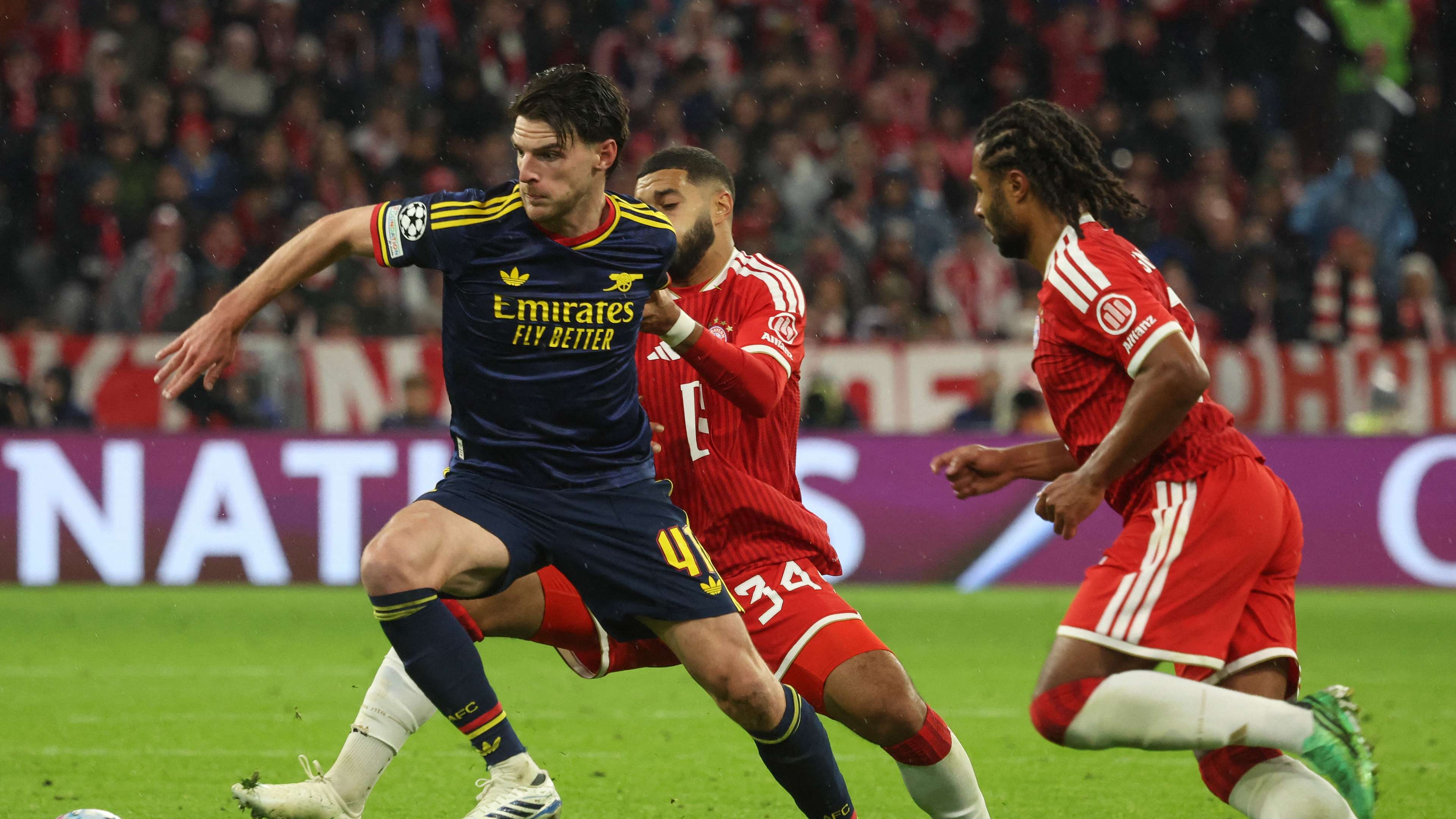
Bayern Munich and Arsenal played out an absorbing 2-2 draw at the Allianz Arena on Wednesday, with both sides producing a lively contest in the third round of the Champions League league phase. The result reflected a match of shifting momentum: Arsenal enjoyed long spells of possession, Bayern threatened repeatedly on the counter, and two outstanding goalkeepers helped prevent the scoreline from becoming even more dramatic.
Four goals, a converted penalty and a late equaliser ensured the meeting delivered plenty for supporters and neutrals alike. Arsenal took the lead through Eberechi Eze, Bayern responded through Alphonso Davies and Harry Kane, and Declan Rice rescued a point for the visitors in the closing stages.
Eze Gives Arsenal the Early Advantage
Arsenal made an assertive start and found a way through Bayern’s defence in the 25th minute. Eze collected a well-weighted pass down the left, accelerated into space and finished decisively to put the visitors ahead. The goal rewarded Arsenal’s willingness to attack quickly and exploit the channels behind Bayern’s defensive line.
The opening strike did not settle the contest. Bayern responded by pushing forward with greater urgency, using the energy of the home crowd to build pressure around Arsenal’s penalty area. The hosts looked increasingly dangerous as they searched for an equaliser, forcing the visitors to defend deeper and rely on timely interventions at the back.
Bayern’s pressure paid off in the 35th minute. Davies found the net to bring the teams level, giving the German side a lift after falling behind. His goal restored the balance before half-time and set the tone for an increasingly open second half, with both teams looking capable of creating chances whenever they moved forward with speed.
Raya and Neuer Keep the Match in the Balance
Although the score finished 2-2, the goalkeepers played a major role in shaping the result. Arsenal’s David Raya and Bayern’s Manuel Neuer each produced important saves as attacks came from both sides. Their interventions denied clear opportunities and kept the match finely poised through periods when either team might have taken control.
Arsenal’s possession gave the visitors a platform to build attacks, but Bayern remained dangerous whenever they won the ball and moved forward quickly. That contrast made the game difficult to predict: Arsenal could control the tempo for stretches, while Bayern’s direct bursts created a constant threat. Both defences also had to work hard to contain runners arriving in the box and prevent promising moves from turning into goals.
The goalkeepers’ performances underlined how narrow the margins were. A single rebound, misplaced pass or missed save could have changed the outcome, particularly in a match where neither side was short of attacking intent. For fans assessing a future football prediction involving these clubs, the game offered a reminder that possession statistics alone do not tell the full story. Finishing, defensive organisation and goalkeeping can be just as decisive.
Kane’s Penalty Puts Bayern Ahead
Bayern moved in front in the 61st minute after Harry Kane converted a penalty. The England captain’s composed finish made it 2-1 and appeared to give the hosts the advantage they had been seeking since Davies’s equaliser. With the Allianz Arena behind them, Bayern looked to protect their lead while remaining alert to opportunities to extend it.
For Arsenal, conceding the penalty created a test of resilience. The visitors could have allowed the setback to disrupt their rhythm, but instead they continued to press for a way back into the match. Their response showed why they remain a difficult opponent in European competition: even when trailing away from home, they maintained their attacking ambition and kept searching for openings.
Rice Rescues a Point for Arsenal
Arsenal’s persistence was rewarded in the 82nd minute, when Declan Rice scored to make it 2-2. The late equaliser changed the closing stages into a tense battle, with both sides aware that one more goal could still decide the match. Neither team found a winner, and the points were ultimately shared after a compelling evening of Champions League football.
Rice’s goal was significant beyond the immediate result. It preserved Arsenal’s unbeaten start to the league phase and demonstrated the value of continuing to attack after falling behind. Bayern, meanwhile, will take encouragement from their response to Eze’s opener and from the attacking pressure that helped them turn the game around, even if they were unable to hold on for all three points.
Champions League Table and What Comes Next
The draw leaves Arsenal with seven points from three matches, following two wins and Wednesday’s stalemate. They sit seventh in the league-phase standings, keeping themselves in a strong position as the competition progresses. Bayern have five points from one win and two draws, placing them 14th. While the table remains competitive, the German side will be keen to turn future draws into victories and climb toward the leading positions.
Both clubs now return to domestic action before continuing their European campaigns. Arsenal are scheduled to face Everton in the Premier League on October 24, while Bayern are due to meet SC Freiburg in the Bundesliga on October 26. Those fixtures will offer each team a chance to reset, address any defensive concerns and build momentum before their next Champions League challenge.
What the Draw Means for Future Football Predictions
This result makes any prediction for the clubs’ next European matches more nuanced. Arsenal showed composure and attacking depth, but they also had to withstand sustained pressure away from home. Bayern demonstrated that they can respond strongly after conceding, though the late equaliser highlighted the importance of managing a lead through the final minutes.
The strongest takeaway is that both teams possess the quality to score against elite opposition, while their goalkeepers can keep them in matches when the defence is stretched. Supporters considering a football prediction should therefore look beyond league position alone and weigh recent form, home advantage, player availability and the capacity to convert chances. In Munich, neither side managed to dominate for the full 90 minutes—and that balance made the 2-2 draw a fitting result for a high-quality European contest.