
Manchester United’s Como Defeat Deepens Crisis as Michael Carrick Faces Growing Pressure
Manchester United’s difficult season took another damaging turn in Italy, where Cesc Fàbregas’s Como side delivered a heavy defeat that exposed familiar defensive weaknesses and raised fresh questions about the team’s confidence. For manager Michael Carrick, the result was more than a poor night on the pitch: it intensified scrutiny from supporters and the club hierarchy at a moment when patience appears to be wearing thin.
United’s problems were visible almost immediately. Como scored after just 118 seconds, putting the visitors on the back foot before they had settled into the match. The early concession echoed last week’s loss in Madrid, when United were breached after only 47 seconds. Repeatedly starting games in trouble has become a troubling pattern, and it leaves the side with little margin for error.
A stoppage-time goal from Joshua Zirkzee prevented United from suffering their heaviest European defeat since 1994. It offered little comfort, however, after a performance that had already become a symbol of the club’s broader struggles. The result leaves Carrick facing an increasingly urgent question: can he restore organisation and belief quickly enough to keep his job?
A Losing Run Revives Unwelcome Memories
United have now gone seven consecutive matches without a win, their longest winless stretch since December 2015. That comparison is particularly striking because Carrick was part of the playing squad during that earlier period, under then-manager Louis van Gaal. The historical parallel has inevitably sharpened discussion about the club’s current direction.
Van Gaal remained in charge for nearly five months before leaving. Carrick may not have the same amount of time, with the latest defeat prompting speculation that the board could make a decision much sooner. While one result rarely tells the whole story, the combination of poor form, defensive errors and visible frustration has made this run feel like a defining moment.
The match also marked Matthijs de Ligt’s first appearance after an absence of 325 days. His return might have offered a boost, but instead it came amid a defensive display that struggled to contain Como’s movement and attacking pressure. His comeback is a reminder that injuries have complicated United’s season, although the team’s recurring lapses cannot be explained by availability alone.
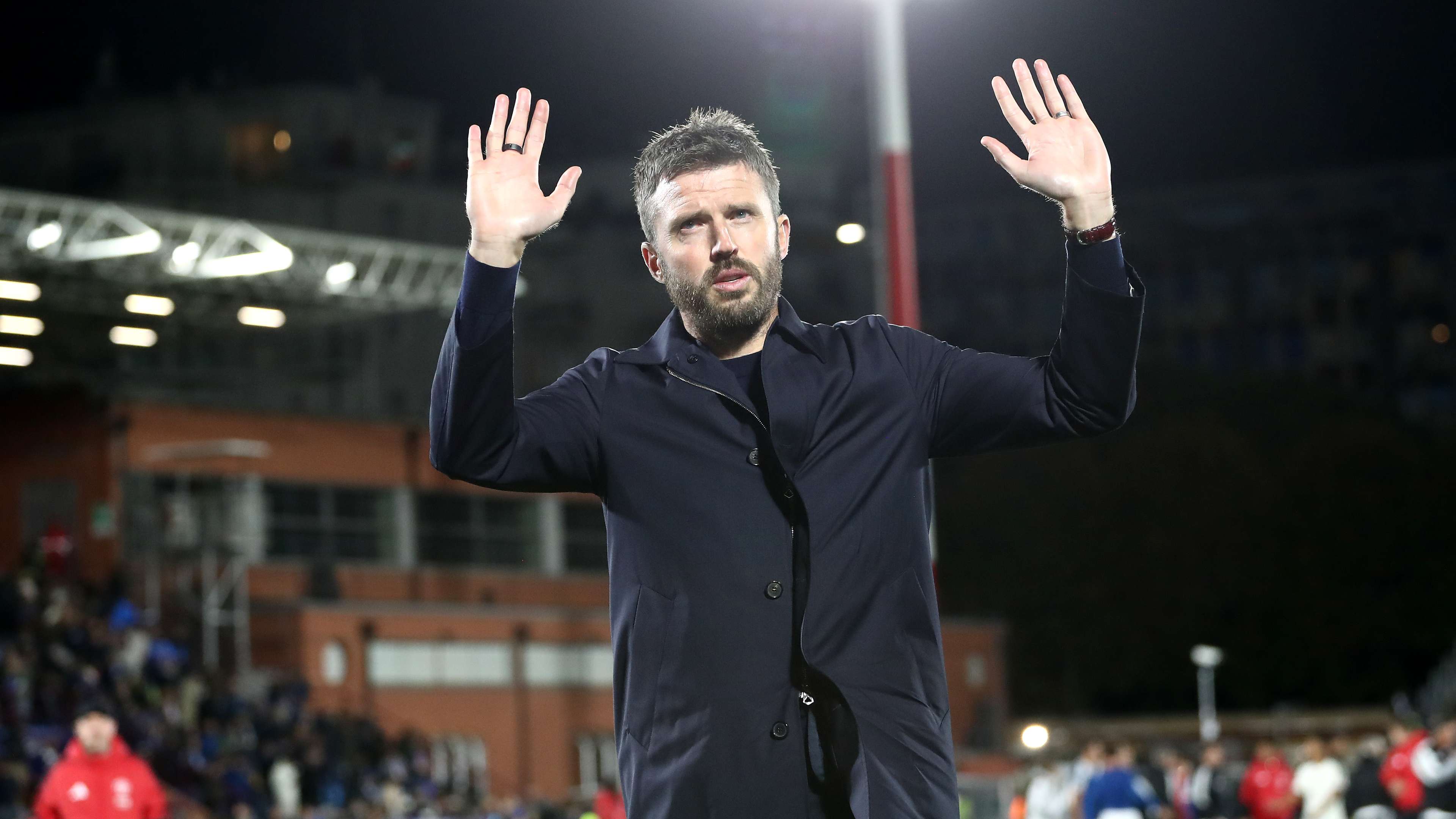
Carrick’s body language reflected the mood. After Nico Paz scored Como’s third goal before the hour, the United manager slumped and moved away from the cameras toward the bench. It was a brief but telling image: a coach appearing short of answers while his team’s situation worsened in real time.
Selection Experiments Add to the Uncertainty
Carrick is not solely responsible for United’s decline. The club’s summer recruitment left important needs unresolved, including the absence of a second recognised striker and a new left-back. Those omissions have reduced the manager’s options, particularly during a congested schedule when injuries and changes in form can quickly expose a thin squad.
Even with those limitations, questions have emerged over Carrick’s team selections. The squad is considered stronger than the group that finished third last season, yet performances have not matched that potential. With fewer than twelve matches played, frequent tactical changes have made it difficult for players to build rhythm or understand their roles consistently.
One of the most debated decisions was using captain Bruno Fernandes as a false nine. The experiment lasted only through the first half. Fernandes had played out wide the previous week, and this time he replaced Bryan Mbeumo, who had scored twice in his previous three appearances as a central striker.
The change also appeared to affect Youri Tielemans. In recent matches against Atlético Madrid and Leeds, Tielemans had shown creativity as a playmaker, linking effectively with Mbeumo. With Fernandes occupying a different role, that connection faded. Fernandes was substituted in the 67th minute, by which time the contest had largely slipped away.
Frequent reshuffling can sometimes help a team find a solution, but it can also create uncertainty when players are moved from position to position. United’s challenge is to identify a dependable structure—one that protects the defence while allowing its creative players to influence matches without sacrificing balance.
Early Errors and Rising Frustration
The opening stages offered a concentrated picture of United’s problems. Diogo Dalot had a promising opportunity in the second minute but failed to make the most of the chance. Soon afterwards, Como built a goal from a straightforward goal kick. Lucas Da Cunha found Nico Paz, while Harry Maguire appeared to give the attacker too much space and the goalkeeper failed to hold the ball cleanly.
The mistakes drew immediate reactions from United players. Noussair Mazraoui showed his frustration, while Mason Mount appeared to challenge Maguire. Carrick, by contrast, remained largely still during the opening twenty minutes before becoming involved in a heated exchange with Matheus Cunha. Such scenes suggested that tension was spreading beyond the touchline and into the team itself.
United finished the first half without a shot on target, a statistic that captured the lack of attacking threat as well as the defensive instability. A side that cannot create clear chances while conceding early goals is left chasing matches on two fronts—and that is a difficult formula to sustain over a season.
Supporters Demand a Response as Carrick’s Future Comes Into Focus
Discontent from the stands surfaced almost as soon as the match began. United supporters chanted “attack, attack, attack” within three minutes, making clear that frustration with the team’s cautious and unconvincing football has been building for some time. Earlier jeers during the Fulham match, including when Kobbie Mainoo was substituted, and the reaction to a home draw against Tottenham had already pointed to a strained relationship between the team and its fans.
Como supporters added to the pressure with chants suggesting Carrick could soon be dismissed. Their taunts landed against a backdrop of genuine uncertainty among United followers, many of whom are now asking whether the manager can turn the season around or whether a change is needed.
The next fixtures will matter, but they will not be judged only by the final score. United need to show greater intensity, reduce avoidable defensive errors and settle on a coherent attacking plan. A more resilient performance could give Carrick valuable breathing room; another flat display would make the case for change harder to ignore.
Any football prediction about United’s immediate future remains uncertain. The club has the resources and individual talent to recover, but improvement must become visible quickly. The Como defeat did not decide Carrick’s fate on its own, yet it made the stakes unmistakable. Manchester United now face a test of leadership as much as tactics: whether the club will give its manager another opportunity, or conclude that the moment for a departure has arrived.