
Temba Bavuma’s 179 Rescues South Africa and Revives Second Test Hopes
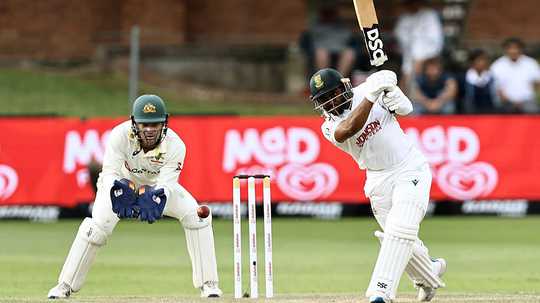
Temba Bavuma’s career-best 179 transformed the second Test between South Africa and Australia, lifting the hosts from early trouble to a commanding first-innings total and giving the match fresh life. After losing two quick wickets at St George’s Park, South Africa were under pressure. By the time Bavuma was dismissed on Tuesday, they had declared at 425 for 9—and Australia had already lost a wicket in reply.
The innings was a remarkable display of patience, judgment and resilience. Bavuma faced 334 deliveries, struck 18 fours and one six, and spent more than nine hours at the crease. It was his fifth Test century and his highest score in the format, but its significance went beyond personal milestones: it gave South Africa a chance to fight back after a heavy defeat in the series opener.
A Test Match Shaped by Rain and Resolve
The second Test had been disrupted by persistent rain and a wet outfield, which cost the teams 137 overs across the first two days. Although Bavuma had batted across three calendar days, the lost time meant his innings was better measured in hours than in days. He began on Sunday and was finally out on Tuesday, building his score through long periods of concentration as conditions and pressure shifted around him.
South Africa’s position was precarious when he arrived. The hosts had slipped to 12 for 2, with the overcast conditions and lively pitch appearing to favour Australia’s bowlers. Bavuma acknowledged the challenge after play, noting that the early wickets had left his side in a difficult spot. Rather than chase a quick recovery, he focused on staying compact and making the bowlers work for every breakthrough.
That approach was familiar. Bavuma said he had often found himself batting in crisis situations and believed those moments brought out his best. His priority, he explained, was to put South Africa in a competitive position. The difference this time was that he was able to turn that familiar responsibility into a major individual score.
Partnerships Turn the Momentum
Bavuma’s innings was the foundation of South Africa’s recovery, but key partnerships helped carry the team beyond survival. He added 132 runs with Marco Jansen, who counterattacked and made the most of scoring opportunities. Jansen’s willingness to take on the bowlers helped shift pressure back onto Australia, while Bavuma continued to anchor the innings at the other end.
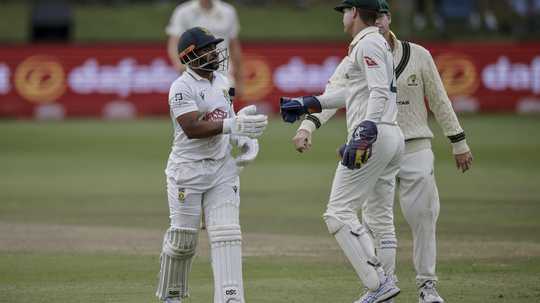
Simon Harmer then joined Bavuma for a stand of 183, setting a South African record for the eighth wicket in Test cricket. Harmer’s contribution was built on discipline and a clear understanding of the situation: protect his wicket, support the established batter and take advantage of loose deliveries. Bavuma praised both partners for their contrasting but complementary roles, highlighting Jansen’s attacking intent and Harmer’s determination to make Australia earn each dismissal.
The late-order partnerships changed the shape of the contest. At 97 for 5, South Africa still faced the possibility of a modest total. Instead, Bavuma and his partners stretched the innings, wore down the attack and gave their bowlers a meaningful target to defend. Their work also helped South Africa make the most of the limited time available in a match already shortened by weather.
Patience on a Pitch That Still Offered Challenges
Some observers might have expected batting to become easier as the match progressed, but Bavuma did not view the conditions that way. He said the pitch continued to produce occasional movement, with balls sometimes lifting unexpectedly or deviating off the surface. The softer ball offered a little more comfort, but it did not remove the need for careful shot selection.
His plan remained simple: defend tightly, play straight and stay at the crease for as long as possible. That method was particularly valuable on a surface where one lapse could undo hours of hard work. Bavuma’s innings demonstrated how Test cricket can reward restraint as much as aggression. He did not need to dominate every session; he needed to keep South Africa’s innings alive until the scoring opportunities came.
Australia Face a Difficult Chase Against the Clock
South Africa declared at 425 for 9, leaving Australia to begin their reply late in the day. The visitors lost a wicket and reached 3 for 1 before bad light brought play to a close after only four overs. With two scheduled days remaining and the first innings still unfinished, the match was finely balanced—but the clock and the weather remained major factors.
Bavuma recognised that South Africa would need to spend a substantial portion of the remaining time in the field if they were to secure a result. He also pointed to the threat posed by the new ball, suggesting that disciplined bowling in the right areas could create opportunities. His comments reflected a realistic approach: South Africa had gained momentum, but Australia’s batting line-up was unlikely to surrender without a fight.
Further weather interruptions could also complicate the contest. In a rain-affected Test, every session matters, and teams must balance attacking for a win with managing the available overs. South Africa’s declaration gave their bowlers a chance to apply pressure, but converting that opportunity into a victory would require sustained accuracy and patience.
What Bavuma’s Innings Means for the Series
South Africa entered the match under pressure after Australia won the first Test at Kingsmead by 214 runs. At 12 for 2, and later 97 for 5, the hosts appeared at risk of falling further behind in the series. Bavuma’s innings has changed the mood and the match narrative, restoring belief and giving South Africa a platform from which to challenge Australia.
It is too early to make a firm prediction about the result. The remaining overs, the condition of the pitch and any further rain will all influence the outcome. Australia still have the batting resources to respond, while South Africa will need to strike consistently if they are to turn a strong first innings into a win. What is clear is that Bavuma’s 179 has made the contest far more compelling.
His performance was not simply a rescue act. It was a reminder of the value of composure under pressure, especially in Test cricket, where matches can change gradually through partnerships and persistence. Jansen’s aggression and Harmer’s resistance strengthened the recovery, but Bavuma was its central figure. South Africa were on the brink of another difficult day; his innings gave them a reason to believe the second Test could still be theirs to shape.