
Temba Bavuma’s 179 Turns the Tide as South Africa Seize Control Against Australia
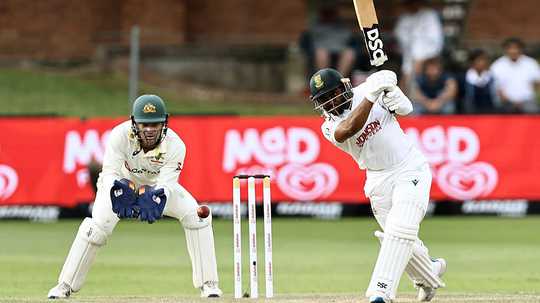
South Africa transformed a precarious position into a commanding advantage on Day 3 in Gqeberha, powered by a remarkable innings from captain Temba Bavuma. Batting for nearly the entire day, Bavuma made 179 from 338 balls, spending 547 minutes at the crease as the hosts recovered from 110 for 6 to declare at 425 for 9. Australia ended the day on 3 for 1, still trailing by 422 runs and facing a steep challenge.
The scale of the turnaround was striking. South Africa had begun the day at 97 for 5 and lost another wicket soon after, leaving the innings at risk of collapsing before it could build a meaningful lead. Instead, Bavuma led two substantial partnerships that changed the match’s direction. His innings combined patience, concentration and carefully chosen moments of aggression—qualities that made the difference on a pitch he later described as difficult to bat on.
Jansen Brings the Counterattack
Marco Jansen was the first to join Bavuma in the rescue effort, and the contrast between the pair’s styles became a defining feature of the partnership. Bavuma held his shape and focused on occupying the crease, while Jansen looked to put Australia’s bowlers under pressure. His 85 came from just 100 deliveries and included nine fours and three sixes.
Their stand added 132 runs from 185 balls, giving South Africa the momentum and breathing room they badly needed. Jansen’s willingness to attack helped disrupt Australia’s rhythm, while Bavuma provided the stability that allowed his partner to play freely. The left-hander came close to a maiden Test century, but Scott Boland eventually broke the partnership by dismissing him.
Jansen’s innings was more than a burst of scoring. It shifted the pressure onto Australia, whose bowlers had earlier looked capable of running through the lower order. The partnership also demonstrated how a team can respond to a difficult situation without relying on one approach alone: Bavuma’s restraint and Jansen’s counterpunching complemented each other.
Harmer Helps Extend South Africa’s Lead
After Jansen departed, Simon Harmer joined his captain and helped South Africa build another major stand. Harmer was composed and technically assured, using his footwork well and selecting his shots with care. He faced 157 balls on his way to 82, providing valuable support while Bavuma continued to accumulate runs at the other end.
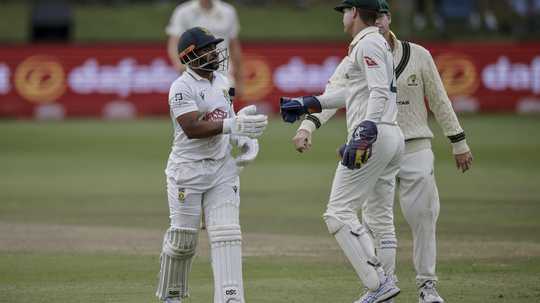
The partnership lasted 277 deliveries, further testing Australia’s patience and endurance. During that time, Bavuma moved through the milestones to reach both his century and 150, receiving warm applause from the South African dressing room. Harmer, like Jansen, narrowly missed out on a maiden Test hundred, but his innings played a crucial role in pushing the total beyond 400.
For Australia, the challenge was not only to find a way through Bavuma’s defence. They also had to keep attacking partnerships alive and prevent the South African captain from dictating the pace. The long periods without a wicket made the day increasingly demanding for the visitors, who had started with a clear opportunity to put the hosts under pressure.
Bavuma’s Marathon Knock Sets Up the Declaration
Bavuma’s 179 was the central achievement of South Africa’s recovery. His innings lasted 338 balls and more than nine hours, a test of concentration that allowed the lower order to contribute around him. Rather than force the pace too early, the captain steadily wore down the attack, then took advantage of opportunities to keep the scoreboard moving.
Mitchell Starc finally ended the innings by having Bavuma caught behind. With the captain gone and South Africa already in a strong position, the hosts declared at 425 for 9. The decision left Australia with only a brief opportunity to bat before stumps, but it also gave South Africa the chance to strike immediately with the new innings.
Harmer’s dismissal had brought Kagiso Rabada to the crease, but the declaration meant the fast bowler had to return to the field almost at once. He made an instant impact. Rabada dismissed Nic Maddinson for a duck with the fourth ball of Australia’s innings, giving South Africa an early breakthrough and ensuring the day ended on a high note for the home side.
Australia Face a Steep Task
Australia closed at 3 for 1, with Rabada’s early strike leaving them 422 runs behind. The scoreline reflected the dramatic shift in the contest: what had looked like a promising position for the visitors at the start of the day had become a substantial deficit by the close.
South Africa’s advantage was built through patience as much as power. Jansen’s attacking 85 and Harmer’s measured 82 were important contributions, but Bavuma’s ability to remain at the crease for 547 minutes gave the innings its foundation. The captain’s marathon effort kept Australia in the field for most of the day and allowed South Africa to move from survival to control.
Match Snapshot
South Africa: 425 for 9 declared. Temba Bavuma 179, Marco Jansen 85, Simon Harmer 82; Scott Boland 5 for 81, Mitchell Starc 3 for 89.
Australia: 3 for 1 at stumps. Kagiso Rabada 1 for 0. Australia trail by 422 runs.
What the Day Means for the Match
South Africa will take confidence from a recovery built on resilience, while Australia must regroup after spending a long day searching for breakthroughs. The next phase will depend on whether the visitors can bat with discipline and reduce the deficit, and whether South Africa’s attack can make early inroads. Rabada’s wicket before stumps has already given the hosts a valuable start.
For cricket followers assessing the match prediction, the balance has clearly swung toward South Africa, although the contest is not decided. Australia still have the opportunity to respond, and conditions, partnerships and the new ball could all influence what happens next. What is certain is that Bavuma’s innings has given South Africa a substantial platform—and turned a day that began with danger into one of authority.