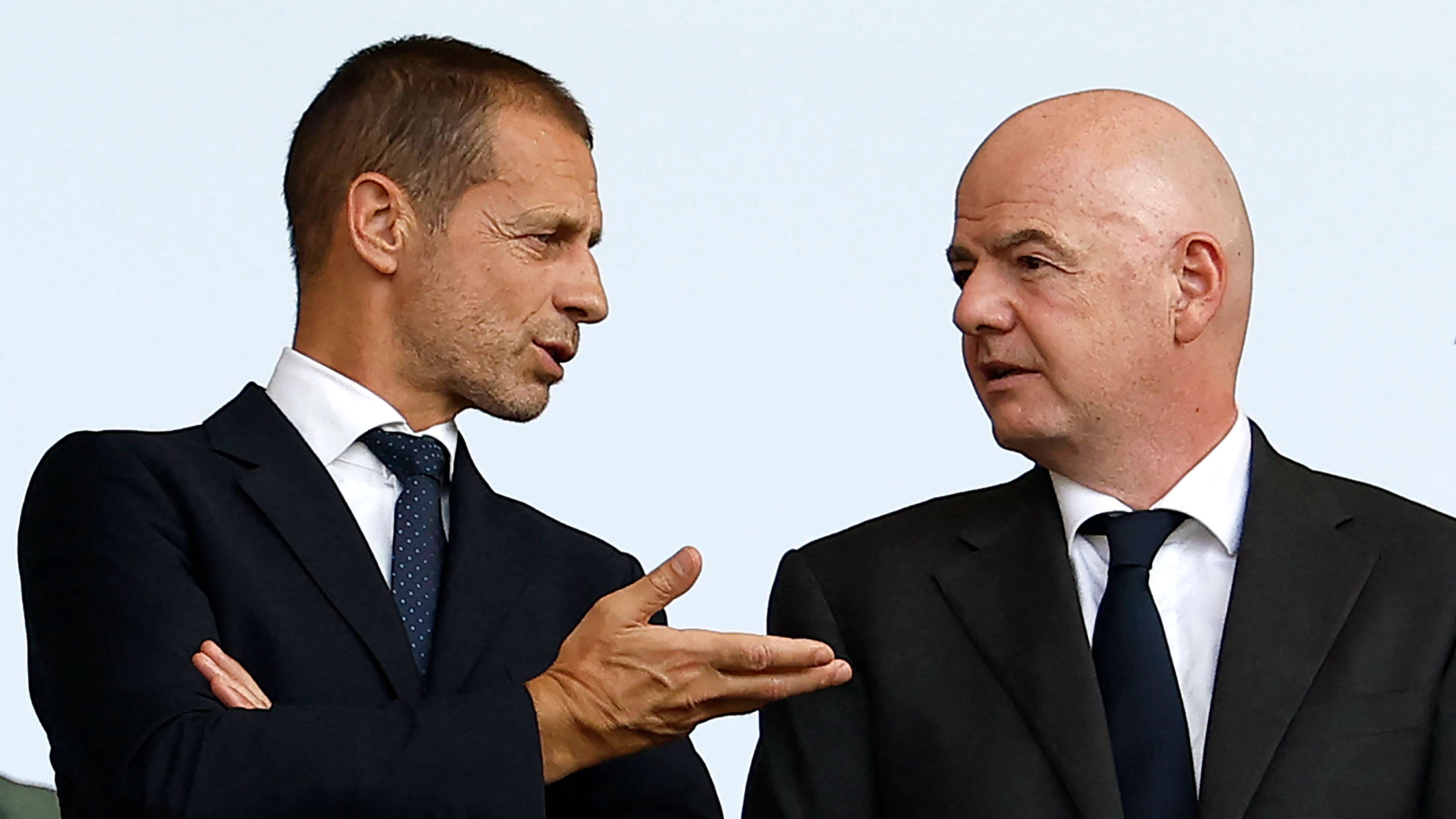

UEFA President Aleksander Ceferin Slams FIFA’s Gianni Infantino: A Battle for the Future of Global Football
The ongoing power struggle within the world of international football has reached new heights, with UEFA President Aleksander Ceferin unleashing a pointed critique of FIFA President Gianni Infantino. As tensions escalate, the rivalry between Europe’s football governing body and FIFA intensifies, raising questions about the future direction of the sport on a global scale. This confrontation is not just about leadership styles but also about the very soul of football, its integrity, and its prediction for the sport’s future development.
Backdrop: A Fractured Global Football Landscape
Over the past few years, the relationship between UEFA and FIFA has deteriorated dramatically, marked by disagreements over tournament hosting rights, financial distributions, and governance reforms. UEFA, representing the continent with the richest football leagues and most competitive clubs, has often found itself at odds with FIFA, which seeks to maintain its influence over the global game. This discord has culminated in a series of public disputes, with both sides accusing each other of mismanagement and overreach.
The recent comments by Ceferin underscore this deepening divide. The UEFA chief’s outspoken criticism signals a broader dissatisfaction within European football circles regarding FIFA’s leadership and strategic direction, which many perceive as increasingly centralized and disconnected from the sport’s grassroots and traditional values.
Ceferin’s Stark Criticism: Comparing Infantino to a ‘Naked Emperor’
During a recent speech in Copenhagen, Aleksander Ceferin did not hold back. He openly criticized Gianni Infantino’s leadership style, accusing him of lacking transparency and accountability. Ceferin went further, drawing a striking analogy that has garnered widespread attention: he described Infantino as a “naked emperor,” implying that the FIFA president’s authority is built on flimsy foundations, and that his leadership is exposed as vulnerable and potentially unsustainable.
This metaphor, borrowed from the classic tale of political allegory, suggests that Infantino’s supposed authority is devoid of substance or legitimacy, and that it’s only a matter of time before the facade crumbles. Such a comparison is rare in the usually diplomatic world of football governance and underscores the depth of Ceferin’s frustration.
The Implications for Football Prediction and the Sport’s Future
For fans, pundits, and industry insiders, the ongoing civil war between UEFA and FIFA has significant implications for football predictions—those forecasts about upcoming tournaments, club performances, and emerging talents. As the governance of the sport becomes more fragmented, the stability and predictability of major football events could be affected.
In particular, the future of major tournaments like the FIFA World Cup, UEFA Champions League, and continental competitions might be influenced by shifts in leadership, sponsorship, and organizational priorities. Reliable prediction models depend heavily on consistent competition formats, fair play, and transparent governance—all of which are currently under scrutiny amid the discord.
Key Issues at the Heart of the Dispute
Financial Control and Revenue Distribution
One of the main sticking points is how revenue from global tournaments is distributed. UEFA has long championed a more equitable sharing of profits, especially to support developing football nations. Conversely, FIFA’s current model, under Infantino’s leadership, has been criticized for favoring certain regions and prioritizing expansion over sustainability.
Governance and Transparency
Ceferin’s criticism points to concerns over transparency in FIFA’s decision-making processes. Allegations of corruption, lack of accountability, and opaque bidding procedures have tainted FIFA’s reputation, leading to calls for reform. UEFA, under Ceferin’s guidance, has positioned itself as a defender of integrity and good governance in football.
Global Strategy and Expansion
Infantino’s push for expanding the FIFA World Cup to new markets and increasing the tournament’s frequency has sparked debate. Critics argue that such moves could dilute the sport’s quality and predictability, potentially impacting betting markets, predictions, and fan engagement worldwide.
What Does This Mean for Fans and Stakeholders?
The rivalry between UEFA and FIFA is more than just a power struggle; it directly affects the global football ecosystem. For fans, this internal conflict can influence the scheduling, quality, and accessibility of major tournaments. It also impacts betting markets and prediction analytics, which rely on stable and transparent governance to provide accurate forecasts and betting odds.
Moreover, emerging trends like digital transformation, sustainability initiatives, and social responsibility are at the core of this governance battle. UEFA’s emphasis on integrity and fairness aligns with the growing demand from fans and stakeholders for a more responsible and transparent sport.
Looking Ahead: The Road to Reconciliation or Further Division
As Ceferin’s fiery rhetoric suggests, the future of global football hinges on whether meaningful reforms can be achieved. The key questions remain:
- Will FIFA undertake significant governance reforms to restore credibility?
- Can UEFA and FIFA find common ground to ensure the sport’s growth and stability?
- How will these leadership disputes influence upcoming tournaments and football predictions worldwide?
Analysts and insiders warn that without constructive dialogue, the sport risks further fragmentation, which could undermine the very foundation of international football. The upcoming FIFA Congress and UEFA meetings are expected to be pivotal moments, where stakeholders will debate these critical issues and chart a course forward.
Conclusion: A Turning Point for Global Football
The public clash between Aleksander Ceferin and Gianni Infantino is a clear signal of a sport at a crossroads. The leadership disagreements, accusations of mismanagement, and calls for transparency reflect deeper concerns about the future of football governance. For enthusiasts and industry professionals invested in the sport’s prediction and growth, the stakes have never been higher.
As the world watches, the question remains: will football’s top leaders prioritize the sport’s integrity and long-term sustainability, or will internal rivalries continue to threaten its unity and global appeal? The coming months will be critical in determining the direction of football’s evolution, shaping the landscape for players, fans, and betting markets alike.
In an era where the sport’s prediction models and tournament outcomes depend heavily on sound governance, ensuring transparency, fairness, and shared vision is more essential than ever. The battle between UEFA and FIFA isn’t just about power—it’s about preserving the spirit of football for generations to come.