
Manchester United’s Crisis Deepens as Carrick Faces Injuries, Pressure and Recruitment Questions
Bryan Mbeumo continues to provide Manchester United with goals, but one player’s scoring form cannot disguise the scale of the problems facing Michael Carrick. A 1-1 draw with Leeds United at Elland Road extended United’s winless run to six matches, leaving the club under pressure on several fronts: results, defensive injuries, squad depth and growing questions about recruitment.
United showed encouraging spells against Leeds, as they had against Atlético Madrid earlier in the week. But improved passages of play have not translated into victories. Poor starts, missed opportunities and costly moments continue to undermine the team, while the draw left the Red Devils 13th in the Premier League table, with the possibility of slipping lower as other fixtures are completed.
For supporters looking ahead to United’s next fixtures, the key question is whether Carrick can turn signs of progress into points. A football prediction for the team’s immediate prospects is difficult to make with confidence: the attack has a dependable scorer in Mbeumo, but the unsettled defence and lack of consistent results make their form hard to assess.
Mbeumo’s goals offer a rare attacking bright spot
Mbeumo has emerged as one of United’s most reliable performers in front of goal. His strike against Leeds took him to four goals in seven Premier League appearances, according to BBC Sport. That return has been particularly valuable because the team has struggled to find regular contributions from elsewhere.
Bruno Fernandes scored a hat-trick against Ipswich in August, but beyond that performance, no other member of Carrick’s squad has scored more than once. The imbalance places extra responsibility on Mbeumo and makes United easier to manage: opponents can focus on limiting the Cameroonian’s influence without facing a consistent threat from several other attackers.
His form is an encouraging sign, but it is not a complete solution. United need goals to come from across the front line and midfield, especially in matches where Mbeumo is closely marked or unable to make the difference. More broadly, the team must improve its ability to turn promising play into decisive results.
Six matches without a win raise expectations debate
The run of six games without a victory is United’s worst since the 2018-19 season, a period when the club’s performance level fell sharply after Ole Gunnar Solskjaer was appointed permanently. The comparison adds weight to the current concern, even if Carrick has urged players and fans not to treat the situation as beyond repair.
Former Liverpool and England defender Jamie Carragher criticised the way United’s draw with Leeds was being framed. Speaking on Sky Sports, he argued that avoiding defeat should not be mistaken for a successful performance or a meaningful measure of progress.
“Because they didn’t lose to Leeds, we tend to think that United put in a good performance,” Carragher said. He warned that such a view risks lowering expectations, adding that Manchester United should not be judged simply by whether they escape a loss.
The criticism reflects a wider change in the conversation around the club. Rather than discussing a title challenge, attention is on how United can recover the basic habit of winning and stop dropping points. For a team with ambitions of returning to the top end of English football, a draw may offer limited relief when the league position remains so low.
Martinez’s comments put recruitment under the spotlight
The result at Elland Road was accompanied by a dispute over the club’s transfer strategy. Before the match, defender Lisandro Martinez criticised sporting director Jason Wilcox and the board, questioning whether the summer recruitment had adequately strengthened the squad.
Martinez later apologised for the timing and setting of his remarks, but did not withdraw their substance. Wilcox watched the Leeds game from the stands, with the episode adding to scrutiny of the relationship between the club’s decision-makers and the coaching staff.
One concern highlighted by the debate is the lack of reinforcement at left-back. Luke Shaw has faced availability issues, and United have used five different players in the position this season. Diogo Dalot became the latest to fill the role against Leeds, illustrating how injuries and squad construction have forced Carrick to improvise.
That instability matters beyond the individual position. Regular changes can make it harder for defenders to build understanding and for the team to maintain a consistent shape. Shaw’s availability for the Champions League trip to Como was uncertain, potentially leaving Carrick with another selection problem as United seek greater continuity.
Defensive injuries leave Carrick short of reliable options
United’s defensive concerns grew during the Leeds match when Martinez was substituted at half-time with a thigh injury. His condition is another uncertainty for a back line already dealing with limited options and players returning from lengthy absences.
Matthijs de Ligt has only recently returned after around 11 months out with back problems, so Carrick has had to manage his workload carefully. Against Leeds, the manager turned to full-back Noussair Mazraoui rather than rely heavily on De Ligt. The choice underlined the difficult balance between protecting returning players and fielding a defence capable of ending the winless run.
Frequent changes also make it harder to address one of United’s most damaging habits: conceding at crucial moments. The team gave up a goal inside the opening minute against Atlético Madrid, and early lapses have reinforced the sense that United are not consistently prepared for the demands of a match.
With several players either injured, returning to fitness or being asked to cover unfamiliar roles, Carrick has little room for error. Defensive organisation, rather than attacking promise alone, is likely to determine whether United can stabilise their season.
Carrick maintains a measured and optimistic outlook
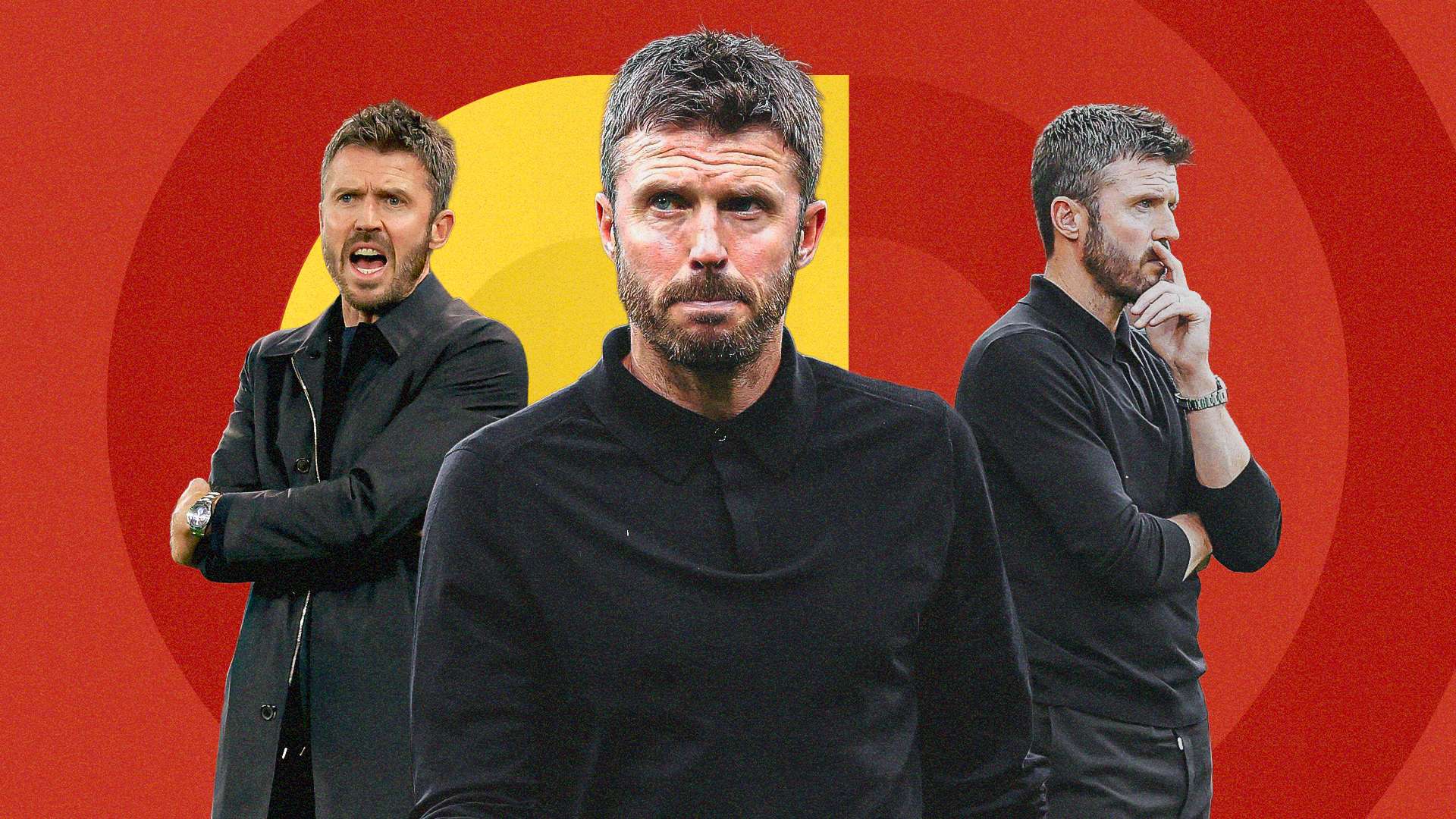
Despite the league position and mounting criticism, Carrick has resisted a public show of panic. He described the Leeds match as feeling like a fresh start and said the club understood its current reality. His message was not that everything was going well, but that the squad had to respond through consistency and hard work.
Carrick also said he believed United had the ingredients to win matches and could build a positive sequence of results. His calm approach contrasts with the more dramatic public response associated with Ruben Amorim last season, when a press conference following a meeting between the sides was followed by his departure within 24 hours.
Optimism, however, will have to be backed up on the pitch. United need to improve their starts, spread the scoring responsibility, settle the defence and restore confidence around the club. Mbeumo’s goals offer a foundation, but they cannot carry the team out of trouble alone.
The next stage of the season will test whether Carrick can turn encouraging performances into tangible progress. Until United begin winning again, every draw will invite further questions about the squad, the recruitment strategy and the manager’s options. For now, the clearest prediction is that improvement will depend less on promises and more on whether the Red Devils can finally deliver a complete, consistent performance.