
Diomande’s Rise Could Reshape Mourinho’s Clasico Plans as Vinicius Faces Pressure
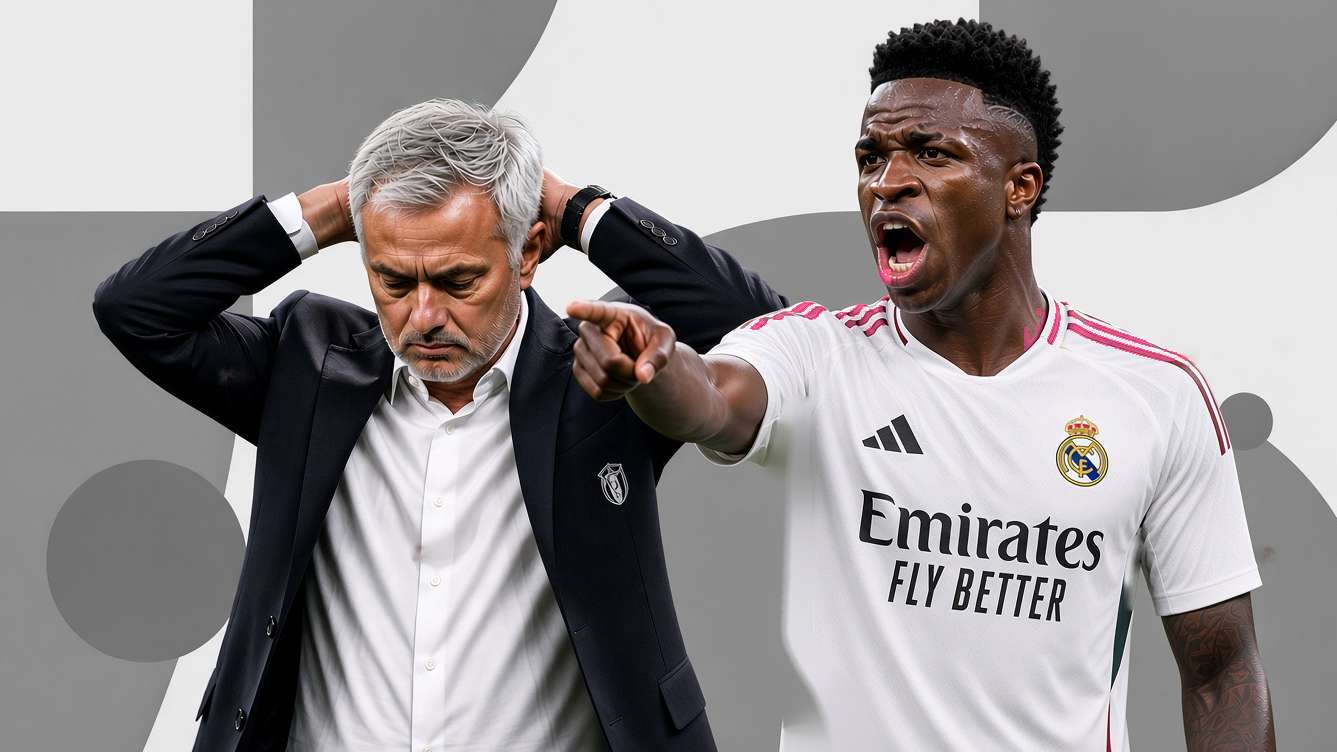
As the Clasico approaches, a new name is beginning to complicate José Mourinho’s planning: Diomande. The emerging player’s growing influence could alter the balance of the contest, particularly as Real Madrid’s Vinicius Junior struggles to rediscover the form that once made him one of the team’s most feared attackers. With expectations high and the spotlight intense, the Brazilian’s place in the starting line-up is no longer beyond question.
Vinicius is not simply enduring an ordinary dip in form. His recent performances have prompted a wider debate about confidence, consistency and his role in Madrid’s attack. Spanish newspapers AS and Marca have both highlighted the change in perception around the winger, suggesting that the player currently on display is not the dynamic, decisive figure supporters at the Santiago Bernabéu have grown accustomed to watching.
A difficult spell under the Bernabéu spotlight
The pressure has been visible inside the stadium. Vinicius was substituted in the 70th minute of Madrid’s Champions League match against Leipzig, and sections of the crowd responded with faint boos as he left the pitch. It was not the kind of reception that defines a player’s relationship with supporters, but it underlined the frustration building around a run of performances that has fallen short of expectations.
The numbers help explain the scrutiny. Vinicius has gone 53 consecutive days without scoring, while 19 attempts on goal during that period have failed to produce a finish. For a forward whose game is built around attacking defenders and creating danger in the penalty area, the drought is especially noticeable. Each missed opportunity adds to the pressure to deliver, particularly with major fixtures approaching.
Still, goal totals alone do not tell the full story. Vinicius has often contributed through movement, pressing and the ability to draw multiple defenders toward him. But when the goals dry up, those less visible contributions can be overshadowed—especially at a club where performances are judged against an exceptionally high standard.
The missing spark in his one-on-one game
Perhaps more concerning for Madrid is the apparent disappearance of Vinicius’s most distinctive weapon: his dribbling. The Brazilian has built much of his reputation on explosive acceleration, quick changes of direction and the confidence to take on defenders in isolated situations. Against Leipzig, he recorded no successful take-ons. In the previous match against Roma, he did not attempt one.
That change matters because Vinicius’s ability to beat an opponent can transform the shape of a match. A successful dribble may force a full-back to retreat, draw a second defender out of position or open space for a teammate making a run into the box. When he avoids those challenges—or cannot complete them—Madrid can become easier to contain, with opponents able to defend more compactly and focus on blocking passing lanes.
There may be several reasons behind the downturn. Confidence can be affected by a prolonged scoring drought, while fatigue, tactical instructions or the attention of opposing defences may also play a part. None of those factors necessarily signals a permanent decline. But together, they create a difficult cycle: fewer successful dribbles can mean fewer chances, and fewer chances can make a forward more cautious in the next match.
Diomande adds a fresh question to the selection debate
That is where Diomande’s emergence becomes relevant. His rise gives Mourinho another option to consider as he prepares for the Clasico, and it could encourage a reassessment of how best to attack the opposition. A player offering fresh energy, direct running or a different physical profile can change the demands placed on defenders—even if he is not a like-for-like replacement for Vinicius.
For Mourinho, the decision is not simply whether to start one player over another. It is about choosing the right balance for a high-pressure football match. Vinicius still possesses the pace and individual quality to decide a contest in a single moment, while a rising alternative may offer greater sharpness or a different tactical solution. The coach must weigh current form against experience, potential and the specific weaknesses he hopes to exploit.
That uncertainty can also benefit Madrid. If opponents are unsure which players will start, they must prepare for more than one attacking pattern. A lineup featuring Vinicius could threaten the space behind the defence, while a different selection might encourage Madrid to attack through quicker combinations or more direct movement. The best choice will depend on the opponent’s defensive setup and the condition of the players available.
A personal message reflects the pressure
After leaving the pitch against Leipzig, Vinicius appeared to acknowledge the difficult moment in a brief post on his social media platforms. “I am living the moment… and everything passes,” he wrote. The message was short, but it conveyed the emotional weight of a spell in which every performance is being examined closely.
For elite players, public criticism can become part of the job, yet the timing and scale of scrutiny can still be challenging. Vinicius has experienced the highs of becoming a central figure in Madrid’s attack, and that history shapes what supporters expect from him now. The same qualities that earned admiration—fearlessness, flair and ambition—also mean that a quiet performance is quickly noticed.
Clasico prediction: form may matter, but one moment can change everything
Any Clasico prediction must account for the uncertainty surrounding Madrid’s attack. Vinicius’s current numbers raise questions about whether he is at his sharpest, while Diomande’s development gives Mourinho a potentially valuable alternative. Yet writing off a player with Vinicius’s pace and experience would be risky. Big matches can provide the ideal setting for a struggling forward to reset his season, particularly if he finds space early or wins a decisive one-on-one battle.
The key may be how Madrid manage his role. Rather than asking Vinicius to carry the entire attacking burden, the team could create more support around him, offering quick passing options and runs that prevent defenders from surrounding him. If he can regain the confidence to attack his marker, his threat may return even before the goals do.
Ultimately, Diomande’s rise and Vinicius’s difficult spell have added a compelling subplot to the Clasico build-up. Mourinho has a selection decision to make, and the outcome could shape Madrid’s approach from the opening whistle. Vinicius remains capable of changing a match in an instant, but he must show signs of the directness and belief that once made him so dangerous. In a rivalry defined by fine margins, that response could prove more important than the recent statistics.