
La Liga’s 2026-2027 Season Opens with Refereeing Controversy
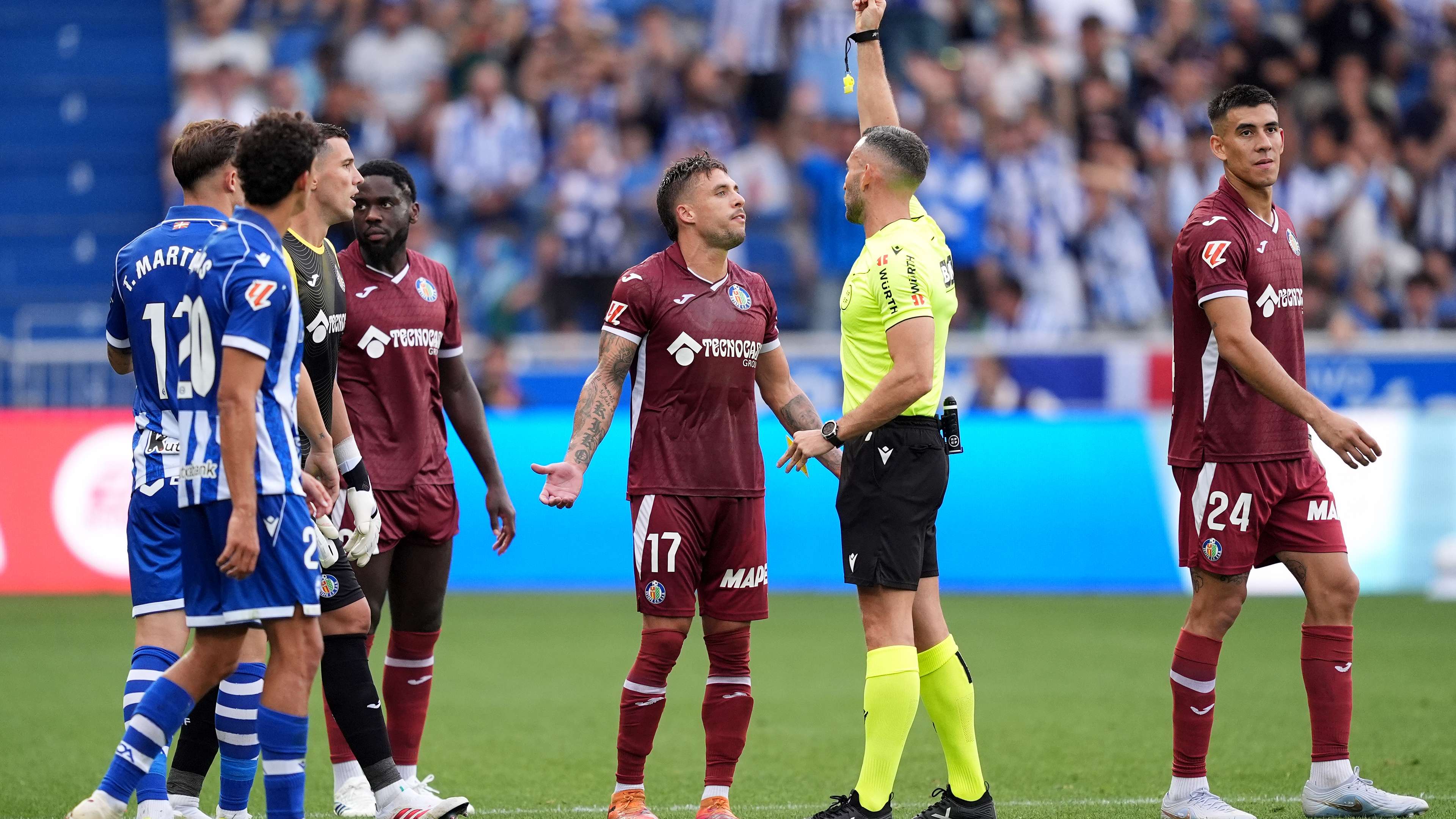
The first game of the 2026-2027 La Liga season between Deportivo Alaves and Getafe on the 21st of August set the stage for a season filled with drama and controversy. The match saw a red card shown to Getafe’s Kiko Femenia, reducing his team to 10 men early in the game.
According to reports from Cadena SER, Femenia’s dismissal came after a heavy challenge on Adebayo Ribeiro. The Getafe player arrived late after the Alaves defense had cleared the ball, catching his opponent with his leg outstretched and his boot raised, resulting in Ribeiro falling to the ground. Referee Manuel Jesus Ortiz Oliana deemed the challenge serious enough to warrant a straight red card.
Refereeing expert Iturralde Gonzalez supported the decision, citing the outstretched leg and raised boot as clear indicators of a serious foul that required strict punishment. However, the controversy arose not from the challenge itself, but from the quality of the footage used during the VAR review.
Questionable VAR Review
During the video review, Ortiz Oliana was shown distant and unclear images of the incident, making it difficult to verify what had actually happened. Iturralde argued that as the referee had a clear view of the incident in real-time, the VAR review should not have been necessary. He criticized the lack of quality in the footage provided, stating that it left room for doubt and uncertainty.
Commentators also weighed in on the issue, expressing astonishment at the poor quality of the images shown to the referee during crucial moments in the match. They called for sharper and clearer pictures to be used when officials review important decisions to avoid any controversies.
Impact on the Game
The red card for Femenia stood, leaving Getafe with a numerical disadvantage for the remainder of the first half. The decision not only affected the outcome of the game but also heightened the intensity of the contest and sparked early debates over the role of refereeing and VAR in the new La Liga season.
As the season progresses, fans and analysts will be closely watching how VAR is utilized in crucial moments and whether improvements are made to ensure fair and accurate decision-making on the football pitch. The incident between Deportivo Alaves and Getafe serves as a reminder of the importance of clear and effective officiating in the world of football.
VAR Technology in Football
The incident during the Deportivo Alaves and Getafe match highlights the ongoing debate surrounding the use of Video Assistant Referee (VAR) technology in football. While VAR was introduced to improve the accuracy of refereeing decisions and reduce errors on the field, its implementation has been met with mixed reviews from fans, players, and officials.
One of the main criticisms of VAR is the inconsistency in its application across different leagues and competitions. Some argue that VAR disrupts the flow of the game and leads to prolonged stoppages, while others believe it is necessary to ensure fairness and eliminate blatant errors. The quality of the footage used in VAR reviews, as seen in the Alaves-Getafe match, also plays a crucial role in the effectiveness of the technology.
Football governing bodies continue to refine the use of VAR and address concerns raised by stakeholders. Education and training for referees on how to utilize VAR correctly, as well as improving the clarity and resolution of video footage, are key areas of focus for enhancing the system’s reliability and acceptance among fans and teams.
Refereeing Challenges in La Liga
La Liga has a reputation for its passionate fans, intense rivalries, and competitive matches. However, the league has also been plagued by refereeing controversies over the years. From questionable red card decisions to missed offside calls, referees in La Liga often find themselves under scrutiny for their performance on the field.
The pressure on referees to make split-second decisions in high-stakes matches can lead to errors that impact the outcome of games. The introduction of VAR was intended to assist officials in making more accurate judgments, but as seen in the Alaves-Getafe game, it is not without its challenges.
Referees in La Liga face immense pressure from clubs, fans, and media outlets to get decisions right, further adding to the complexity of their role. As the league progresses into the 2026-2027 season, all eyes will be on the officiating standards and the impact of VAR on match outcomes.
Fans’ Role in Football
Football is not just a game; it is a passion that unites millions of fans worldwide. The reactions of fans to controversial decisions, like the red card in the Alaves-Getafe match, can shape the narrative around a season and influence the perception of the sport.
Fans play a crucial role in holding officials and governing bodies accountable for the integrity of the game. Social media platforms have amplified fan voices, allowing for instant reactions and discussions on refereeing decisions, player performances, and team tactics.
As the La Liga season unfolds, fans will continue to voice their opinions on refereeing controversies, VAR incidents, and the overall direction of the sport. Their engagement and passion contribute to the vibrant ecosystem of football, making it more than just a sport but a cultural phenomenon.
Conclusion
The opening game of the 2026-2027 La Liga season not only set the stage for an action-packed campaign but also brought to light the challenges and controversies that surround football officiating. From VAR technology to the role of fans in shaping the sport’s narrative, the Alaves-Getafe match sparked discussions that will resonate throughout the season.
As football continues to evolve, so too will the debates over refereeing decisions, technology in the game, and the influence of fans. The blend of tradition and innovation in football creates a dynamic landscape where every match is a spectacle, every decision is scrutinized, and every fan’s voice is heard.