
Lionel Messi’s Ballon d’Or return highlights a remarkable late-career chapter
Lionel Messi has added another striking milestone to his extraordinary football career, finishing fifth in the 2026 Ballon d’Or voting at the age of 39. Although the Argentina great did not claim a ninth award, his place among the leading contenders was a notable achievement—particularly after he moved away from Europe’s top leagues and brought his international career to a close.
The result revived discussion about Messi’s enduring influence on the game. His World Cup performances for Argentina helped keep him in the conversation for football’s most prestigious individual honour, while his latest ranking underscored how a defining tournament can shape a player’s standing long after the final whistle.
A ceremony missed, but a warm reception remained
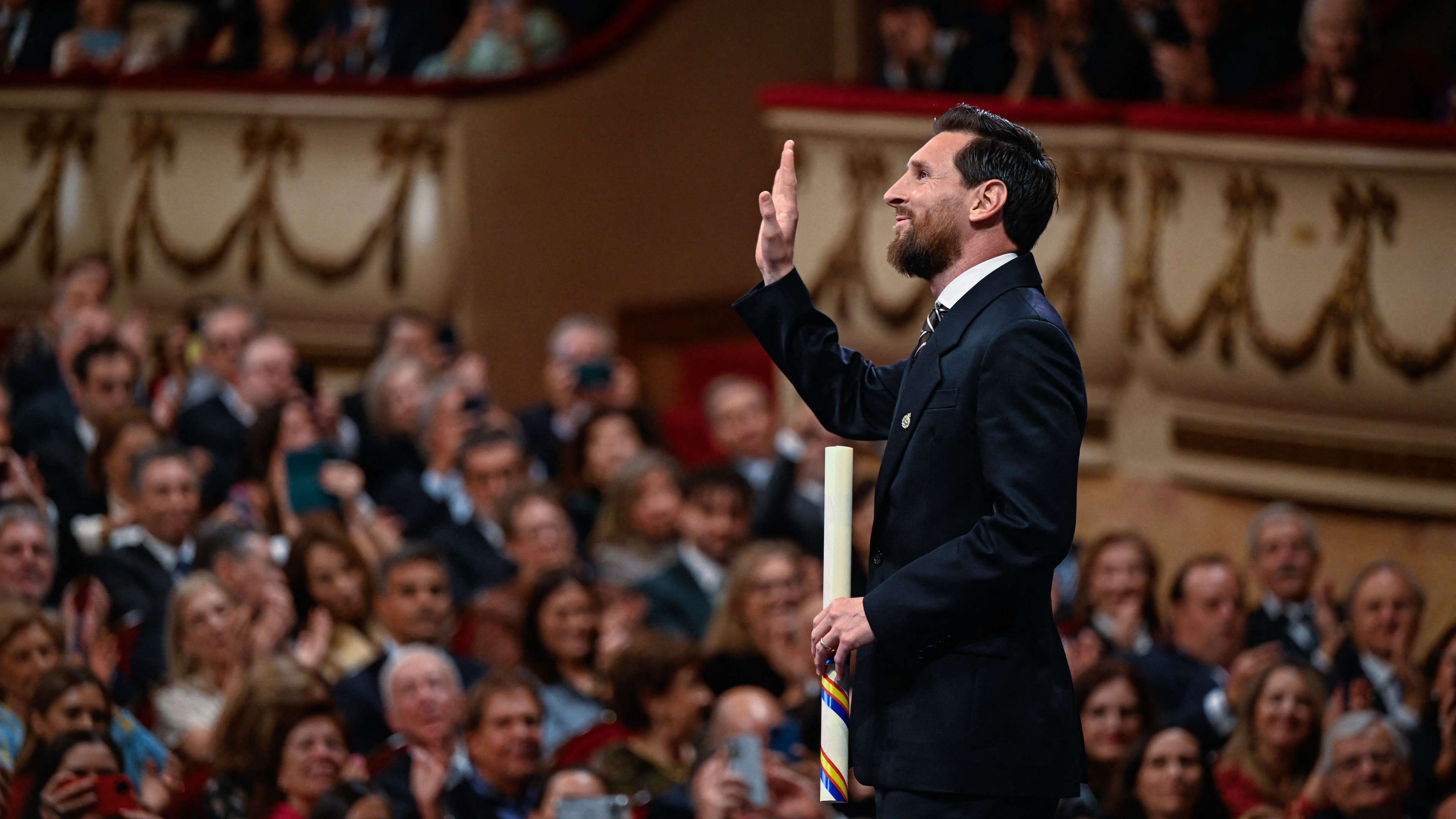
Messi did not attend Monday evening’s Ballon d’Or ceremony at London’s Palladium, according to French newspaper L’Équipe. His schedule had taken him from Spain to the United States in the days before the event. On Friday, he travelled to Oviedo to receive the Princess of Asturias Award, then returned to join Inter Miami for a match against New York, which his side lost 2-0.
Despite his absence, Messi was not forgotten by the audience. When a video celebrating previous Ballon d’Or winners included his image, the crowd responded with warm applause. The moment reflected the affection he continues to command among football fans and the respect attached to a career that has reshaped expectations of individual excellence.
His fifth-place finish also carried historical weight. It was his 17th Ballon d’Or nomination, and he has now finished in the top three 14 times—a record for podium appearances. Cristiano Ronaldo remains ahead in total nominations, with 18, but the two rivals have spent much of their careers setting the standard for the award.
Argentina’s World Cup run strengthened Messi’s case
The main foundation of Messi’s 2026 candidacy was his World Cup campaign with Argentina. He scored eight decisive goals as the team advanced to the final, producing a series of performances that reinforced his importance to the national side. Argentina’s journey ended in disappointment, however, with a 1-0 defeat to Spain after extra time.
The final was a painful conclusion to Messi’s international story. He retired from international football this summer after a career in which he scored 126 goals across 208 appearances for Argentina. Those numbers place him among the most productive players ever to represent a national team, while his World Cup contribution added another defining chapter to his legacy.
For voters, the tournament offered a powerful reminder of Messi’s ability to influence major matches. Ballon d’Or discussions often weigh club form heavily, but international competitions can change the conversation, especially when a player leads his country deep into a global tournament. In Messi’s case, the World Cup helped bridge the gap between his achievements in North America and the attention normally given to Europe’s leading competitions.
Strong Inter Miami numbers, different competitive context
Messi’s club statistics during the voting period were impressive: 40 goals and 27 assists in 41 appearances for Inter Miami. Those figures demonstrate that he remains a highly productive attacking player, capable of creating chances as well as finishing them. Yet statistics do not tell the entire story of Ballon d’Or voting.
Inter Miami compete in Major League Soccer, a growing competition with an expanding international profile, but it does not receive the same weekly scrutiny or competitive weighting as Europe’s leading leagues and continental tournaments. That difference can influence how voters compare players whose performances come in very different football environments.
Messi’s fifth-place finish therefore reflects both sides of the debate: the strength of his individual output and the challenge of maintaining Ballon d’Or momentum outside European club football. His ranking suggests that exceptional performances can still attract global recognition, but it also shows how difficult it may be for players outside Europe’s elite competitions to win the award without a major international achievement.
Could Messi return to the Ballon d’Or podium?
Messi remains under contract with Inter Miami until December 2028, giving him time to continue his club career. A future Ballon d’Or challenge is not impossible, but it would likely require an exceptional season that captures attention well beyond MLS. A dominant run in a major international tournament or a landmark campaign with Miami could strengthen his prospects.
Any prediction about another podium finish must also account for the changing shape of world football. Younger stars are taking on larger roles, and voters increasingly assess a player’s influence across the full season. Messi’s age and league context may make the path harder, but his latest ranking proves that his name still carries substantial weight.
The Messi-Ronaldo era gives way to a new generation
For more than a decade, Messi and Ronaldo defined the Ballon d’Or race. Between 2008 and 2021, they won 12 of the 13 awards, establishing a rivalry that became one of football’s most compelling long-running stories. Their sustained dominance raised the standard for individual honours and shaped how fans compared players across different teams and competitions.
That era is now drawing to a close as a new generation moves into the spotlight. England striker Harry Kane won the 2026 Ballon d’Or, while Kylian Mbappé missed out despite the hopes of many of his supporters. The result reflects the unpredictable nature of award voting: reputation matters, but a player’s season, major-match impact and team success can all shift the final outcome.
Messi’s fifth-place finish may not add another trophy to his collection, but it does reinforce the scale of his achievement. At 39, after retiring from international football and competing outside Europe, he remained among the world’s leading names. For fans following football’s next chapter, the 2026 vote offers both a farewell to an era and a reminder that Messi’s influence on the sport is far from finished.