
Fede Valverde’s Right-Back Masterclass Gives Real Madrid a New Tactical Option
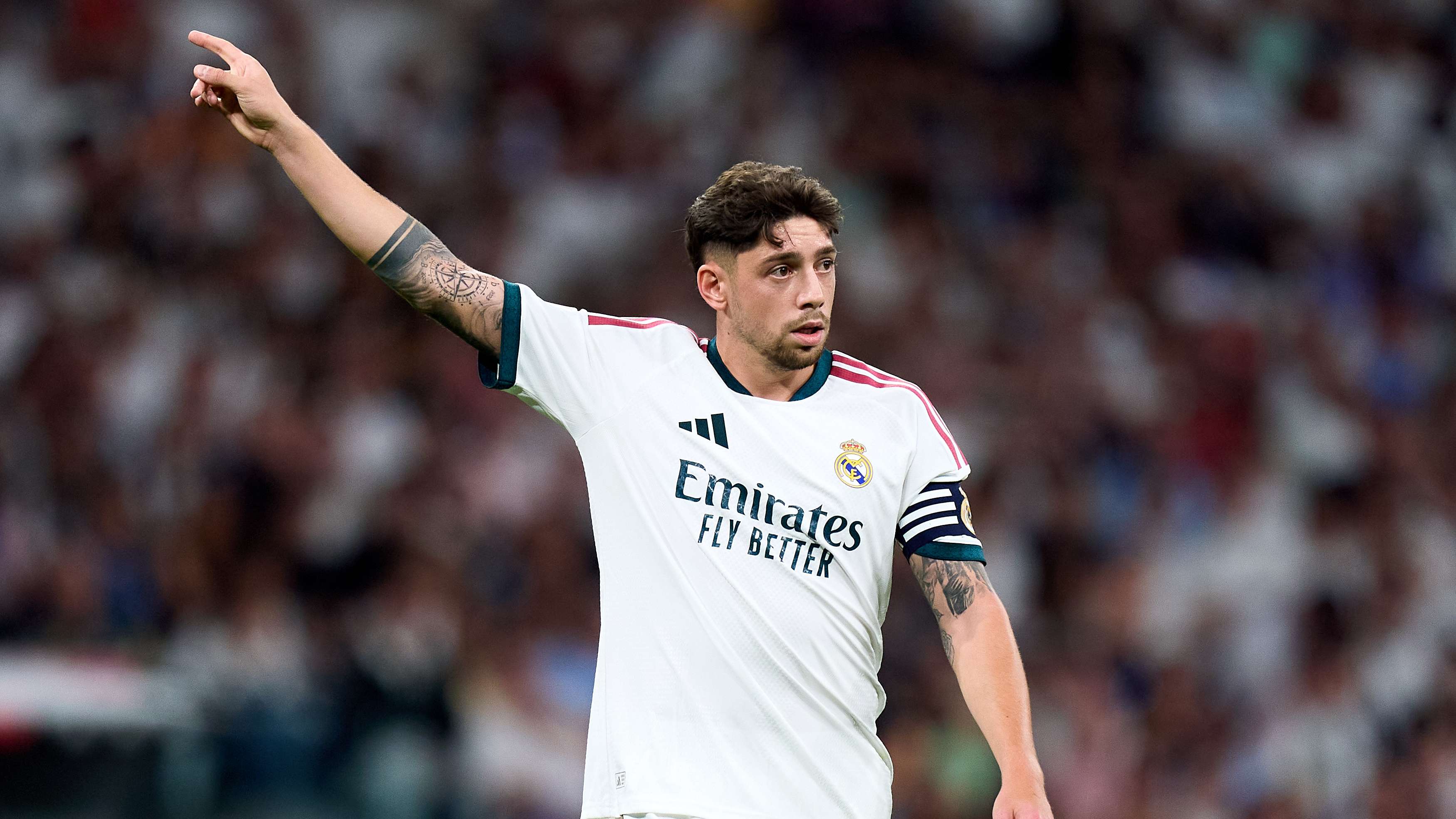
Fede Valverde has never hidden his preference for playing in midfield. Yet Real Madrid’s demanding match against Villarreal offered a fresh reminder that the Uruguayan can influence a game from almost anywhere on the pitch. Shifted to right-back after the break, he produced an energetic, creative performance that helped transform Madrid’s rhythm and raised a compelling question for José Mourinho: could Valverde’s least-preferred position become one of the team’s most useful solutions?
The display was especially striking because Valverde had only recently returned from an ankle injury. He had been expected to miss the Villarreal fixture after suffering a sprain in the aftermath of the derby, but completed his rehabilitation at Valdebebas instead of joining Uruguay for the international break. His recovery came sooner than anticipated—and his impact was far greater than simply making up the numbers.
A tactical switch changes the game
Valverde began the match in a double pivot alongside Aurélien Tchouaméni. The pairing struggled to find its best balance, prompting Mourinho to adjust the structure. Valverde and Arda Güler exchanged positions as the first half progressed, and the change was repeated after the interval as Madrid searched for greater control and attacking purpose.
The decisive reshuffle came in the 52nd minute, when Vinícius Júnior entered the game in place of Trent Alexander-Arnold. Valverde moved to right-back, giving Madrid a player with the stamina to cover the flank, the passing range to build attacks and the speed to recover when possession was lost. Rather than simply filling a defensive vacancy, he became an active part of the team’s forward movement.
His contribution to the goal sequence captured the value of the switch. From the right, Valverde delivered a precise pass that opened the play for Diomande, helping create a decisive moment in a match that had previously lacked fluency. The assist was not an isolated flash of quality: his positioning and willingness to advance gave Madrid another route through Villarreal’s defensive shape.
Numbers underline Valverde’s all-round impact
Valverde finished as one of Madrid’s most influential players, combining attacking production with disciplined defending. He created three chances, matching Diomande for the team lead, and completed 12 passes in the final third. Only Güler, with 18, recorded more in that area, underlining how effectively Valverde connected the defensive line with Madrid’s attackers.
His defensive work was just as important. Valverde made four recoveries, two interceptions and one clearance, and won his only attempted tackle. He also prevailed in four of five duels and was not dribbled past. Those figures illustrate why he can be so valuable at full-back: he offers the defensive intensity of a midfielder while bringing unusual power and forward drive to the position.
For football fans considering the wider tactical picture, this adaptability gives Madrid more than a temporary injury-cover option. Valverde can move between midfield, the right flank and the defensive line without requiring a substitution. That flexibility can help a coach respond to an opponent’s formation during a match, protect a lead or add momentum when a team needs to attack. Any prediction about his future role should account for that versatility, even if the right-back position is not his preferred home.
A regular starter with a history on the right
Valverde’s move to right-back may have looked like an in-game solution, but it is part of a longer pattern. He has started all nine of Real Madrid’s matches this season and has played 744 minutes, with only Thibaut Courtois and Kylian Mbappé featuring for longer. Until the Villarreal match, his most familiar assignment had been in the double pivot, including during pre-season.
Across his Madrid career, Valverde has appeared on the right side in 116 of his 381 matches—around 30.5 per cent of his total appearances. That figure includes 35 games at right-back. The role has been used by several coaches, including Zinedine Zidane, Carlo Ancelotti, Xabi Alonso and Álvaro Arbeloa, reflecting a recurring belief that his athleticism and work rate can solve problems on the flank.
Ancelotti once joked that Valverde was the world’s third-best right-back, behind Dani Carvajal and Lucas Vázquez. The remark was playful, but it pointed to a serious asset: Valverde has repeatedly delivered when Madrid have needed him to cover the position. He also played a key role in the club’s 14th Champions League triumph, creating the goal for Vinícius Júnior in the final after operating on the right.
Why the position still makes him uneasy
Valverde has been clear that right-back is not where he feels most comfortable. Speaking in Almaty in September 2025, he said he had not grown up learning the position and did not consider himself naturally suited to every defensive responsibility it demands. At the same time, he stressed his readiness to serve the coach wherever required.
That distinction matters. Valverde’s success at right-back does not necessarily mean he wants to abandon midfield, where his pressing, ball-carrying and ability to arrive in attacking areas are central strengths. Instead, his performance against Villarreal showed that Madrid can use him there when the match calls for it—and that he can make the adjustment without losing his influence.
A comeback that turned into a tactical opportunity
The timing made the performance all the more remarkable. After the derby, Valverde was left with an ankle sprain following a challenge by Kang In-lee. The incident attracted controversy, and the injury ruled him out of Uruguay’s international commitments. Madrid’s medical staff initially considered the Roma match a possible target for his return, while the Villarreal game appeared less certain.
Valverde instead recovered in time to deliver a commanding display. His return was not merely a welcome boost to the squad; it gave Mourinho evidence that a change in position could improve the team’s balance. Whether the coach uses him at right-back regularly or reserves the move for specific opponents remains to be seen. But after Villarreal, the option looks far more than an emergency measure.
Valverde may not have been “born” to play full-back, as he has put it, yet his performance showed how a player’s best contribution is not always tied to a single position. For Real Madrid, his right-sided role offers a blend of pace, defensive commitment and creative passing. For Valverde, it is another way to shape a match—even when the solution comes from a position he never set out to make his own.