
Javier Tebas Faces Possible Disciplinary Action Amid Escalating Real Madrid Dispute
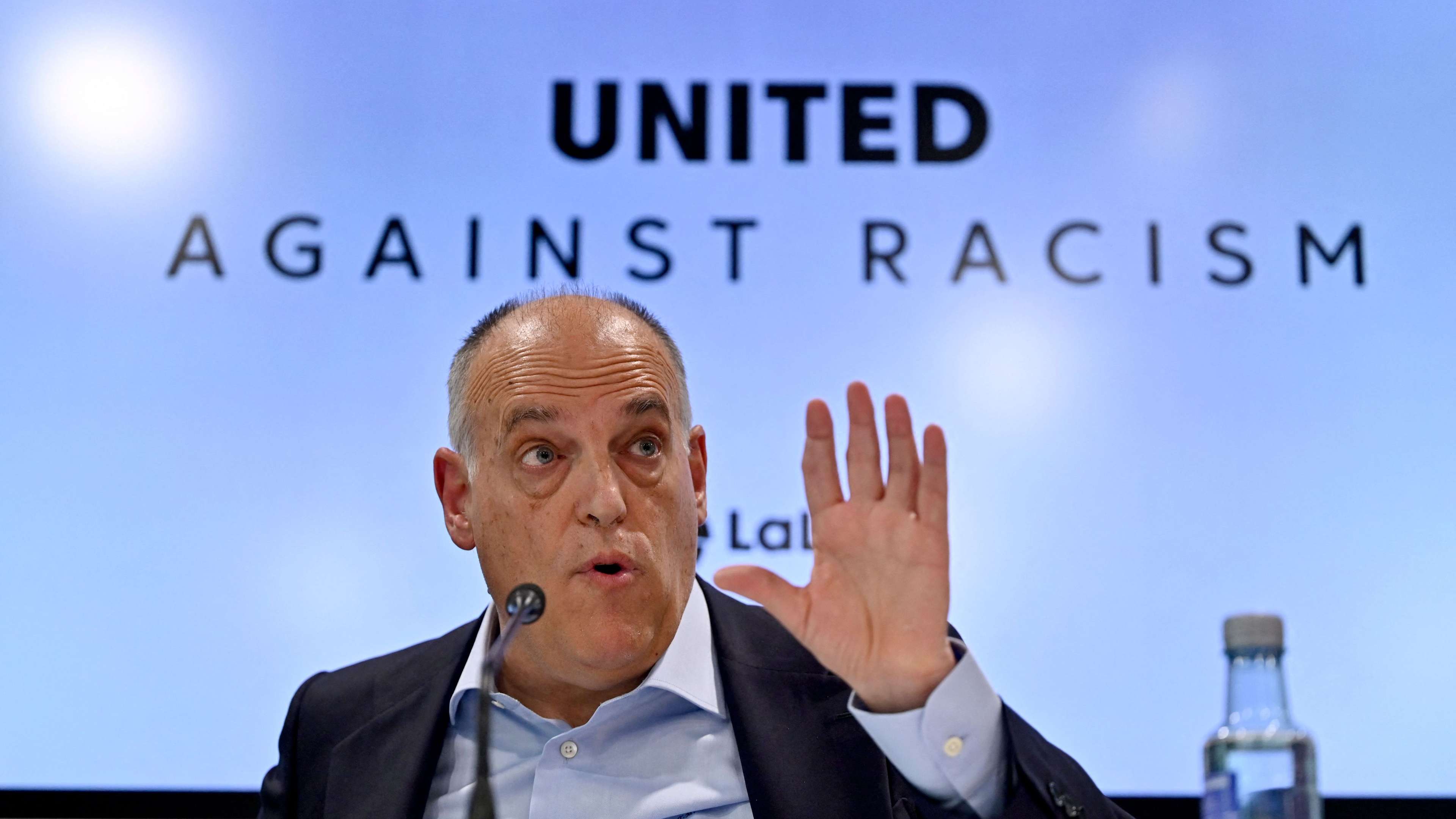
The long-running dispute between La Liga president Javier Tebas and Real Madrid has entered a potentially decisive phase, with Spain’s Higher Sports Council reportedly examining whether to pursue disciplinary action against the league chief. The controversy centers on Tebas’s comparison of statements made by the club to Nazi declarations—a remark that prompted a fierce response from Real Madrid and renewed calls for his resignation.
Spanish broadcaster La Sexta reported that the Higher Sports Council, known as the CSD, is considering whether to act on its own initiative. The newspaper Sport has also reported on the matter. For now, however, no final decision has been announced, and Tebas remains in his position as the head of Spain’s top professional football league.
What sparked the controversy?
The latest confrontation followed sharp criticism from Real Madrid, which issued statements attacking Tebas and demanding that he step down. The club’s objections focused on the league president’s language and his characterization of its public communications.
Tebas responded directly through his social media accounts, defending his position rather than withdrawing the comparison. He argued that the way he framed his comments was based on “mechanisms taught in media faculties.” His explanation has not ended the dispute, and the question of whether his words warrant formal disciplinary proceedings is now reportedly under legal review.
That distinction matters: a review by the CSD does not, by itself, mean that Tebas has been charged or that his removal is imminent. According to reports, the matter is with the council’s legal department. For the case to reach the Administrative Court for Sport, a formal complaint would need to be submitted. The court would then assess the issue and decide whether any sanction is justified.
Bernabéu fans turn the dispute into a stadium protest
The tension has also spilled into the stands. During Real Madrid’s match against Sevilla on Sunday, supporters at the Santiago Bernabéu directed chants at La Liga and Barcelona. Among the slogans reported were “Leave, Tebas,” “Keep pushing, Laporta,” and chants accusing football authorities of corruption and invoking the Negreira case.
A banner displayed in the section reserved for the club’s most vocal supporters read: “This is not football, it is Tebas and Negreira.” The wording reflected a broader frustration among some Madrid fans over governance, refereeing controversies and the relationship between football institutions and leading clubs.
The protest was especially visible because the supporters’ section is close to the box occupied by Real Madrid president Florentino Pérez. While chants and banners do not determine the outcome of a legal review, they underline how the dispute has become part of the club’s public campaign against the league leadership.
Why the Negreira case remains part of the debate
References to Negreira relate to the controversy surrounding payments made by Barcelona to companies linked to José María Enríquez Negreira, a former senior official in Spain’s refereeing structure. The case has generated intense scrutiny and competing claims, with Barcelona denying that the payments were made to influence match officials. The matter has become a recurring point of conflict in Spanish football, particularly in the rivalry between Barcelona and Real Madrid.
That background helps explain why the Bernabéu protest connected Tebas, Barcelona and Negreira in a single message. It also shows how disputes over league administration can quickly become intertwined with wider questions about transparency, sporting integrity and trust in football’s governing bodies.
The Rubiales precedent—and its limits
One precedent being discussed is the case of Luis Rubiales, the former president of the Royal Spanish Football Federation. Rubiales lost his position after the 2023 Women’s World Cup final, following the non-consensual kiss of player Jenni Hermoso during the medal ceremony and gestures he made from the stadium’s VIP area. The Administrative Court for Sport later imposed a three-year suspension.
The Rubiales case demonstrates that Spain’s sports authorities can impose serious sanctions on senior football officials. However, it does not mean Tebas will automatically face the same outcome. The circumstances, evidence and legal grounds in each case are different, and any decision would depend on the specific complaint and the court’s assessment.
Reports have suggested that a three-year suspension is among the possible consequences if a case against Tebas reaches the court and results in a severe penalty. At this stage, that remains a potential scenario, not a confirmed sanction. The next key step is whether a formal complaint is filed and whether the CSD decides that the matter merits legal action.
What happens next for La Liga?
The dispute could have consequences beyond Tebas’s personal future. Any uncertainty around the league’s leadership would arrive at a sensitive time for Spanish football, as clubs continue to navigate commercial pressures, international competition and debates over the distribution of revenue and authority. A prolonged confrontation could further strain relations between La Liga and one of its most influential clubs.
For supporters following the story, the central question is no longer only whether Tebas and Real Madrid can repair their relationship. It is also whether the league president’s comments meet the threshold for disciplinary action under Spanish sports law. Until the legal process advances, predictions about his dismissal or suspension should be treated cautiously.
Football prediction: The immediate outlook is for continued public tension rather than a swift resolution. Real Madrid’s criticism and the Bernabéu protests suggest the dispute remains politically charged, while the reported legal review means the CSD’s next move could shape the story. Tebas’s position is not yet decided, but the possibility of formal proceedings has placed his leadership under renewed scrutiny.