
Erik ten Hag Says Harry Kane Was His Priority Transfer Target at Manchester United
Erik ten Hag has revealed that signing Harry Kane was his preferred solution to Manchester United’s search for a striker in 2023. The former United manager says he pushed the club to pursue the England captain, believing Kane could bring goals, leadership and greater stability to a team preparing for a new season.
In an interview with The Athletic, Ten Hag also questioned how United’s senior decision-makers handled the transfer opportunity. Kane ultimately left Tottenham Hotspur for Bayern Munich, while United recruited Rasmus Højlund from Atalanta. Looking back, the Dutchman suggested that missing out on Kane was one factor that limited his side’s progress.
“I Want Only One Player”: Ten Hag’s Kane Plan
As he entered his second campaign at Old Trafford, Ten Hag wanted a striker who could immediately lead the attack. He described Kane as his clear first choice and said he had made that preference known to the club’s leadership.
“I told them: I want only one player, and you know who,” Ten Hag recalled. He said he fought for the transfer and had heard that Kane was positive about the possibility of joining United. However, Ten Hag added that he never spoke directly with the striker and did not know exactly how the club’s internal decision-making unfolded.
At the time, United’s leadership included then-football director John Murtough, chief executive Richard Arnold and the Glazer family, who owned the club. Ten Hag’s comments point to a broader issue that has often surrounded United’s transfer strategy: the distance between a manager’s preferred targets and the decisions made by executives responsible for recruitment, negotiations and spending.
Why Kane Appealed to Ten Hag
Kane’s value to Ten Hag was about more than his finishing. The striker had spent years carrying responsibility at Tottenham, combining consistent scoring with the ability to link play, create chances and guide teammates. For a United side seeking a reliable focal point, those qualities offered a potential foundation for a more settled attack.
Ten Hag compared the leadership Kane could have brought to that of players such as United captain Bruno Fernandes and Arsenal midfielder Declan Rice. His argument was that a team needs influential figures across the pitch—players who can take responsibility during difficult stretches, set standards and help younger teammates develop.
That kind of presence can be especially important for a club rebuilding under pressure. A proven striker can give a team a dependable outlet when its overall play is inconsistent, while also helping convert close games into wins. Kane’s experience in the Premier League meant he would not have needed a lengthy adjustment period to English football.
Kane’s Bayern Munich Transfer and Its Cost
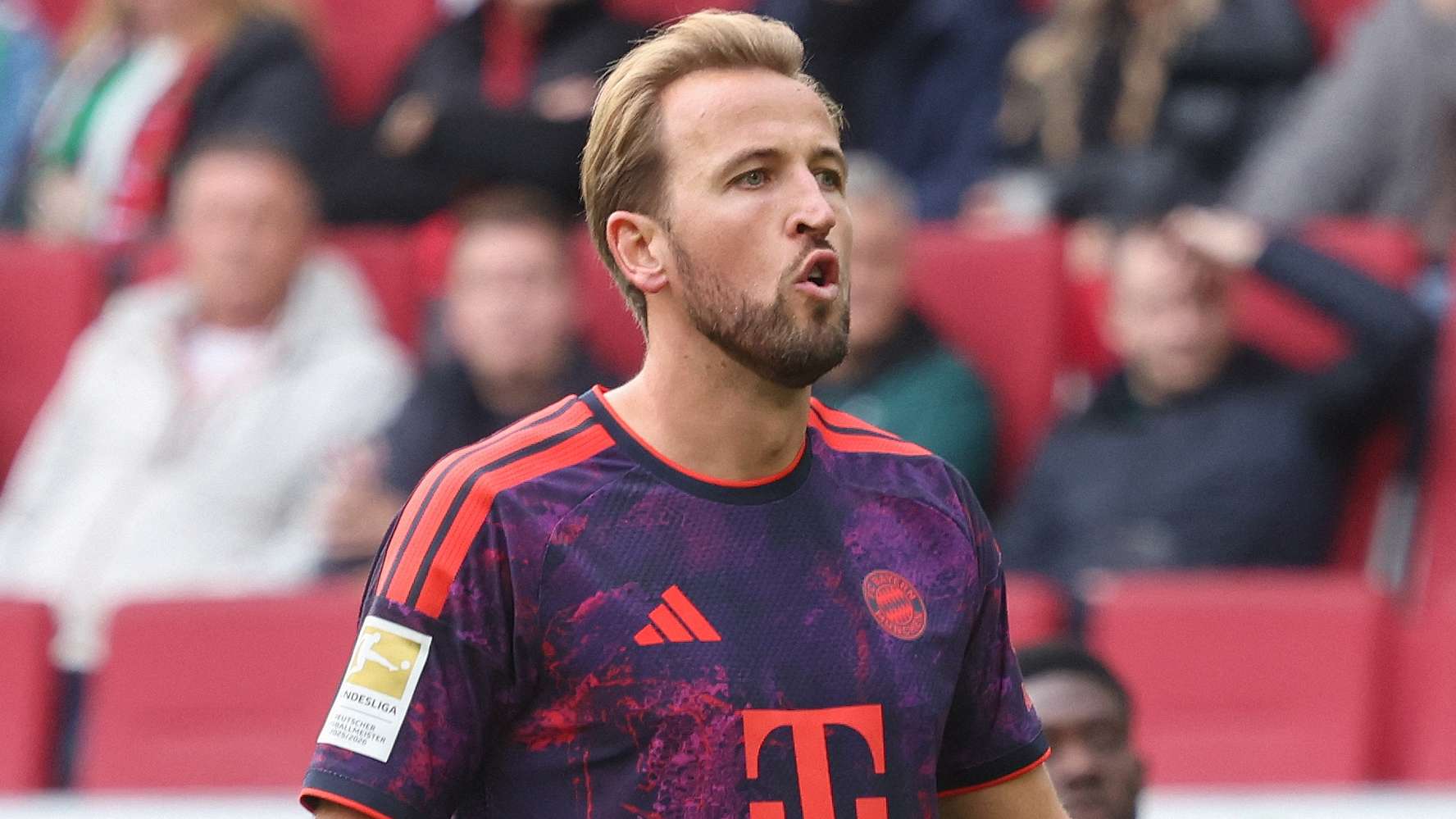
Kane moved to Bayern Munich in August 2023 after Tottenham agreed to a reported fee of €95 million. The transfer ended his long spell in north London and gave Bayern the established centre-forward they had been seeking. Kane had been open to a move that summer, according to Ten Hag’s account, although the United manager says he was not personally involved in direct discussions with the player.
The fee was substantial, but Bayern secured a striker with a proven record at the highest level and immediate experience in the Bundesliga. Kane has scored prolifically since arriving in Germany, strengthening the view that the investment delivered the elite goal threat Bayern expected. Reports have also suggested that the club is interested in extending his contract, which is currently due to expire in 2027.
For United, the transfer remains a useful point of comparison when assessing the club’s recruitment during that period. A large fee alone does not guarantee success, but the profile of the player—and how well that profile fits the team’s needs—can shape the impact of a signing for years.
United Chose Rasmus Højlund Instead
United signed Højlund from Atalanta for just under €80 million in 2023. The Danish forward was 20 at the time, offering potential and room to grow, but he was a very different kind of investment from Kane. Højlund was still developing, whereas Kane would have arrived with a long record of Premier League goals and extensive experience as a senior international.
Højlund struggled to provide consistent output during his time at United and later returned to Serie A with Napoli. His career path does not, by itself, prove that United made the wrong decision: young strikers often need time, support and a stable attacking structure. But the contrast illustrates the different risks involved in a transfer strategy built around future potential compared with one aimed at immediate impact.
United also spent heavily on Mason Mount, who joined from Chelsea for a reported €68 million, and goalkeeper André Onana, signed from Inter Milan for around €50 million. Both arrivals were expected to strengthen key areas, but neither consistently met the expectations attached to their transfer fees during Ten Hag’s tenure. Taken together, those deals intensified scrutiny of United’s recruitment process.
Could Kane Have Changed Ten Hag’s United Prediction?
Ten Hag’s comments invite a familiar football question: would Kane have changed the course of his time at Manchester United? A prolific striker might have improved the team’s finishing and offered a dependable target, but no single signing can resolve every problem at a club. United’s inconsistent league form reflected broader challenges, including squad balance, injuries, recruitment and the difficulty of building a settled playing style.
Ten Hag did win the FA Cup in 2023/24, yet United’s Premier League performances remained uneven. A poor start to the following campaign contributed to his departure in autumn 2024. He has since taken on a role as head of sport at Twente Enschede, while his remarks about Kane have renewed discussion about the transfer choices made at Old Trafford.
The episode also highlights the importance of alignment between a manager and a club’s decision-makers. A transfer prediction is never certain: even a celebrated striker must adapt to a new team, league and set of expectations. Still, Ten Hag’s account suggests he viewed Kane as more than a marquee signing. He saw him as the central piece of a rebuild—an experienced leader capable of giving United’s attack a clearer identity.