
Borussia Dortmund Let Two-Goal Lead Slip in Dramatic Draw With Werder Bremen
Borussia Dortmund looked to have secured a hard-fought Bundesliga victory at Signal Iduna Park after scoring twice in the closing stages, but a remarkable late collapse allowed Werder Bremen to escape with a 2-2 draw. Goals from David Svensson and Nico Schlotterbeck put the hosts in control, only for Ludovit Reis and former Dortmund forward Niclas Füllkrug to strike back in stoppage time.
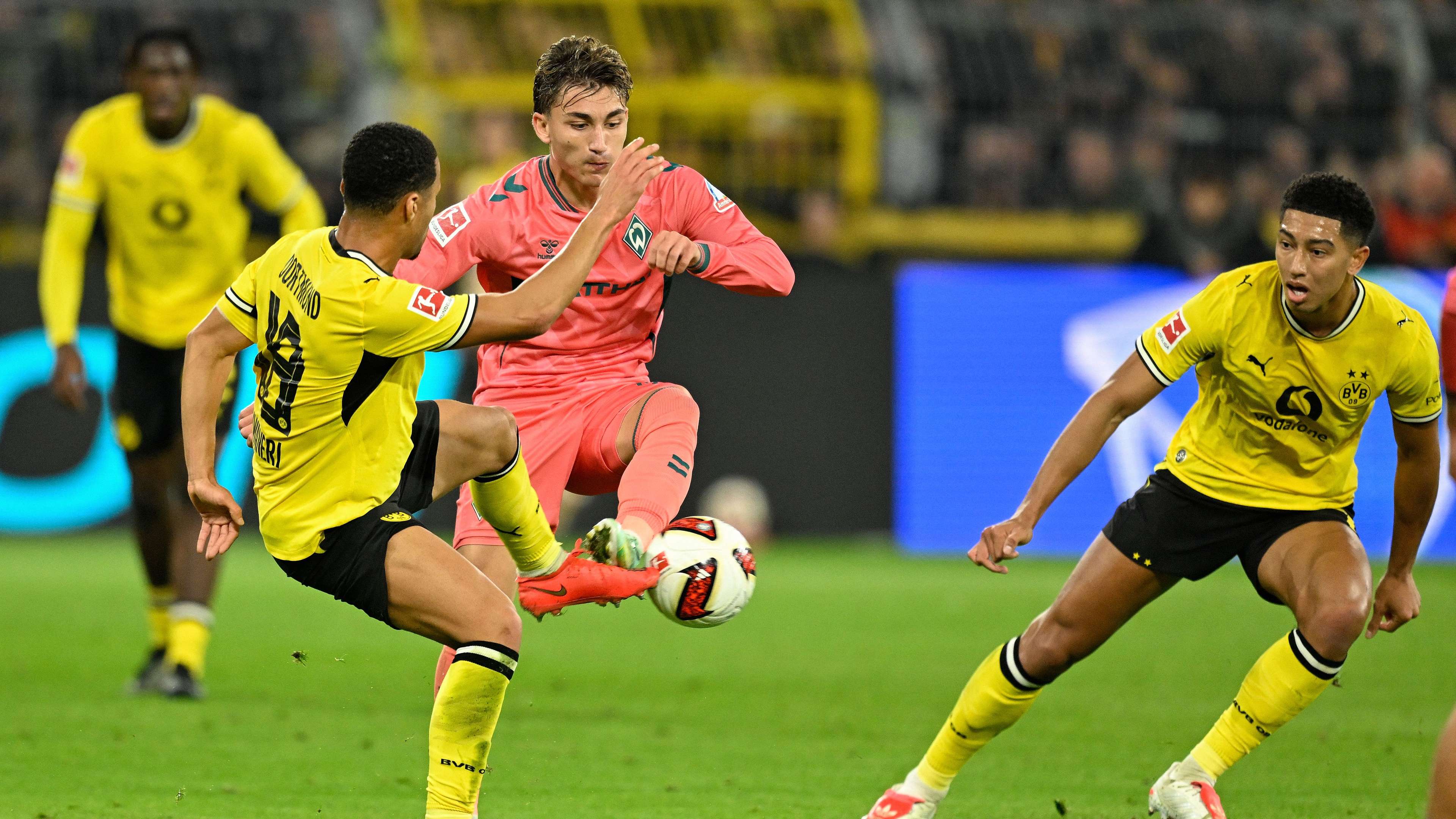
The result was a painful one for Dortmund, who had dominated possession and created the greater share of the attacking opportunities. BVB held 72% of the ball and registered 22 shots, yet their control counted for little once Bremen found a way through in the final minutes. For supporters searching for a post-match football prediction or assessment of Dortmund’s prospects, the match offered a familiar warning: possession and pressure do not guarantee points if a team cannot manage the closing stages.
Dortmund Control a Cagey First Half
The opening period was more restrained than the dramatic finish suggested. Dortmund enjoyed long spells on the ball and tried to move Bremen’s defensive block with patient passing, but clear chances were limited. The visitors stayed compact, crowded the central areas and looked to disrupt BVB’s rhythm rather than engage in an open contest.
That approach made the first half a test of patience for the home side. Dortmund had the territorial advantage, but Bremen’s organisation prevented them from turning possession into a decisive breakthrough. The score remained 0-0 at the interval, leaving the hosts with work to do and the visitors still within reach of an upset.
After the restart, Dortmund increased the tempo and pushed more players forward. The home side’s shot count eventually climbed to 22, reflecting their willingness to attack, although the number also underlined a familiar challenge: turning volume into efficiency. Bremen, meanwhile, continued to wait for opportunities to counter and remained competitive despite spending much of the match without the ball.
Svensson and Schlotterbeck Seem to Seal the Win
The deadlock was finally broken in the 80th minute when David Svensson found the net. His goal appeared to reward Dortmund’s sustained pressure and gave the home crowd reason to believe the breakthrough would be enough to settle the contest.
Dortmund struck again soon afterwards. Nico Schlotterbeck added a second goal, seemingly putting the result beyond Bremen’s reach and turning the final minutes into a celebration of a job well done. At 2-0, the hosts had both the scoreline and the momentum. The remaining task was straightforward in principle: stay organised, protect the space behind the defence and see out the game.
Instead, the closing stages became a lesson in how quickly a football match can change. Dortmund’s defensive structure lost its shape as Bremen committed more players forward. The visitors, who had struggled to make a major impact for much of the evening, suddenly sensed that the hosts were vulnerable.
Werder Bremen Produce a Stunning Late Comeback
Ludovit Reis gave Bremen a route back into the contest, reducing the deficit and immediately changing the atmosphere inside Signal Iduna Park. What had looked like a comfortable Dortmund finish became an anxious scramble, with the hosts forced to defend under pressure rather than simply manage possession.
Bremen then completed the comeback in stoppage time through Niclas Füllkrug, the former Dortmund player. His equaliser turned a likely home victory into a 2-2 draw and made him the central figure in a dramatic ending. For Werder, the point was a reward for persistence and a reminder that a match is not over until the final whistle. For Dortmund, it was a costly failure to protect a two-goal advantage.
The late collapse was not simply a matter of conceding two goals. It exposed problems in game management, communication and defensive concentration. Once Bremen scored, Dortmund needed to slow the match, keep possession in safe areas and avoid allowing the visitors to build momentum. Instead, the closing minutes became chaotic, giving Bremen the belief and space needed to complete their comeback.
What the Draw Means for Dortmund
Dortmund can take some positives from the performance. Their 72% possession and 22 attempts show that they were able to control the ball and apply sustained pressure. Svensson and Schlotterbeck also delivered the goals that appeared to put the team in a winning position. Yet those strengths were overshadowed by the inability to close out the game.
For a side with ambitions of competing near the top of the Bundesliga, protecting a late lead is as important as creating chances. Dortmund will need to review how their defensive line responded after Bremen’s first goal, whether substitutions helped maintain balance and how effectively the team managed the final moments. The match also raises questions about the psychological response under pressure—an issue that can become decisive in tight league races.
From Bremen’s perspective, the comeback could provide a significant boost. The visitors showed resilience after trailing by two and made the most of their late attacking opportunities. Their ability to stay in the contest, even when Dortmund dominated possession, demonstrated the value of discipline and belief. Füllkrug’s equaliser added extra significance because it came against his former club.
Football Prediction: Lessons for the Next Match
Any football prediction for Dortmund’s next fixture will depend on whether they can turn their attacking control into a more complete performance. The team’s ability to create chances remains encouraging, but defensive focus must last for the full 90 minutes—and beyond when stoppage time is added. If Dortmund correct their late-game organisation, their possession and attacking output could make them difficult opponents. If the same lapses return, even a strong performance may not be enough to secure three points.
Werder Bremen, meanwhile, can carry confidence from a comeback that required composure and persistence. Their challenge will be to reproduce that threat more consistently rather than relying on a dramatic finish. The draw ultimately offered both teams a clear takeaway: Dortmund must learn to manage pressure, while Bremen have shown they can punish hesitation.
For the home side, this was a match that should have ended in celebration. Instead, Svensson’s opener and Schlotterbeck’s second were followed by a defensive unraveling that handed Bremen a point. Dortmund’s dominance shaped most of the contest, but Bremen’s two late goals defined it—and left BVB with difficult questions to answer.