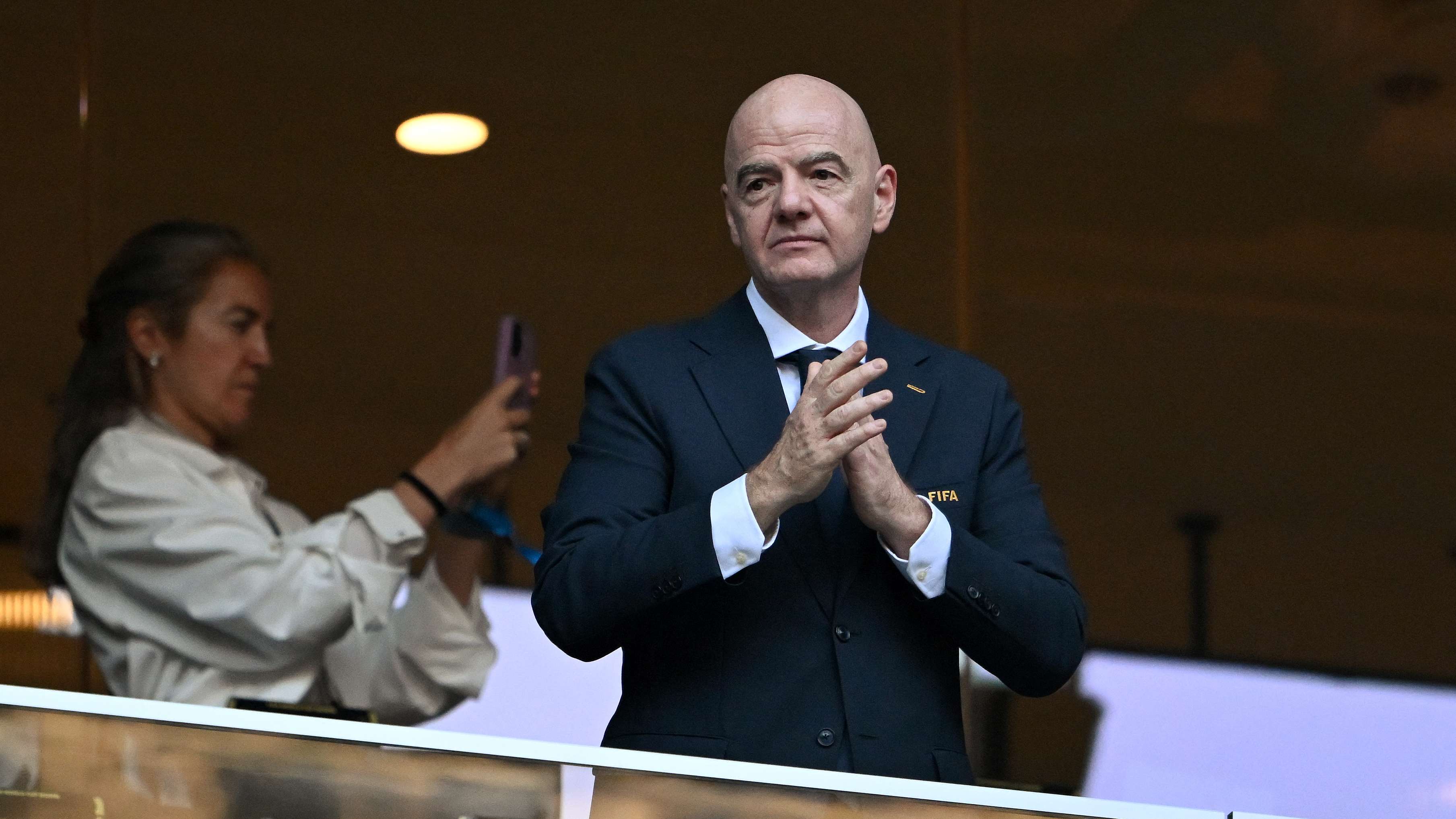

Gianni Infantino Faces Fresh Questions Over Reported 2026 World Cup Payments
FIFA president Gianni Infantino is facing renewed scrutiny after a report alleged that he received compensation connected to the company organising the 2026 World Cup in the United States. The claims have prompted questions about how the governing body reports executive pay, although FIFA has firmly denied that its president receives a second salary or that the organisation has breached its disclosure rules.
An investigation published by The Times on Monday evening said US tax documents showed that Infantino received approximately $1.76 million in 2024 from FWC2026 US Inc. The company is involved in organising the US portion of the 2026 tournament. The reported payment is equivalent to roughly €1.5 million and would be in addition to income previously disclosed by FIFA, according to the newspaper.
The allegation has quickly become a significant talking point in international football. With the 2026 World Cup expected to be the largest edition of the tournament to date, the financial arrangements behind its organisation are attracting growing attention from fans, journalists and governance specialists.
What the Report Says About the Alleged Payment
The central issue is not simply the size of the reported sum, but how it was classified and whether it was included in the compensation information FIFA has made public. The Times’ account, based on American tax documents, describes the payment as additional compensation linked to FWC2026 US Inc.
That description has raised questions about the relationship between FIFA, the tournament’s local organising structures and the president’s compensation package. Large international sporting events often involve several legal entities, each with its own responsibilities, contracts and reporting obligations. Payments associated with those entities can therefore prompt scrutiny over whether they represent salary, reimbursement, a contractual benefit or another form of compensation.
The available information does not, by itself, establish that the reported payment was improper or that FIFA violated any rule. The precise nature of the payment, the arrangements behind it and how it was accounted for remain central to understanding the dispute. FIFA’s response has focused on rejecting the suggestion that the payment amounts to a second salary or that relevant financial information was withheld.
FIFA Rejects Claims of a Second Salary
FIFA responded quickly, insisting that it had complied with its reporting obligations and its own regulations. In a statement issued on Tuesday, the organisation said: “FIFA does not pay a second salary to its president, and it complies with all reporting requirements relating to compensation.”
The statement added that the FIFA president’s annual compensation, along with other contractual benefits, is determined by an independent compensation sub-committee. FIFA also strongly rejected allegations that it had failed to disclose financial information or breached its regulations.
According to the governing body, its accounts are independently audited, and its declarations comply with tax rules in Switzerland, the United States and other relevant jurisdictions. That response places emphasis on formal oversight and compliance processes, though it does not resolve every question raised by the newspaper’s account. Further detail about the payment’s purpose and its treatment in financial disclosures may be important to public understanding of the issue.
Why Compensation Transparency Matters in Football
Executive pay has long been a sensitive subject in global sport, particularly at organisations responsible for competitions that generate billions of dollars in commercial activity. FIFA’s leadership oversees major decisions involving tournament planning, broadcasting, sponsorship, development funding and the distribution of revenue among member associations.
For supporters, transparency is about more than the personal finances of one official. It is also about confidence in the institutions that govern football and the way they manage money connected to the sport. Clear disclosures can help demonstrate that compensation is set through appropriate procedures, independently reviewed and reported consistently across different jurisdictions.
The scale of the 2026 World Cup adds further interest. The tournament will be hosted across the United States, Canada and Mexico, with an expanded field of 48 national teams. Its size and multinational structure create complex operational and financial demands, making clear lines of responsibility especially important. As planning continues, scrutiny of the organisations involved is likely to remain part of the wider conversation about tournament governance.
FIFA Turns Attention to Its Council Meeting
Despite the controversy, FIFA said its immediate focus was the upcoming FIFA Council meeting on Thursday. The organisation stated that it looked forward to discussions with council members and to continuing its work on developing the game. It also described the previous World Cup as the most successful in history.
The meeting may provide an opportunity for members to discuss broader organisational priorities, although FIFA’s statement did not indicate that the reported compensation would be a formal agenda item. Whether the issue receives further attention may depend on requests from council members, additional reporting or clarification from the parties involved.
What Happens Next?
For now, the competing accounts leave several points requiring clarification. The Times has reported that US tax documents recorded a payment of $1.76 million from FWC2026 US Inc in 2024. FIFA, meanwhile, says it does not pay Infantino a second salary and maintains that its compensation disclosures and financial reporting comply with applicable rules.
Further documentation or explanation could help establish how the payment was structured, what it covered and how it relates to the compensation already disclosed by FIFA. Until then, the distinction between a reported payment connected to a tournament-organising company and a second salary remains at the heart of the dispute.
The story is also a reminder that football governance is judged not only by formal compliance, but by how clearly organisations explain their decisions to the public. As the 2026 World Cup approaches, financial transparency will remain an important measure of trust. Any prediction about the controversy’s next chapter is uncertain, but sustained questions from the media and football stakeholders are likely unless the payment’s purpose and disclosure are explained in greater detail.