
Nahid Rana Ruled Out of Bangladesh’s T20I Series Against South Africa After Dengue Diagnosis
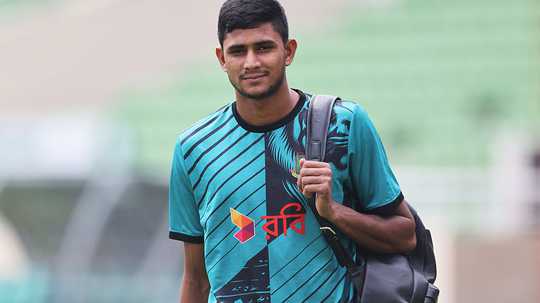
Bangladesh fast bowler Nahid Rana is expected to miss the upcoming T20I series against South Africa after being diagnosed with dengue, adding another setback to a difficult period of injuries and interrupted preparation. Bangladesh Cricket Board (BCB) officials told Cricbuzz that Rana was admitted to Evercare Hospital on Thursday night after his platelet count fell sharply.
“He is admitted to Evercare and has been diagnosed with dengue. It will take at least three weeks for him to recover because your body becomes very weak due to dengue,” a BCB official said.
The illness is likely to delay Rana’s return to competitive cricket, which the team management had been anticipating after his recent rehabilitation. His absence also creates a fresh selection challenge for Bangladesh as the side prepares to face South Africa in the shortest format.
Another Interruption in Rana’s Recovery
Rana’s latest health setback comes after a series of injuries kept him away from the national team for much of the recent season. The fast bowler was initially ruled out of Bangladesh’s Test series against South Africa because of a labrum tear. Before that diagnosis, he had been working through a lengthy rehabilitation programme in Australia, where he also underwent a medical assessment supervised by specialist physicians.
The path to recovery has been complicated. Rana sustained a Grade 2 side strain during Bangladesh’s tour of Zimbabwe in July, an injury that forced him to miss the team’s subsequent trip to Australia, the Asian Games and the one-off Test against Afghanistan. While rehabilitating, he then suffered a glute injury, ruling him out of a UAE tri-series featuring Afghanistan and Zimbabwe.
The labrum problem extended his absence further, keeping him out of Bangladesh’s two-match Test series against the West Indies as well as the Tests against South Africa. Dengue now threatens to postpone his return once again. Although a three-week recovery estimate has been given, the timing of a comeback will depend on how quickly Rana regains his strength and completes any necessary follow-up assessments.
Why Dengue Can Delay a Fast Bowler’s Return
Dengue can cause fever, fatigue and a significant drop in platelet levels. Even after the acute illness passes, patients may need time to rebuild their energy and physical conditioning. For a fast bowler, that recovery is particularly important: repeated high-intensity spells place considerable demands on the body, and returning too quickly could increase the risk of another injury.
As a result, Rana’s timeline is likely to involve more than simply waiting for symptoms to clear. The team’s medical staff will need to assess his general health and readiness before he resumes bowling at full pace. That cautious approach may be frustrating for the player and supporters, but it is a practical step after a succession of fitness setbacks.
Bangladesh Face a Pace-Bowling Selection Question
Rana’s absence is significant because Bangladesh will have to consider how to balance pace, experience and workload in its T20I plans. The right replacement will depend on the conditions, the opposition’s batting line-up and the team’s preferred combination of specialist fast bowlers and all-rounders.
Any cricket prediction about Bangladesh’s prospects against South Africa should therefore account for the uncertainty surrounding the pace attack. Rana’s availability had been a potential boost after his rehabilitation, but the dengue diagnosis means selectors may need to settle on alternatives and give them time to prepare. The series could also offer an opportunity for another fast bowler to establish a role, particularly if Bangladesh wants to manage workloads across a demanding schedule.
Selection decisions will not be based on one player alone. Bangladesh’s success in T20 cricket often depends on how effectively its bowlers use variations, control the middle overs and defend totals at the death. With Rana unavailable, the team may need to rely on a broader collective effort rather than expecting a single quick to provide the breakthrough pace.
Hasan Mahmud Set for Further Assessment in England
Bangladesh are also monitoring the condition of fast bowler Hasan Mahmud, who was ruled out of the South Africa tour after a recurrence of his tennis elbow during the series. He is expected to travel to England for further assessment and treatment, with arrangements reportedly being made by Kent, the county club for whom he starred last season.
Hasan’s association with Kent adds a useful support network as he considers the next stage of his recovery. He helped the club secure promotion last season, and the county is understood to be keen for him to receive treatment in England. BCB sources said the club was making arrangements for the trip, although details of the assessment and any treatment plan have not been announced.
Tennis elbow can be especially disruptive for a bowler because repetitive arm action may aggravate the affected area. A specialist evaluation could help determine the severity of Hasan’s recurrence and whether he needs a period of rest, targeted rehabilitation or another form of treatment. As with Rana, a return date will depend on medical advice rather than a fixed schedule.
Fitness Management Becomes a Priority
The simultaneous concerns around Rana and Hasan underline the importance of careful workload and injury management for Bangladesh’s fast-bowling group. A team can have promising pace options, but their value depends on sustained availability. When injuries overlap with illness, selectors may have to adjust plans quickly and give reserve players opportunities at short notice.
For now, the immediate priority is Rana’s recovery from dengue and Hasan’s assessment in England. Bangladesh supporters will be hoping both bowlers can return to full fitness, but the team will need to plan the South Africa T20Is without assuming either player will be ready. The latest cricket prediction, then, is not simply about who will win the series: Bangladesh’s adaptability and the health of its replacement bowlers may prove just as important.