
An Se-young Extends Winning Streak with Korea Open Final Victory over Akane Yamaguchi
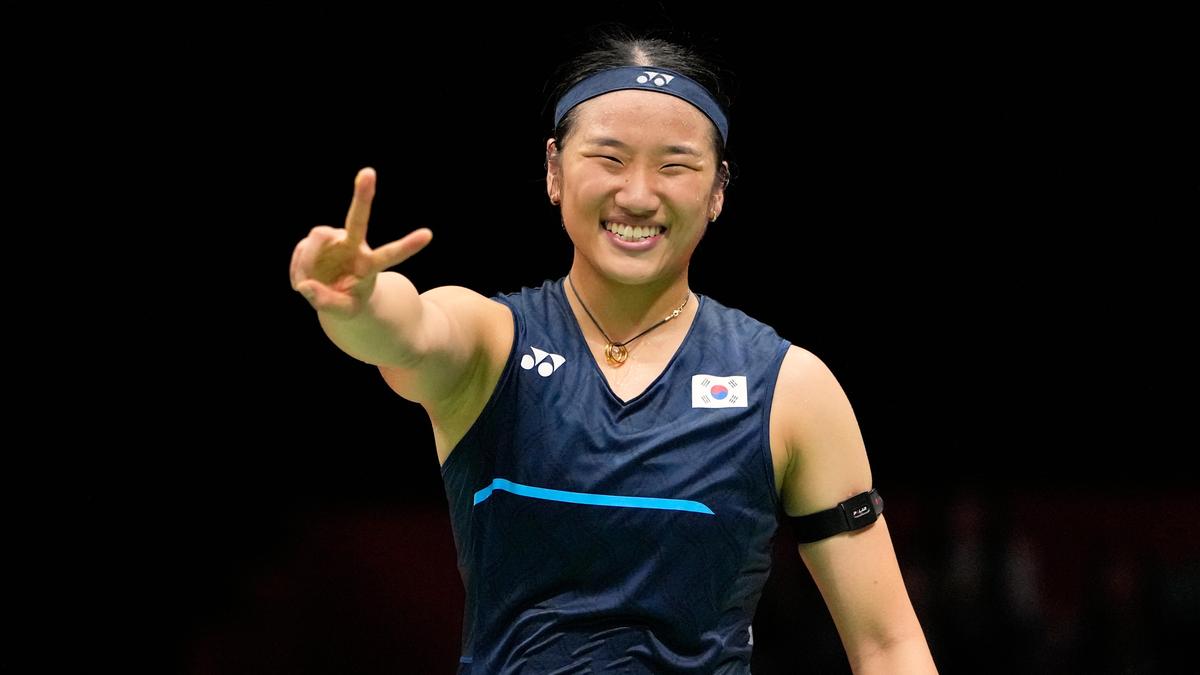
The chants inside Jinnam Stadium grew louder as the decisive rallies unfolded: “An Se-young, An Se-young.” In front of a passionate home crowd in Yeosu, South Korea’s world No. 1 delivered the result fans had come to see, defeating Japan’s Akane Yamaguchi 21-12, 15-21, 21-16 to win the 2026 Korea Open women’s singles title.
The victory gave An her 11th title of the season and extended her extraordinary winning streak to 55 matches. But the scoreline tells only part of the story. After sweeping through the tournament without dropping a game, An was pushed into a demanding three-game final by one of the few badminton players with the experience and tactical range to challenge her consistently.
A familiar rivalry, with more than a title at stake
The final marked the 40th meeting between An and Yamaguchi, a rivalry shaped by years of close contests and detailed tactical adjustments. An had won 25 of their previous encounters, but Yamaguchi had beaten her in the Korea Open final the year before. That result offered a reminder that past records and home-court support cannot guarantee an easy victory in elite badminton.
An arrived in Yeosu in remarkable form. She had played 72 matches during the 2026 season, losing only once, and had not surrendered a game on her way to the final. Keeping that level of consistency requires more than physical conditioning: players must also manage pressure, recover quickly between rallies and adapt when opponents find a weakness.
For the South Korean star, the championship was therefore about more than lifting a trophy at home. A win would preserve her streak and reinforce a season in which she had set an exceptionally high standard. For Yamaguchi, a third Korea Open crown would underline her enduring quality and bring her a fourth title of the year.
An takes control of the opening game
The first game quickly revealed the tactical battle at the heart of the final. An changed her usual approach, moving away from repeatedly targeting one side of the backcourt. Instead, she mixed her placements, switching between corners and using cross-court shots to make Yamaguchi cover more ground.
Yamaguchi responded with sharp blocks and well-timed returns, making An work just as hard to recover her position. The Japanese player’s defence prevented the opening exchanges from becoming one-sided, but An gradually found her rhythm. She led 11-9 at the interval, then began to dictate the pace with greater confidence.
By stretching the rallies and moving Yamaguchi around the court, An created opportunities to attack without rushing her shots. Her advantage grew to four points before she closed out the game 21-12. Yamaguchi managed only three points after the break, as An’s improved control turned a close start into a convincing finish.
Yamaguchi changes the momentum
The second game brought a sharp response. Yamaguchi varied the direction of her attacks, drawing An towards one corner before switching play to the opposite side. The tactic was familiar—both players use changes of direction to unsettle opponents—but Yamaguchi executed it with enough accuracy to keep An from settling into a predictable rhythm.
Her powerful around-the-head shots also forced An to move repeatedly, while the South Korean’s clears failed to put Yamaguchi under sustained pressure. Several of An’s attacking attempts drifted beyond the lines, giving her opponent valuable points and helping Yamaguchi maintain a comfortable lead.
Yamaguchi took the game 21-15, ending An’s run of straight-game victories at the tournament and setting up a decider. The shift was important: the final was no longer following the pattern of An’s earlier matches. Yamaguchi had shown she could disrupt the world No. 1’s timing, and the home favourite now had to find another way through.
A demanding decider tests both players
As the third game began, the physical cost of the contest became increasingly visible. An was seen bending over between points to catch her breath, while Yamaguchi’s returns began to find the net or sail beyond the court. In a match decided by fine margins, small errors and recovery time became as important as attacking skill.
An reached the interval with an 11-9 lead—the same score at which she had been ahead in the opening game. The narrow advantage left little room for complacency. Yamaguchi continued to press, looking for openings and forcing An to defend, but the South Korean produced moments of exceptional athleticism under pressure.
One mid-court exchange captured the balance of her game: An turned a difficult return into a jump smash, combining speed, timing and precision to seize the initiative. It was the kind of explosive response that can change a rally, but her victory depended just as much on patience and composure. She avoided forcing every point, stayed alert to Yamaguchi’s changes of direction and kept competing through the longest exchanges.
Championship point seals a remarkable season
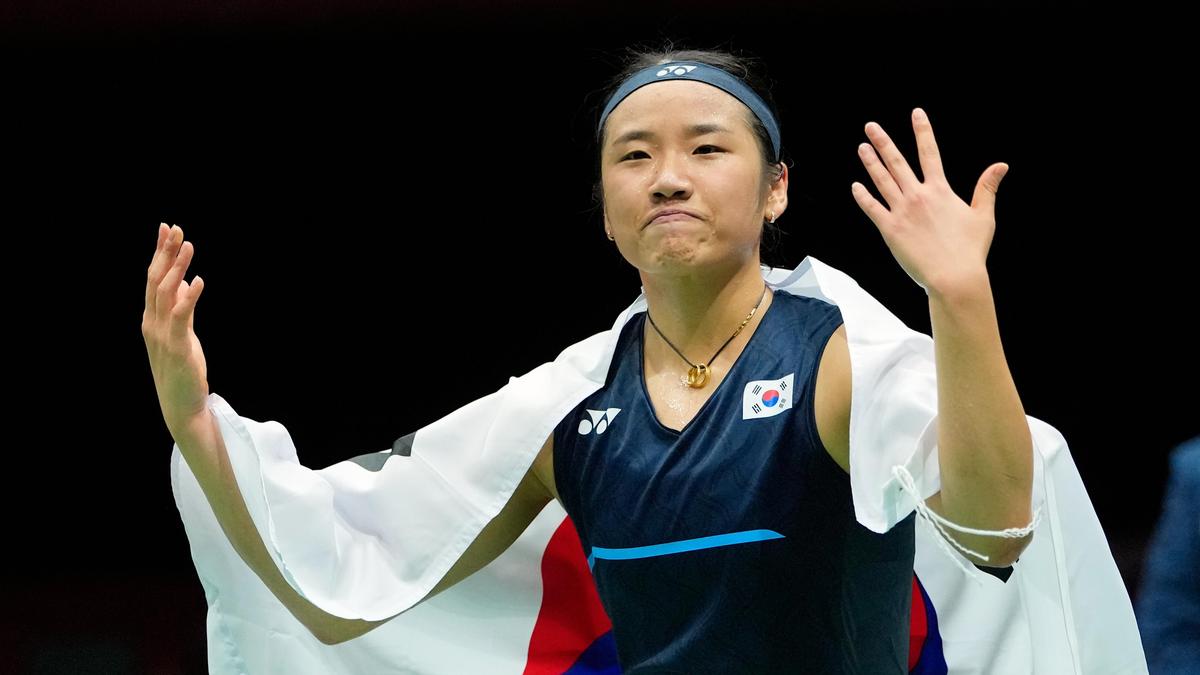
Yamaguchi kept fighting, but An held her nerve as the finish approached. The championship point came when Yamaguchi sent a return beyond the back boundary. An’s racquet slipped from her hand as the significance of the moment sank in: she had won the Korea Open, extended her streak to 55 consecutive victories and claimed her 11th title of the season.
The 21-12, 15-21, 21-16 result was not the straightforward home triumph some spectators may have expected. Yamaguchi took a game, tested An’s movement and forced her to adjust after the tournament’s earlier straight-game wins. That resistance made the victory more revealing, not less. At the highest level of badminton, champions are often defined not only by how they perform when their preferred tactics are working, but by how they respond when an opponent takes control.
For An, the Korea Open final was another demonstration of her ability to adapt under pressure. She began by varying her shot placement, weathered Yamaguchi’s second-game surge and found enough energy and accuracy to finish strongly in the decider. The loud support in Jinnam Stadium provided a memorable backdrop, but the title was secured through tactical discipline and resilience.
Yamaguchi once again proved why she remains one of An’s most formidable rivals. Yet the final belonged to the South Korean, whose winning run and outstanding 2026 campaign continue. With another major title added to her collection, An leaves Yeosu not simply as a home champion, but as a player who found a way to win when the match demanded more than momentum.