
Seven-Year-Old Filipino Chess Talent Named After Magnus Carlsen Is Chasing a Grandmaster Dream
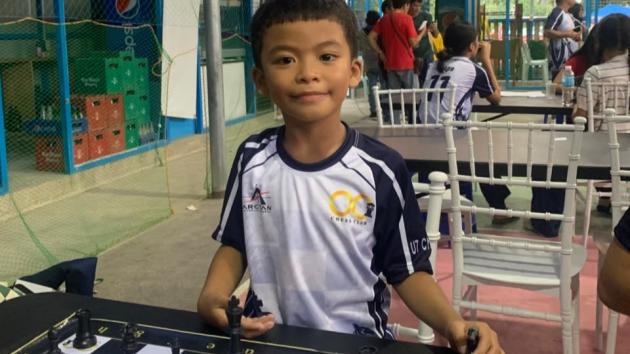
When Bernard Sanico’s son was born in 2019, he gave him a name that reflected a decade-long admiration for one of chess’s most celebrated players. The boy became Magnus Carlsen Sanico, named after Norwegian grandmaster Magnus Carlsen. Now seven, the young Filipino is building a reputation of his own—and says he hopes to become a grandmaster someday.
Bernard, a chess fan since childhood, began following Carlsen in 2009, when he was 12. Years later, when he and his partner were expecting a baby, they agreed that Bernard would choose the name if the child was a boy, while the mother would decide if it was a girl.
“The real reason is I am the number one fan of the greatest Magnus Carlsen,” Bernard told Chess.com. His choice was accepted by the family, though he sometimes has to explain the story behind it. Magnus, his father said, has known since daycare that he was named after the world champion.
A young player who chose chess for himself
Bernard teaches beginners in Kolambugan, a town in Lanao del Norte on the Philippine island of Mindanao. He plays chess online and has a rating of around 2000. As he introduced other children to the game, he sometimes brought his son along—but says the name was never intended to determine the boy’s future.
That distinction mattered when Magnus expressed an interest in learning. In March 2025, at five years old, he told his father: “Dad, teach me also chess.” Bernard says the request came from Magnus himself. The family’s famous namesake may have made the story memorable, but the decision to play belonged to the child.
Since then, Magnus has competed in about 35 tournaments, mostly local events, with some at national level. His father jokes that the name can add a little pressure for opponents. But the results suggest the young player is developing through more than a headline-making introduction: regular competition is giving him experience against a wide range of rivals.
Strong results against older and more experienced opponents
At the ASEAN Youth U10 Boys Championship in Misamis Occidental, held November 7–9, Magnus scored 4.5 points from seven games and finished 10th. He was competing in an under-10 division despite being only seven, a difference that can mean facing opponents with several additional years of practice and tournament experience.
He followed that event by entering the Misamis Occidental Philippines International Chess Championship, which concluded on November 16. The tournament included grandmasters and international masters, offering a demanding test for a young player. Magnus scored four points from nine games, recording three wins and two draws.
Among his notable results was a draw against an opponent rated 1930. He also defeated players rated 1516 and 1784. For a seven-year-old competing in a strong open field, those games provided valuable evidence of his ability to handle experienced opposition—and an opportunity to learn from the pace and pressure of high-level chess.
Magnus already has published FIDE ratings of 1495 in rapid and 1755 in blitz. His classical rating is expected to appear in the high 1600s on a forthcoming rating list. If confirmed, that would place him among the highest-rated players born in 2019 or later. Ratings are only one measure of progress, particularly at a young age, but they can help show how a player’s results compare with those of others in rated competition.
Learning confidence, discipline and perspective
Bernard says his son enjoys the experience of playing in major events, especially when he gets to meet strong opponents from national and international chess circles. The family also emphasizes qualities that matter beyond the scoreboard.
“He is learning to be more confident, disciplined, and humble,” Bernard said. “We always remind him to enjoy the game.” That approach is important in a sport where improvement often depends on reviewing losses, staying patient and returning to the board with curiosity. For a child, the challenge is to balance ambition with the enjoyment that first made chess appealing.
Magnus’s interests are not limited to the 64 squares. His father says he enjoys school, performs well in mathematics and likes hiking. Those activities offer a broader picture of a young student whose chess ambitions are developing alongside ordinary childhood interests.
Family commitment behind the tournament results
Supporting a promising young player requires time, travel and money. Bernard says he changed his working life to focus more closely on Magnus, leaving a steady job away from home. He now earns income by helping in his uncle’s furniture business. Father and son train together every day, although Bernard acknowledges that his own chess knowledge is limited and that the family cannot afford to hire a separate coach.
Travel costs can also be a significant obstacle for families entering tournaments. For the event in Misamis Occidental, about two hours from their home, Magnus’s elementary school and a community official helped contribute toward the trip. A business sponsored the family’s accommodation at a resort, easing some of the expense.
Magnus has attracted attention within the Filipino chess community, with media coverage and a social media following of nearly 7,000. That visibility can help celebrate his progress, but the practical support behind each tournament—transport, accommodation, training and family time—is just as central to his development.
A dream supported, not imposed
Magnus’s stated goal is to play in more tournaments and eventually earn the grandmaster title. The path to that achievement is long and highly competitive, requiring sustained study, strong results and years of development. At seven, his immediate task is simpler: keep learning, enjoy the game and gain experience at the board.
Bernard says he does not want to set a separate ambition for his son or turn a famous name into an obligation. Asked about his own dream, he gave a brief answer: “My dream is what Magnus dreams for himself. I just support him.”
That support may be the most meaningful part of the story. Magnus Carlsen Sanico carries the name of a global chess icon, but his progress is being shaped by his own curiosity, his family’s commitment and the opportunities he finds to compete. Whether or not he reaches the grandmaster title, the young player is already making the name his own—one tournament and one game at a time.