
Liverpool 4-3 Villarreal: Player Ratings After Anfield’s Chaotic Champions League Comeback
Liverpool kept their perfect Champions League campaign intact with a dramatic 4-3 victory over Villarreal at Anfield. The visitors raced into a two-goal lead, but the Reds responded with four strikes of their own before surviving a late scare in a breathless European contest.
Georges Mikautadze stunned the home crowd with an early opener, and Sergi Cardona extended Villarreal’s advantage before the half-hour mark. Liverpool fought back through Alexis Mac Allister and Ronald Araujo, then took control after the break as Mac Allister completed his brace and substitute Florian Wirtz added a fourth. Tani Oluwaseyi’s late goal made for an anxious finish, but Liverpool held on to claim a third straight win.
The result lifted Liverpool to second place with nine points, while Villarreal were left 19th on three. The scoreline reflected the quality of the attacking football on show, but also highlighted defensive issues—particularly during transitions—that Liverpool will need to address. Here are the key player ratings and talking points from an unforgettable night at Anfield.
Match overview: A comeback built on persistence
Villarreal began with confidence and punished Liverpool’s early defensive uncertainty. Mikautadze’s fourth-minute goal gave the visitors an immediate foothold, and Cardona’s finish before the half-hour made the task considerably harder for the hosts. Liverpool were forced to chase the game, with the visitors’ direct attacks and willingness to exploit space behind the defence creating repeated problems.
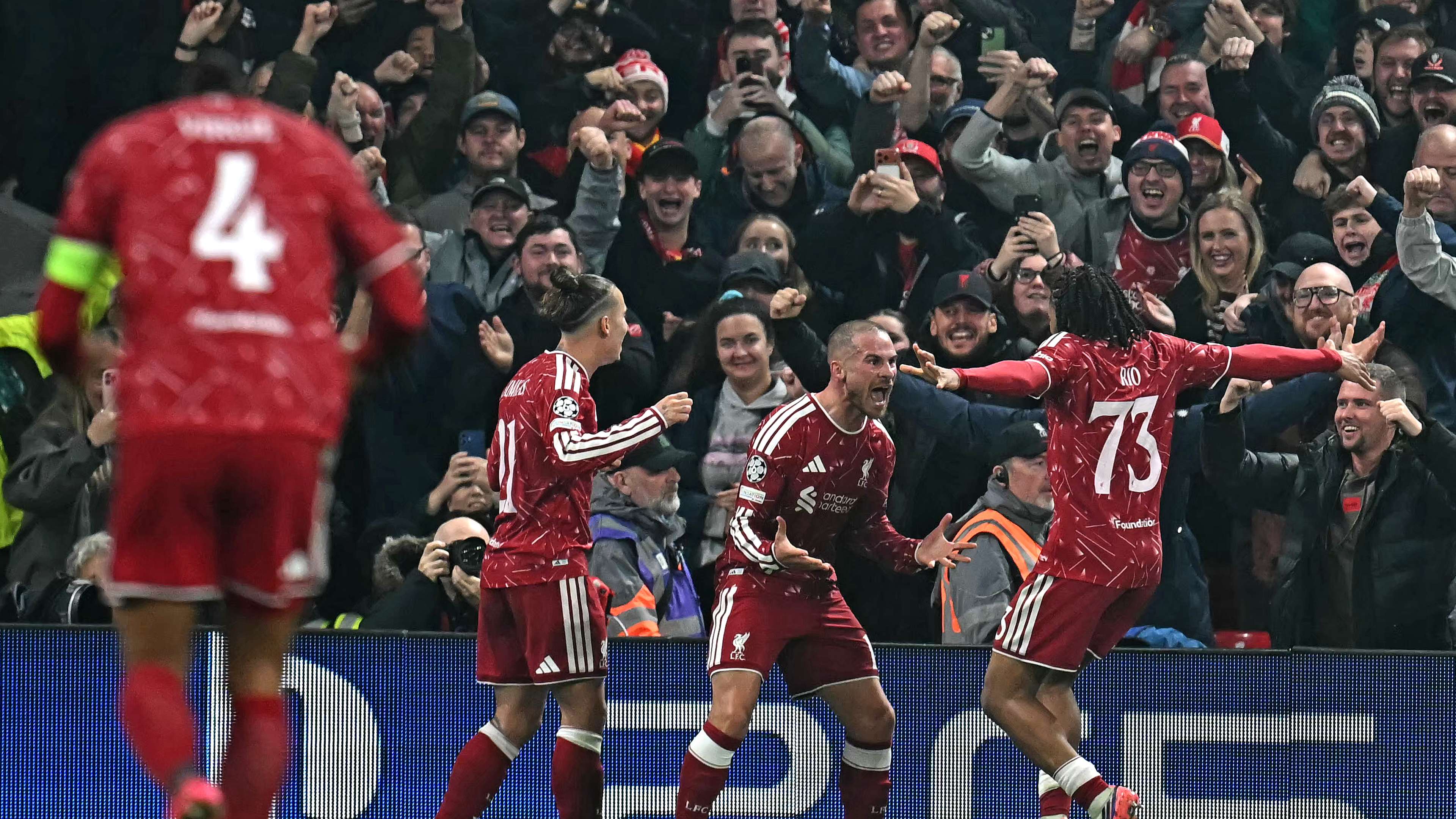
Rather than retreating after falling two goals behind, Liverpool continued to press and move the ball forward. Mac Allister’s header reduced the deficit, and Araujo’s stoppage-time equaliser changed the mood inside Anfield. The second-half introduction of Wirtz added another creative dimension, helping Liverpool turn a tense contest into a commanding lead—at least briefly.
Liverpool player ratings
Alisson Becker — 6/10
Alisson had little chance with the goals he conceded, but the defensive chaos in front of him meant he was kept busy. His experience helped Liverpool remain composed during the closing stages, when Villarreal pushed for a fourth goal.
Trent Alexander-Arnold — 6/10
Alexander-Arnold offered his usual range of passing and helped Liverpool progress the ball quickly. However, Villarreal found opportunities to attack the spaces around him, making this a mixed performance between creative contribution and defensive responsibility.
Virgil van Dijk — 5/10
Van Dijk’s authority was not always evident as Villarreal made their early breakthrough and repeatedly threatened in transition. Liverpool’s centre-backs improved as the match went on, but the first-half display will prompt questions about the team’s defensive organisation.
Ibrahima Konaté — 5/10
Konaté brought physicality to the back line but was part of a defence that struggled to contain Villarreal’s movement. Liverpool’s comeback was impressive, yet the late concession showed that the match was never fully under control.
Andy Robertson — 6/10
Robertson worked tirelessly on the left and supported Liverpool’s attacking pressure. His energy was valuable as the Reds sought to turn the momentum around, although Villarreal’s counterattacks tested the balance of his forward runs.
Alexis Mac Allister — 8/10
Mac Allister was one of Liverpool’s most influential players. His headed goal gave the hosts a route back into the match, and his second strike in the 65th minute put Liverpool in front. Beyond the goals, he helped connect midfield and attack during the comeback.
Ryan Gravenberch — 6/10
Gravenberch contributed to Liverpool’s attempts to dominate possession, but the midfield was stretched during Villarreal’s strongest spells. His performance improved as Liverpool gained control after the interval.
Dominik Szoboszlai — 6/10
Szoboszlai brought intensity and forward running to the midfield. He helped Liverpool maintain pressure, though the visitors’ early pace made it difficult for the home side to establish a consistent rhythm.
Mohamed Salah — 7/10
Salah remained a constant threat, drawing defenders and helping create openings as Liverpool increased the tempo. Even when he was not directly involved in the scoring, his movement gave Villarreal’s back line plenty to consider.
Darwin Núñez — 6/10
Núñez offered energy and stretched the defence with his runs. His direct approach suited a match that became increasingly open, though Liverpool needed greater control to prevent Villarreal from repeatedly finding space on the break.
Cody Gakpo — 6/10
Gakpo worked hard across the attacking line and helped Liverpool sustain pressure. His contribution was more about movement and combination play than decisive finishing, as other players took centre stage in the comeback.
Florian Wirtz — 8/10
Wirtz made an immediate impact after coming on, bringing sharp movement and creativity to Liverpool’s attack. His goal arrived just three minutes after Mac Allister had put the Reds ahead, turning the contest in the hosts’ favour and underlining the value of his influence from the bench.
Villarreal’s bright start and costly late pressure
Villarreal deserve credit for the quality and conviction of their opening spell. Mikautadze and Cardona gave the visitors a platform, while their willingness to attack quickly exposed Liverpool’s defensive transitions. Ayoze Pérez also helped create danger late in the game, setting up Oluwaseyi’s goal and ensuring the final minutes remained tense.
However, Villarreal could not maintain their early defensive discipline once Liverpool found momentum. The hosts’ pressure, improved movement and attacking substitutions gradually shifted the contest. For the visitors, the defeat will be frustrating: they showed they could hurt Liverpool, but were unable to protect their advantage.
What the result means—and what comes next
Liverpool’s third consecutive Champions League win strengthens their position in the league phase and keeps their perfect record intact. The comeback also demonstrated resilience, depth and the ability to change a match through substitutions. Mac Allister’s two goals and Wirtz’s immediate contribution will be among the major positives for the Reds.
Still, the scoreline offers a clear warning. Liverpool’s attacking football was compelling, but conceding three times at home points to vulnerabilities that stronger opponents may exploit. Improving defensive transitions and managing the game after taking the lead will be essential if the team is to turn early momentum into a sustained European challenge.
For supporters looking ahead, this result makes Liverpool an intriguing subject for any Champions League prediction. Their firepower and comeback mentality are undeniable, but their defensive consistency remains a key variable. Anfield witnessed a memorable win; the next test will be whether Liverpool can pair that attacking ambition with greater control.