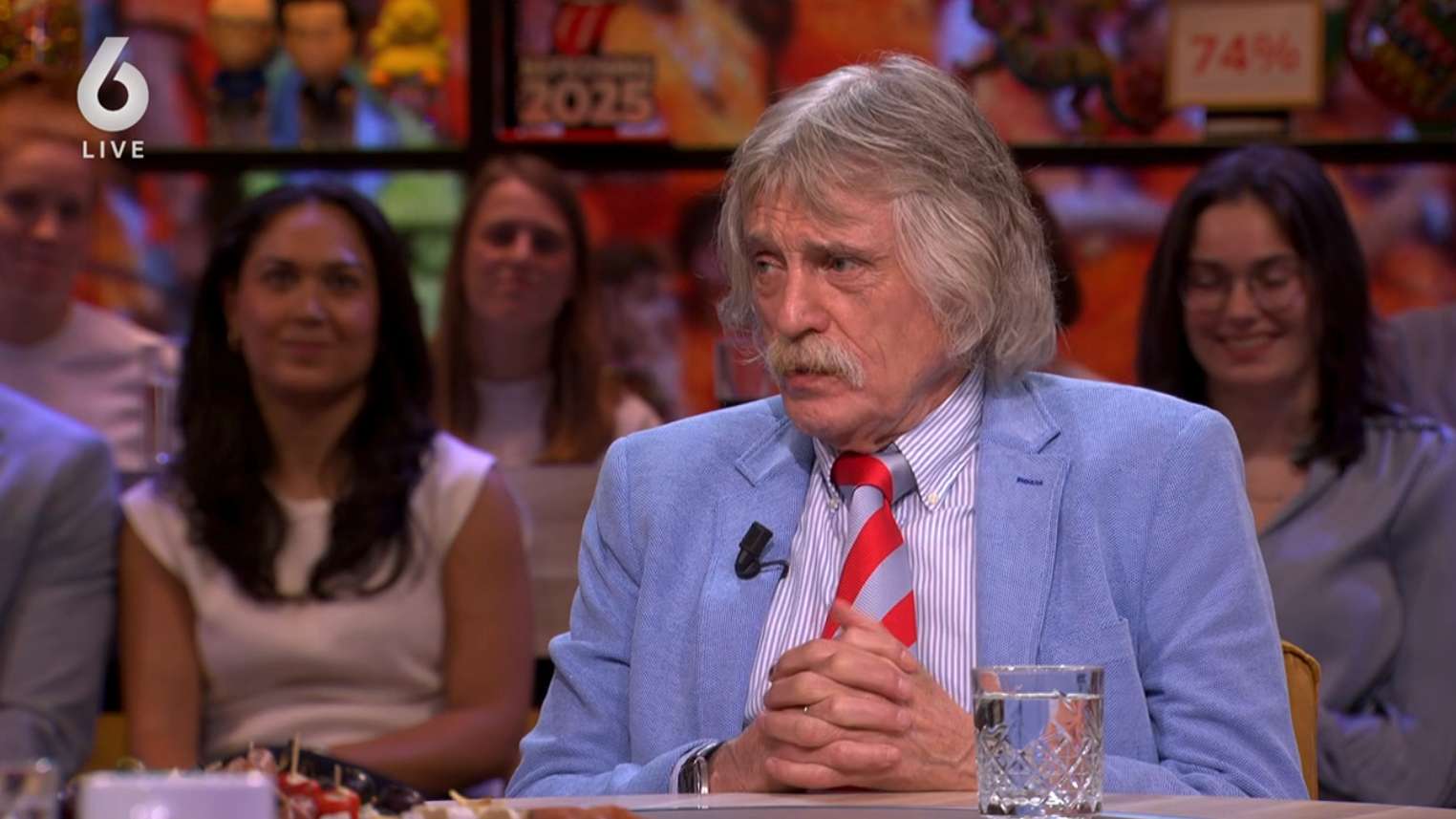

Johan Derksen Reflects on an Unsettled Childhood and His Father’s Domestic Violence
Johan Derksen has spoken candidly about growing up in a home shaped by alcohol abuse, fear and violence. Appearing on the Afterparty podcast with singer Davina Michelle, the 77-year-old former footballer and Vandaag Inside panellist said he has never forgiven his father for abusing his mother.
Derksen has previously discussed the violence on television, but his account on the podcast offered a personal look at how those experiences affected him as a child—and how they continue to influence his view of family, alcohol and domestic abuse. His recollections also provide a striking contrast to the public persona familiar to football fans and viewers of Dutch current-affairs programmes.
“I don’t forgive him”
Derksen was unequivocal when speaking about his father’s behaviour. “I don’t forgive him because he committed domestic violence against my mother. I don’t forgive him for that,” he said.
For Derksen, the subject is not simply a painful memory from the past. It is a lasting judgment about the harm his father caused. His comments underline how violence within a household can shape a child’s sense of safety and leave complicated feelings that do not necessarily disappear with time.
As a boy, Derksen sometimes tried to defend his mother. But stepping in did not bring the protection he hoped for. He recalled that when he took her side, his father would later direct his anger at her after Derksen was no longer present. “If I took my mother’s side, it had the opposite effect,” he explained.
That left the young Derksen facing an impossible choice: remain silent while his mother was being hurt, or intervene and worry that doing so might make things worse. He described the atmosphere at home as one of constant tension. “You’re always on edge,” he said—a brief phrase that captures the uncertainty children can experience when they never know when the next outburst may come.
A promise shaped by what he witnessed
The violence he saw at home led Derksen to make a personal commitment: he would not repeat his father’s behaviour. “I would never commit domestic violence, because I’ve seen the consequences,” he said.
His account also points to the wider impact of heavy drinking on families. Derksen said his father’s reactions to alcohol were especially difficult for children to endure. “When people react badly to alcohol, it’s truly awful for children,” he said.
Alcohol does not excuse abuse, but Derksen’s recollection illustrates how substance use and violence can combine to create an unpredictable home environment. For children, the effects may reach beyond the moments of conflict. Living with fear and uncertainty can influence how they understand relationships, safety and conflict long after childhood has ended.
Derksen’s promise not to become violent offers a personal example of how someone may consciously reject behaviour they witnessed growing up. It is not a simple answer to the lasting effects of childhood trauma, but it shows how those experiences can shape a person’s values and decisions.
His admiration for his mother
While Derksen remains deeply critical of his father, he speaks about his mother with affection and respect. He described her as “a wonderful woman” and said she was “too good for this world.” In his view, she was not equipped to withstand the aggression of her husband.
Derksen also reflected on the social expectations of the time. He believes his mother faced pressures that may have made leaving far more difficult than it might be for someone today. Around seventy years ago, he said, divorce carried a greater social stigma, and a woman’s decision could be judged not only by her immediate family but also by neighbours and the wider community.
“Women would get divorced now,” he said. “But back then, you had to consider family and the neighbours; everyone was taken into account.” His comments offer context for why people may remain in harmful relationships, without suggesting that the decision is straightforward. Financial circumstances, social attitudes and concern for children can all influence what choices seem possible.
A funeral speech that broke with convention
Derksen’s feelings became clear again after his father died. At the funeral, he delivered a speech that departed sharply from the familiar tributes often heard at such ceremonies. Rather than presenting his father as a loving parent, Derksen spoke critically about the man he remembered.
He said the room fell silent. “Everyone in the room was completely silent. You could have heard a pin drop, because I didn’t tell a story about what a wonderful father he had been.”
The moment appears to have reflected Derksen’s refusal to conceal or soften his experience for the sake of convention. Funerals often encourage relatives to focus on positive memories, but his account suggests that grief and family history can be more complicated. For him, acknowledging what happened was more important than offering a version of events that did not match his childhood.
Beyond football and television
Derksen is widely known for his outspoken commentary on football and his role on Vandaag Inside. His appearance on the Afterparty podcast revealed a more personal subject: the childhood experiences behind his firm views on domestic violence and alcohol-related behaviour.
His story is a reminder that public figures have private histories that may be very different from the subjects they discuss on screen. It also brings attention to the lasting effects of violence in the home—not only on the person directly abused, but on children who witness it and grow up trying to make sense of what they have seen.
Derksen’s reflections do not offer a prediction that painful memories simply fade or that every family story can be neatly resolved. Instead, they show how a person can carry anger, affection and regret at the same time: anger at an abusive parent, admiration for a mother who endured difficult circumstances, and a determination not to repeat the violence. In sharing those memories, he has placed a deeply personal chapter of his life alongside the football debates and television commentary for which audiences know him.