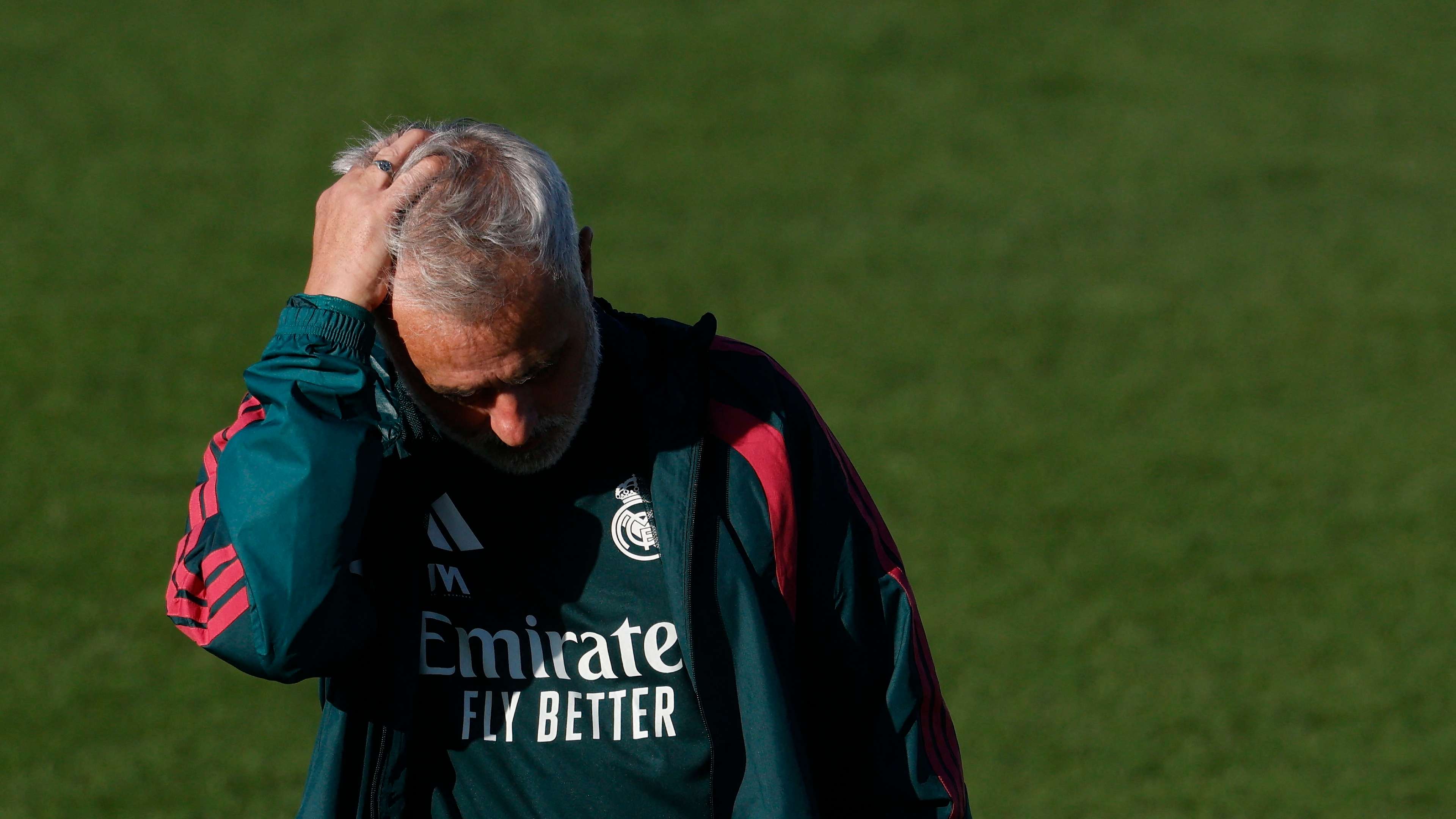

Real Madrid Face Defensive Test Ahead of High-Stakes El Clásico
Real Madrid are preparing for a demanding defensive examination as they host Barcelona in Sunday evening’s El Clásico, with concerns mounting over their ability to contain one of La Liga’s most prolific attacks. The meeting, part of the league’s tenth round, arrives at a difficult moment for Madrid, whose early-season defensive record has offered little reassurance.
The latest setback involves goalkeeper Thibaut Courtois, who was ruled out shortly before the match after falling ill. His absence leaves Madrid without their first-choice goalkeeper for a fixture in which even a brief lapse could prove costly. Conflicting reports had raised the possibility that Courtois might recover in time, but the club’s medical update on Sunday afternoon indicated that he would not be available.
Courtois absence adds to Madrid’s concerns
Courtois’s importance goes beyond his ability to make saves. The Belgian is a commanding presence in the penalty area, an experienced organiser and one of the team’s most reliable performers under pressure. Against Barcelona, his distribution and decision-making could have been especially valuable, given the visitors’ tendency to attack quickly and create chances in numbers.
Without him, Madrid must rely on their reserve goalkeeper to handle the intensity of a contest that rarely gives players time to settle. The replacement will need to communicate clearly with the defenders, deal confidently with crosses and remain alert to Barcelona’s movement around the box. A goalkeeper making a rare start can be tested not only by shots on target, but also by the speed and unpredictability of the occasion.
Madrid’s wider defensive record makes the challenge more urgent. The team have kept only two clean sheets in their first 12 matches of the season, a statistic that highlights their difficulty in shutting opponents out. Although clean sheets do not tell the whole story of a defence, the figure suggests that Madrid have frequently allowed rivals to find dangerous openings or convert chances.
Barcelona’s attack arrives in formidable form
Barcelona’s scoring numbers give Madrid little room for error. They have registered 39 goals in their first nine La Liga matches, averaging more than four per game. That return reflects a forward line capable of threatening from several angles, supported by midfielders who can control possession, move the ball quickly and exploit gaps as soon as they appear.
The danger is not limited to one striker or one type of attack. Barcelona can stretch a defence with width, combine through the middle and punish opponents when they lose possession. Their ability to build pressure in waves may be particularly significant against a Madrid side that has struggled to keep clean sheets. If the hosts fail to maintain their shape, Barcelona’s runners could find space between the defensive lines or behind the back four.
For Madrid, the first priority will be to prevent Barcelona from settling into a rhythm. Pressing at the right moments, protecting the central areas and tracking late runs into the penalty box will all be essential. A high defensive line may help the hosts compress the pitch, but it also carries risk if Barcelona can play through the press or send runners into open space.
What Madrid must do to change the game
Madrid’s defensive task cannot be left to the goalkeeper and back line alone. The midfield will need to provide protection, close passing lanes and help limit Barcelona’s time on the ball. When possession is lost, a coordinated response could stop the visitors from launching the quick attacks that have contributed to their impressive scoring rate.
The hosts may also look to make their own attacking moments count. In a fixture where Barcelona are likely to create chances, Madrid could benefit from turning transitions into immediate threats rather than allowing the visitors to recover their defensive shape. Fast forward movement and accurate passing into space may force Barcelona to think about their own defensive responsibilities.
Set pieces could offer another route to goal. El Clásico encounters are often shaped by fine margins, and a well-delivered corner or free kick can change the momentum of a match. Madrid will need to be alert at both ends: their own delivery may create an opportunity, while Barcelona’s movement on dead-ball situations will demand careful marking.
El Clásico prediction: a contest of pressure and precision
Any football prediction for El Clásico must account for the uncertainty that comes with a rivalry of this scale. Barcelona’s attacking form makes them a serious threat, while Courtois’s absence and Madrid’s limited number of clean sheets increase the pressure on the home defence. Yet Madrid’s experience in major matches and the energy of a home crowd could still give them the momentum needed to compete.
The decisive factor may be how effectively Madrid manage the opening stages. If Barcelona score early, the visitors could gain confidence and force the hosts to take greater risks. If Madrid remain organised, frustrate the attack and create danger on the counter, the match could become a far more balanced contest than the scoring statistics suggest.
Rather than expecting a cautious encounter, supporters may be in for an open and high-intensity game. Barcelona’s recent goal production points towards attacking intent, while Madrid have the quality to respond even if they concede. The key question is whether the hosts can limit the number of clear chances their rivals create—and whether their stand-in goalkeeper can deliver under the brightest spotlight.
With Courtois unavailable, the defensive burden falls on the entire Madrid team. Their ability to stay compact, communicate under pressure and make the most of their own opportunities could determine the outcome. Barcelona arrive with a prolific attack and strong momentum, but El Clásico has a history of defying form. One moment of brilliance, one defensive mistake or one crucial save may ultimately shape Sunday’s result.