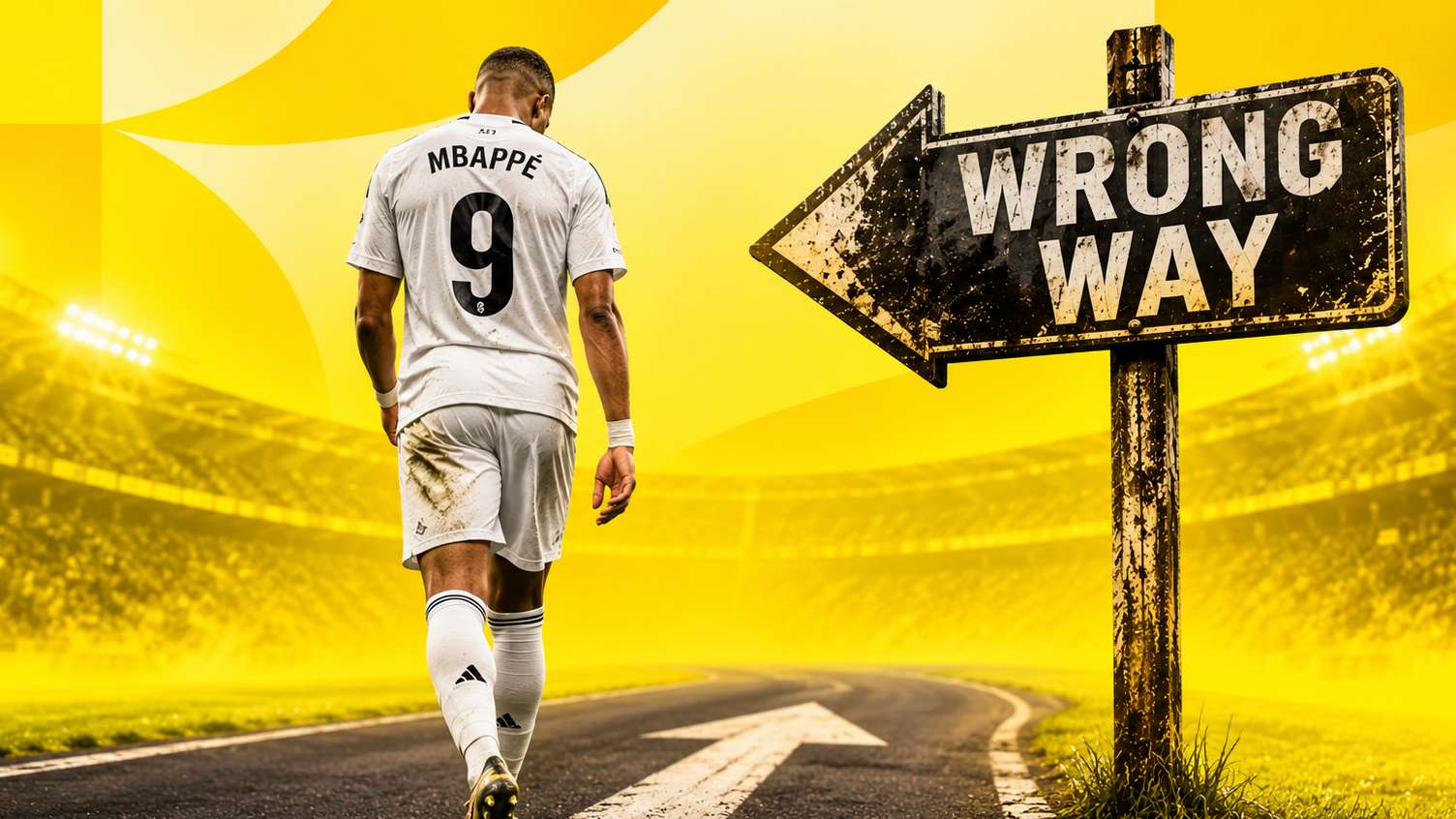

Has Real Madrid Sacrificed Attacking Balance for Kylian Mbappé?
International breaks pause the weekly rush of European football, but they also create room to consider the questions that match results alone cannot answer. One debate surrounding Real Madrid is especially compelling: did the club make the right choice by signing Kylian Mbappé, or might Harry Kane have been a better successor to Karim Benzema?
At first, the question may sound surprising. Mbappé is among the most decisive forwards in the world, combining explosive pace, elite finishing and the ability to change a match in a moment. Yet a transfer should not be judged only by the number of goals a player scores. It also matters how he fits into a team’s structure, connects with his teammates and helps the side create chances when the opposition closes down its most dangerous attacker.
That broader view makes the comparison more interesting. Mbappé and Kane are both world-class forwards, but they offer different solutions. Real Madrid’s decision was not simply about choosing between two prolific scorers; it was a choice between contrasting attacking profiles—and, ultimately, between different ways of building a team.
Mbappé’s match-winning qualities
Mbappé brings a rare combination of speed, directness and confidence in front of goal. He can stretch a defence by running behind the back line, attack space from the left and finish moves with either foot. When Madrid wins possession and breaks quickly, his acceleration can turn a promising transition into a clear scoring opportunity before opponents have time to recover.
His threat also changes how rival teams defend. Opponents may drop deeper, assign extra cover to his side or hesitate to push their full-backs forward. That attention can create space for Madrid’s midfielders and other attackers. Even when Mbappé is not directly involved in a goal, his movement can influence the shape of the opposition’s defence.
There is also the value of individual invention. In a tight game, a forward who can beat a defender or produce a shot from a difficult position gives his team an option that cannot always be created through patient passing. Madrid have often relied on players capable of deciding major matches in a single moment, and Mbappé fits that tradition.
The challenge of fitting into Madrid’s attack
Mbappé’s strengths, however, raise a tactical question: where should he play, and how should the rest of the attack adjust around him? He has often been most comfortable starting from the left and moving into central scoring positions. But Madrid have also had other influential players who prefer to operate in similar areas or attack the same spaces.
When several attackers look for the ball in the same zones, the team can become less balanced. One player may be asked to move wider, another may receive fewer touches in his preferred area, and the midfield can lose a clear passing option near the penalty area. These issues do not mean the players cannot succeed together. They do mean that movement, spacing and role definition become essential.
Madrid’s best attacking football depends on more than individual quality. The team needs runners to stretch the defence, players who can combine between the lines, and a reliable presence in the box. If the forward line becomes too focused on finishing moves, the burden of creating chances may fall heavily on the midfield. The key test is whether Mbappé’s goals and threat are matched by a structure that allows his teammates to contribute fully.
What Harry Kane might have offered
Kane would have presented a different kind of solution after Benzema’s departure in 2023. The England captain is a natural centre-forward, but his game extends well beyond penalty-area finishing. He regularly drops into midfield, links play with short passes and helps bring wide attackers into the game. His ability to act as both scorer and creator could have provided Madrid with a more traditional focal point.
That style might have helped the team maintain a clearer attacking shape. Kane’s movement away from the centre-backs can open channels for runners, while his passing can connect midfield possession to the forward line. Rather than relying primarily on speed and space behind the defence, Madrid could have used him as a reference point for combinations around the box.
His experience and composure would also have suited a side expected to compete for major honours. Kane is comfortable leading an attack, taking responsibility in difficult moments and finishing chances created by others. In that sense, he could have offered some of the connective qualities associated with Benzema, though no player can reproduce another’s role exactly.
Goals are only part of the comparison
Comparing the two forwards through goals alone would miss the central issue. Mbappé is particularly dangerous when he can attack open space and use his pace to unsettle defenders. Kane is more naturally suited to linking attacks and helping teammates find better positions. One can transform a game through acceleration and direct runs; the other can shape a game through hold-up play, passing and intelligent movement.
The best choice therefore depends on the football Madrid want to play. Against a high defensive line, Mbappé’s speed can be devastating. Against a compact opponent, Kane’s ability to combine and create in crowded areas might offer a different route to goal. A balanced team ideally needs both kinds of threat, even if assembling them within one forward line requires careful tactical planning.
There are also practical factors behind any transfer decision. Age, cost, availability, commercial reach and the player’s long-term ambitions all influence a club’s strategy. Mbappé’s global profile and potential to define a new era at Madrid made him an exceptional signing from both a sporting and commercial perspective. Kane, meanwhile, would have represented a more conventional answer to the immediate need for a central striker.
Prediction: the system will decide the verdict
The fairest prediction is that Mbappé’s success at Real Madrid will depend less on whether he can score—his finishing record has already established his ability—than on how effectively the team builds around him. If Madrid can preserve width, maintain clear roles and ensure that midfielders and forwards share the creative workload, his presence could make the attack more dangerous without undermining its balance.
Kane might have offered a smoother fit as a central reference point, particularly in matches where Madrid need a forward to connect play and occupy defenders. But that does not automatically make him the better signing. Mbappé provides a distinctive, game-changing threat that few players can match, while Kane’s strengths would have produced a different version of the team rather than a guaranteed superior one.
Ultimately, the debate is not simply “Mbappé or Kane?” It is whether Madrid can turn extraordinary individual talent into a coherent collective attack. The French star gives the club pace, star power and a constant threat in transition. The challenge is to ensure those qualities complement the team rather than compress its attacking options. For supporters following the latest football analysis, that tactical balance—not the headline transfer comparison—may prove the most revealing measure of Madrid’s decision.