
Jomel Warrican Hails Towhid Hridoy’s Record-Breaking 242 in Bangladesh Test Rescue
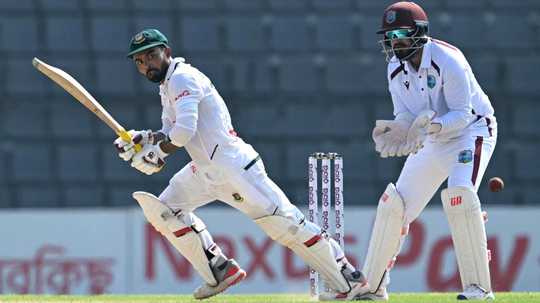
West Indies spinner Jomel Warrican admitted his side had not expected Towhid Hridoy to produce such a commanding innings, describing the Bangladesh batter’s unbeaten 242 as “special” after it transformed the home team’s position in the second Test. Hridoy’s marathon effort, made under pressure and against a West Indies attack that had been in control, helped Bangladesh recover from a precarious start and secure a narrow first-innings lead.
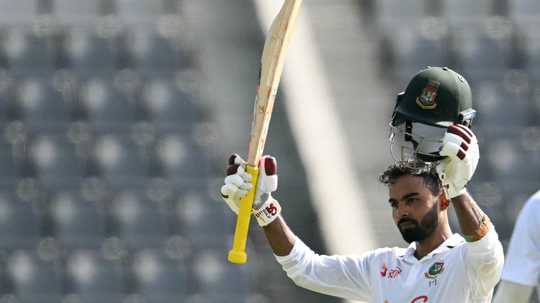
The 25-year-old’s score is now the highest individual total by a Bangladesh batter in Test cricket. It surpassed Mushfiqur Rahim’s previous national record of 219 and made Hridoy only the fourth Bangladeshi to score a Test double century, joining Mushfiqur, Tamim Iqbal and Shakib Al Hasan. For a player appearing in only his third Test, the achievement marked a striking step forward in his international career.
Hridoy turns a difficult innings into a historic one
Hridoy resumed the day on 29, with Bangladesh needing a substantial contribution to prevent the West Indies from tightening their grip on the match. The hosts soon lost three wickets in quick succession, leaving the lower order to help rebuild an innings that had threatened to unravel. Rather than retreat into defence, Hridoy balanced patience with selective aggression, gradually taking control of the contest.
He finished unbeaten on 242 from 359 deliveries, striking 22 fours and 11 sixes. Those 11 maximums set a new record for the most sixes hit by a Bangladeshi in a Test innings, comfortably passing Tamim Iqbal’s previous mark of seven. The innings was not simply a display of power: Hridoy also showed the concentration needed to bat for long periods, assess the field and choose when to attack.
His most important partnerships came with the lower order. Hridoy built a century stand for the eighth wicket with Taijul Islam, giving Bangladesh renewed stability after the collapse. He then continued to add valuable runs with Taskin Ahmed, ensuring that the West Indies had to keep working for every breakthrough. These partnerships helped turn what could have been a modest total into a score capable of putting pressure back on the visitors.
Warrican credits a “special” performance
Warrican said the West Indies had been in a strong position before Hridoy’s innings changed the direction of the day. The left-arm spinner acknowledged that his team had been thinking about the size of the lead it might establish, only to see the Bangladesh batter steadily take that possibility away.
“We were in the ascendancy and things were going our way, but Hridoy batted well. The way he batted was special. We have to give him credit,” Warrican said. He added that the innings had placed Bangladesh in a much better position and praised the quality of Hridoy’s batting throughout a demanding spell at the crease.
Warrican’s comments reflected the challenge facing the West Indies: Hridoy continued to find scoring options even as fielders were pushed out to the boundary. His ability to clear the rope, alongside his willingness to rotate the strike and protect the lower-order batters, prevented the visitors from settling into a straightforward defensive plan.
Phil Simmons praises Hridoy’s decision-making
Bangladesh head coach Phil Simmons was equally impressed, particularly because Hridoy had entered the side after Mominul Haque was ruled unavailable for the second Test following a concussion. Simmons said the team had asked its players to make the most of opportunities, and Hridoy responded by taking responsibility when Bangladesh needed him most.
“When you are out there in the middle, you are in charge and you do what is necessary for the team,” Simmons said. He described the innings as outstanding and highlighted Hridoy’s ability to keep finding boundaries and sixes, even as fatigue set in while he approached the double century.
For the coach, the knock was as notable for its judgment as for its size. Hridoy understood when to attack, when to preserve his wicket and when to give the strike to the lower-order batters. That awareness matters in Test cricket, where a batter’s decisions can shape not only an individual score but also the team’s survival and eventual position in the match.
Simmons also stressed that Hridoy had worked out his approach himself. Rather than sending instructions from the dressing room, the coach said he wants players to take ownership once they cross the boundary. In his view, Hridoy’s choices during the innings showed that he was learning to manage difficult situations with increasing maturity.
A major milestone for a developing Test batter
Hridoy’s record-breaking effort is especially significant because it followed a mixed start to his Test career. Simmons acknowledged that the young batter had played a couple of rash shots in Dhaka, but argued that those moments should be seen in context: Hridoy was still at an early stage of his red-ball career. The coach believes the new innings showed how quickly he is developing.
That growth could be important for Bangladesh beyond this match. A long, composed innings from the middle order can give the side greater resilience, particularly when early wickets fall or the top order is unable to build a platform. Hridoy’s performance also gives the selectors a stronger case to consider him for future Test assignments, although consistency across different conditions will be the next challenge.
For cricket followers, the innings offers plenty to consider when assessing the match’s next phase. Bangladesh’s first-innings lead has shifted the pressure onto the West Indies, but the result will depend on how both sides respond with the bat and ball. Any prediction about the final outcome should account for the pitch, the remaining time and whether Bangladesh’s bowlers can make early inroads. What is certain is that Hridoy has given his team a platform—and produced one of the most memorable individual performances in the country’s Test history.