
Harmanpreet Kaur Steps Down as India Women’s Cricket Captain: A New Era Begins
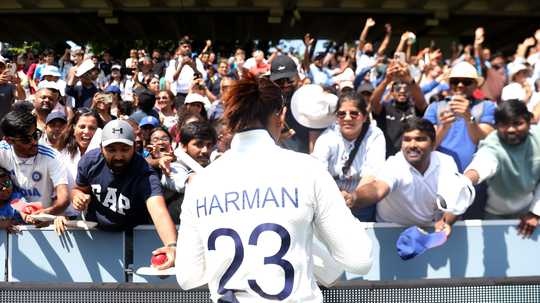
In a significant development within Indian women’s cricket, Harmanpreet Kaur has officially announced her resignation from the captaincy across all formats of the game. This decision marks a pivotal moment in the future trajectory of the Indian women’s team, prompting discussions about leadership, team strategy, and the vision for upcoming international competitions.
Details of the Leadership Transition and BCCI’s Decision-Making Process
The Board of Control for Cricket in India (BCCI), the governing body overseeing cricket operations in the country, convened an important review meeting in Guwahati on Monday. The meeting was attended by key figures including Harmanpreet Kaur herself, vice-captain Smriti Mandhana, and the head coach Amol Muzumdar. Presided over by BCCI secretary Devajit Saikia, the session was ostensibly centered around evaluating the team’s progress and planning the road ahead. However, sources reveal that the core agenda revolved around Harmanpreet’s leadership role and the future of the coaching staff.
While the team has enjoyed recent successes, including back-to-back tournament wins, the discussions appeared to focus on whether a change in captaincy was necessary to foster a new direction. It is noteworthy that the decision for Harmanpreet to step down was announced just hours after the meeting concluded, signaling a strategic move by the BCCI to reshape the team’s leadership structure.
Public and Expert Reactions to the Resignation
Former Indian women’s cricket captain Diana Edulji expressed her support for Harmanpreet’s decision, emphasizing that her resignation aligns with the best interests of women’s cricket in India. “It’s a positive step that allows the team to build around a new leader,” Edulji remarked. “Harmanpreet’s decision provides an opportunity for fresh leadership to emerge, especially with the upcoming major tournaments.”
Edulji’s comments reflect a broader consensus that leadership transitions are vital for sustained success at the international level. She also highlighted that Harmanpreet’s career still has several years remaining, and she should enjoy her remaining playing days without the added pressure of captaincy responsibilities.
Context Behind the Leadership Change: From Disappointment to Triumph
The calls for Harmanpreet’s resignation gained momentum after India’s disappointing performance at the recent Women’s T20 World Cup held in England, where the team failed to advance past the group stage. The tournament was a setback, sparking criticism and debates about leadership and team management. However, India rebounded impressively, securing titles at the Women’s Asia Cup in the UAE and winning gold at the Asian Games in Japan. These victories demonstrated resilience and the team’s potential, yet they did not alter the ongoing discussions about leadership roles.
Interestingly, the recent success stories may have played a role in softening the narrative around Harmanpreet’s departure. Sources suggest that the decision was always in the pipeline following the World Cup, with the subsequent triumphs acting as a positive backdrop for a smooth transition rather than a setback.
Harmanpreet Kaur’s Future and the Road Ahead
In a strategic move, Harmanpreet was offered the option to retain her captaincy in the 50-over format, which remains a crucial component of India’s limited-overs strategy. Given that women’s cricket has fewer Test matches, the focus is predominantly on ODIs and T20Is. Ultimately, Harmanpreet chose to relinquish leadership across both formats, paving the way for a new captain to be appointed.
The BCCI’s overarching goal is to build a formidable team around vice-captain Smriti Mandhana, who has been her trusted deputy for several years. Mandhana is widely regarded as a talented and dynamic player, whose leadership qualities are seen as essential for India’s ambitions in upcoming major tournaments, including the 2028 Women’s T20 World Cup and the Paris 2024 Olympic Games.
Anticipated Leadership Announcement and Future Plans
The formal announcement of the new captain is expected shortly, likely coinciding with the selection of the squad for the upcoming Zimbabwe series. The selectors’ meeting in Guwahati is set to finalize the team for a historic bilateral series, marking Zimbabwe’s first-ever visit to India for women’s cricket. The series will feature six matches—three ODIs that are part of the ICC Women’s Championship 2025-29, and three T20Is in Raipur and Baroda.
Speculation suggests that Smriti Mandhana is the frontrunner to assume the captaincy, a move that aligns with the BCCI’s strategic plan to foster a leadership pipeline centered around her talents. The decision is also seen as a way to prepare the team for the challenges of the next ICC Women’s World Cup and the Olympic debut in Paris, both critical milestones for Indian women’s cricket.
Broader Implications for Women’s Cricket and Prediction of Future Success
This leadership change underscores a broader trend in women’s cricket, where teams are increasingly focusing on strategic leadership and player development to elevate their global standing. As India aims to solidify its position as a powerhouse in women’s cricket, the choice of captaincy will play a vital role in shaping team dynamics and performance.
For cricket enthusiasts and analysts, the prediction of how the team will perform under new leadership remains a topic of intense discussion. Many believe that a fresh captaincy could bring renewed energy and innovative strategies, potentially enhancing India’s chances in upcoming tournaments. The success of the team under Mandhana’s leadership could be pivotal in their quest for global dominance and in achieving their prediction as strong contenders in the 2028 World Cup.
Conclusion: A New Chapter in Indian Women’s Cricket
Harmanpreet Kaur’s decision to step down as captain marks the end of an era and the beginning of an exciting new chapter for Indian women’s cricket. With a focus on building a team around Smriti Mandhana and preparing for major international events, the BCCI’s strategic move aims to position India as a dominant force in women’s cricket. As fans and experts await the official announcement, one thing is clear: Indian women’s cricket is on the cusp of a transformational phase, with leadership and prediction playing crucial roles in shaping its future success.