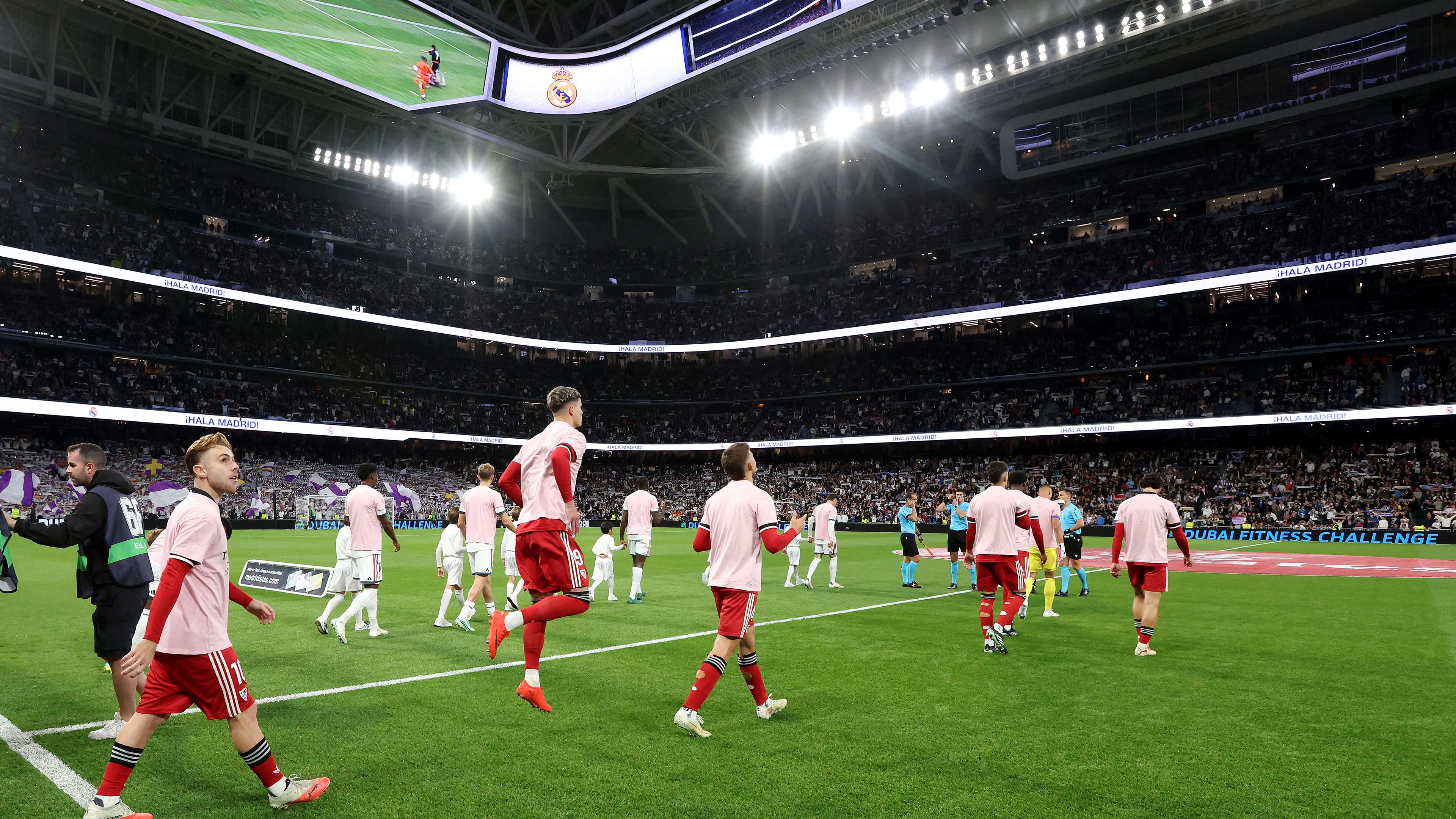

Sevilla Criticise Refereeing After Arda Güler Avoids Red Card Against Real Madrid
Sevilla have publicly questioned the officiating after Arda Güler avoided a red card for an elbow on Peque Fernández during their LaLiga meeting with Real Madrid at the Santiago Bernabéu. The flashpoint came early in the contest, drew a lengthy VAR review and quickly became one of the match’s defining talking points.
The incident occurred in the 24th minute, with Real Madrid building a counter-attack. Fernández tugged at Güler’s shirt as the Turkish midfielder moved forward. Güler then swung an arm backwards, striking the Sevilla player with his elbow and leaving him on the ground. The referee paused play while VAR checked whether the contact met the threshold for a sending-off.
VAR review leaves Sevilla frustrated
Officials spent close to three minutes reviewing the footage before deciding against a red card. Güler was allowed to continue and did not receive a yellow card for the challenge. The decision immediately angered Sevilla, who believed the nature and force of the contact warranted stronger punishment.
Rather than sanctioning Güler, the referee booked Real Madrid defender Dean Huijsen and Sevilla’s Félix Correia after the pair confronted one another during the stoppage. That contrast became central to Sevilla’s criticism: the players involved in the argument were cautioned, while the original elbow incident resulted in no card for the Real Madrid midfielder.
Sevilla used their official account on X to draw attention to the sequence with a pointed post. The club wrote that Güler’s “clear use of the elbow against Peque” had resulted in yellow cards for Huijsen and Correia. The message was brief, but its sarcasm made the club’s dissatisfaction unmistakable.
Güler scores shortly after the controversy
The timing added another layer to the debate. Just five minutes after the VAR review, Güler scored to put Real Madrid ahead. His goal turned the incident into an even more prominent talking point, as a player who might have been dismissed instead went on to make a direct contribution to the scoreline.
That sequence does not by itself prove that the refereeing decision changed the result. However, it underlines why high-profile disciplinary calls attract intense scrutiny: a red card can alter a team’s shape, tactical plan and chances of earning points. For Sevilla, the concern was not only the decision in isolation, but also the possibility that the match might have unfolded differently had Güler been sent off.
Why the decision is likely to be debated
Elbow incidents are among the most difficult moments for referees to judge because the context matters. Officials must assess whether the arm movement was deliberate, how much force was used, whether the action was part of a natural motion and whether the contact endangered an opponent. A shirt pull can also complicate the picture, but it does not automatically determine how a player’s response should be punished.
VAR can review possible red-card offences, yet it is not intended to replace every on-field judgement with a new interpretation. Video officials generally intervene when they believe there has been a clear and obvious error. That standard means two viewers can watch the same replay and still disagree about whether the referee’s decision should be overturned.
In this case, the extended review showed that the incident received careful attention, but the outcome did little to settle the argument. Sevilla’s reaction reflects a broader frustration often heard from clubs when a major decision is reviewed at length and still produces no visible sanction. The absence of a yellow card for Güler, in particular, is likely to remain a key point in post-match discussion.
Real Madrid-Sevilla rivalry adds to the spotlight
Matches between Real Madrid and Sevilla already carry considerable attention, with both clubs accustomed to competing under intense scrutiny. At the Bernabéu, every major refereeing call can quickly become a national talking point, especially when it involves a potential dismissal and a player who later scores.
For Real Madrid, the immediate focus will be on the result and the contribution of Güler, whose goal arrived soon after the controversy. For Sevilla, the challenge is to move on while maintaining their position that the decision was wrong. The club’s post on social media ensured that its view was heard, while also inviting supporters and neutral observers to revisit the footage.
The episode also highlights the wider challenge of consistency in football officiating. Supporters want similar incidents to produce similar outcomes, but decisions involving intent and force are rarely simple. Clear communication from officials can help explain why a VAR review ends as it does, although the final call will not always satisfy the teams affected.
What the controversy means for the next fixtures
Both clubs must now turn their attention to the demands of a busy schedule. Real Madrid are due to face RB Leipzig in the Champions League on 22 October, while Sevilla’s next listed league fixture is against Osasuna on 27 October. The incident may continue to shape the conversation around the Bernabéu match, but neither side can afford to let it distract from the points and performances still at stake.
For fans searching for football prediction and match analysis, the key takeaway is that disciplinary decisions can influence more than a single moment. A potential red card affects formations, substitutions and the balance of a game, while the emotional response can also shape how players approach the remaining minutes. Still, one controversial call should not be treated as a reliable predictor of future results: team form, injuries, tactics and finishing remain essential factors.
Sevilla’s complaint has turned Güler’s challenge into one of the most discussed moments of the match. The VAR review ended without a red or yellow card for the midfielder, and his goal soon afterwards intensified the scrutiny. Whether supporters agree with the referee or Sevilla, the incident is a reminder that football’s biggest debates often centre on a few seconds—and on how officials interpret them.