
Paul Scholes Raises Questions Over Michael Carrick’s Future at Manchester United
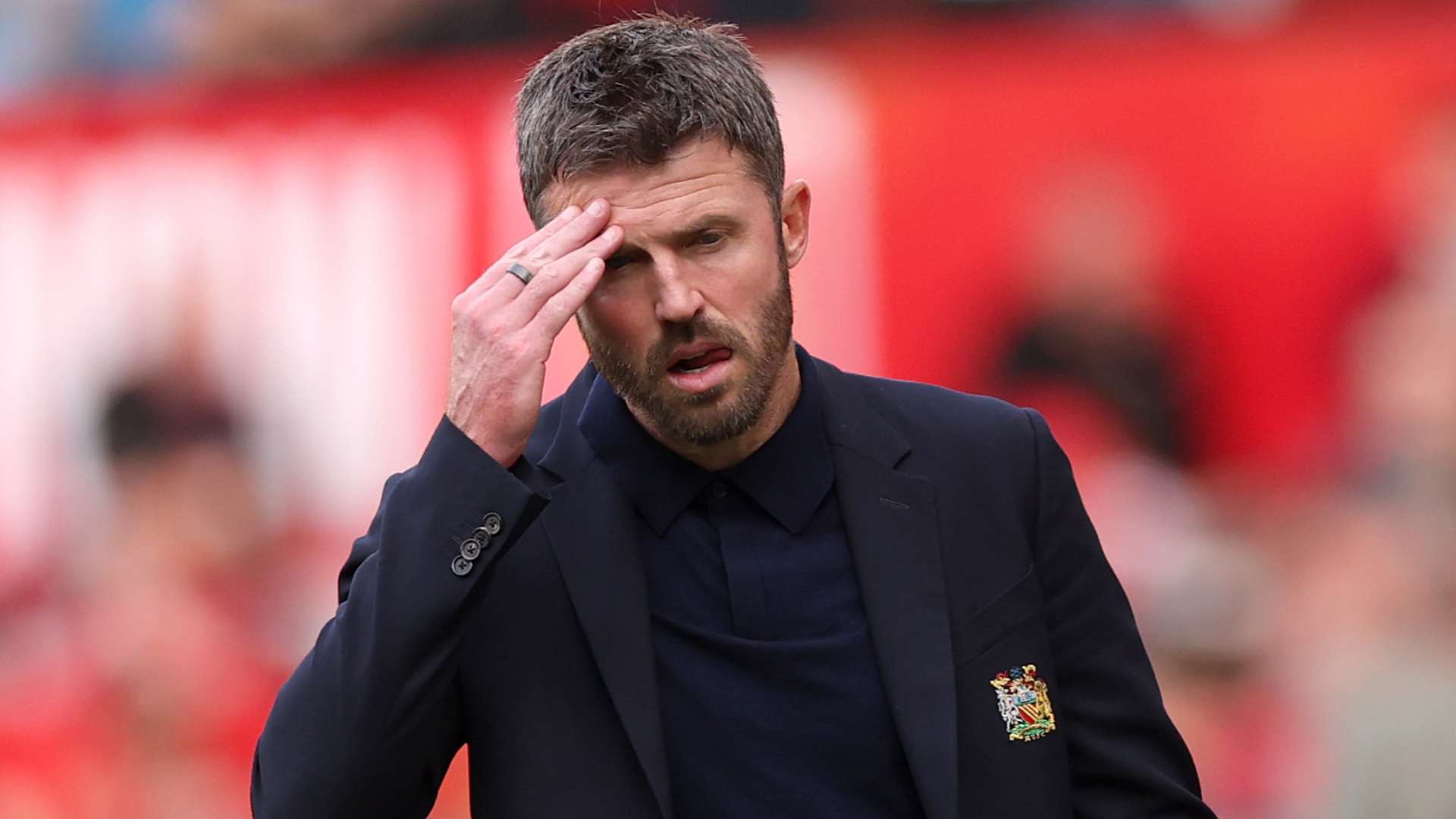
Manchester United great Paul Scholes has cast doubt on Michael Carrick’s long-term commitment to the club, suggesting the under-pressure manager could already be considering an exit from Old Trafford. The comments have added another layer of uncertainty around a team struggling to find consistency after a difficult run of results.
Carrick was given the permanent managerial role this summer, but the early stages of his tenure have proved far more challenging than supporters hoped. A series of poor performances has pushed United into the bottom half of the table, intensifying scrutiny of the former midfielder’s tactics, team selection and ability to restore confidence.
Scholes Questions Carrick’s Position
Scholes’ suggestion that Carrick may be looking for an escape route is particularly striking because of the manager’s close ties to Manchester United. Carrick spent years at the club as a player and later worked within its coaching setup, giving him a strong personal connection to the institution as well as an understanding of its expectations.
However, a familiar face is not protected from the pressures of the job. United managers are judged against the club’s history, its resources and the demands of a global fanbase. When results fall short, questions quickly emerge about whether a coach has the authority, support and time needed to turn things around.
Scholes’ remarks should not be treated as confirmation that Carrick plans to leave. They are an expression of concern about the situation, rather than evidence of a decision or formal development. Still, comments from a prominent former player can influence the conversation around the club, especially when they reflect doubts already being raised by supporters and pundits.
A Difficult Start to the Permanent Role
Taking charge permanently brings a different level of pressure from serving in an interim or transitional capacity. A manager is expected not only to improve immediate results but also to establish a clear football identity, develop the squad and show that progress can be sustained across a full campaign.
For Carrick, the challenge has been to make those changes while dealing with the demands of a club that expects to compete near the top of the Premier League. United’s current position in the bottom half has made every dropped point more significant. Poor results also leave less room for experimentation, making it harder to introduce a new approach without facing criticism for the short-term consequences.
There are several factors that can contribute to a team’s decline: inconsistent finishing, defensive mistakes, injuries, limited squad depth or a lack of confidence. These issues can overlap, making it difficult to identify one simple solution. United’s performances will therefore be judged not just by the final score but by whether the team shows greater organisation, intensity and control from match to match.
What Manchester United Need to Improve
The immediate priority is to make the side more reliable. A team in poor form often needs to simplify its football, reduce costly errors and build confidence through disciplined performances. That does not necessarily mean abandoning attacking ambition. It means creating a stronger foundation so that creative players can take risks without leaving the team exposed.
United also need to show greater consistency across the pitch. Defensive concentration must improve, particularly during transitions and set pieces, while the midfield needs to provide a better link between the back line and the forwards. In attack, the team must turn promising possession into clear chances and demonstrate more composure in front of goal.
These are familiar themes in football, but addressing them requires more than a change in formation. Carrick must communicate a clear plan, choose players suited to it and ensure the squad responds with urgency. If performances improve, the mood around Old Trafford could shift quickly. If results continue to deteriorate, pressure on the manager is likely to grow.
Prediction: Carrick’s Next Results Could Define the Debate
Any prediction about Carrick’s future remains uncertain, particularly without confirmation that he is considering leaving. The most reliable indicator will be what happens on the pitch over the coming weeks. A short run of improved results could ease the immediate pressure and give him time to establish his ideas. Another sequence of defeats, however, would strengthen calls for the club to reassess its direction.
Manchester United’s leadership will also have an important role. Managers need clear backing, but that support is most effective when it comes with measurable expectations. The club must decide whether it believes Carrick can build a team capable of competing consistently or whether the current campaign has exposed deeper problems that require a different solution.
For now, Scholes’ comments have sharpened the focus on Carrick at a moment when United can ill afford more distractions. The manager’s connection to the club may make the situation more emotionally charged, but sentiment alone cannot determine his future. Results, performances and the confidence of the players will carry greater weight.
A Test for Carrick and the Club
The coming period represents a major test for both Carrick and Manchester United. The manager must show that he can steady a struggling side and turn a difficult start into a platform for progress. The club, meanwhile, must provide a coherent response rather than allowing speculation to dominate the story.
Scholes’ suggestion that Carrick could be searching for an exit has fuelled debate, but it remains only a claim about what the manager might be thinking. Until there is clearer evidence, attention should stay on United’s football: whether the team can improve its league position, regain confidence and deliver performances that match the expectations attached to the badge.
For supporters, the key question is no longer simply whether Carrick understands Manchester United. It is whether he can translate that understanding into results. His next decisions—and the players’ response to them—may determine whether this difficult spell becomes a temporary setback or the beginning of a more serious crisis at Old Trafford.