
Saudi Football Under Scrutiny: The Paradox of Coach Georgios Donis’s Leadership and Its Impact on Prediction and Performance
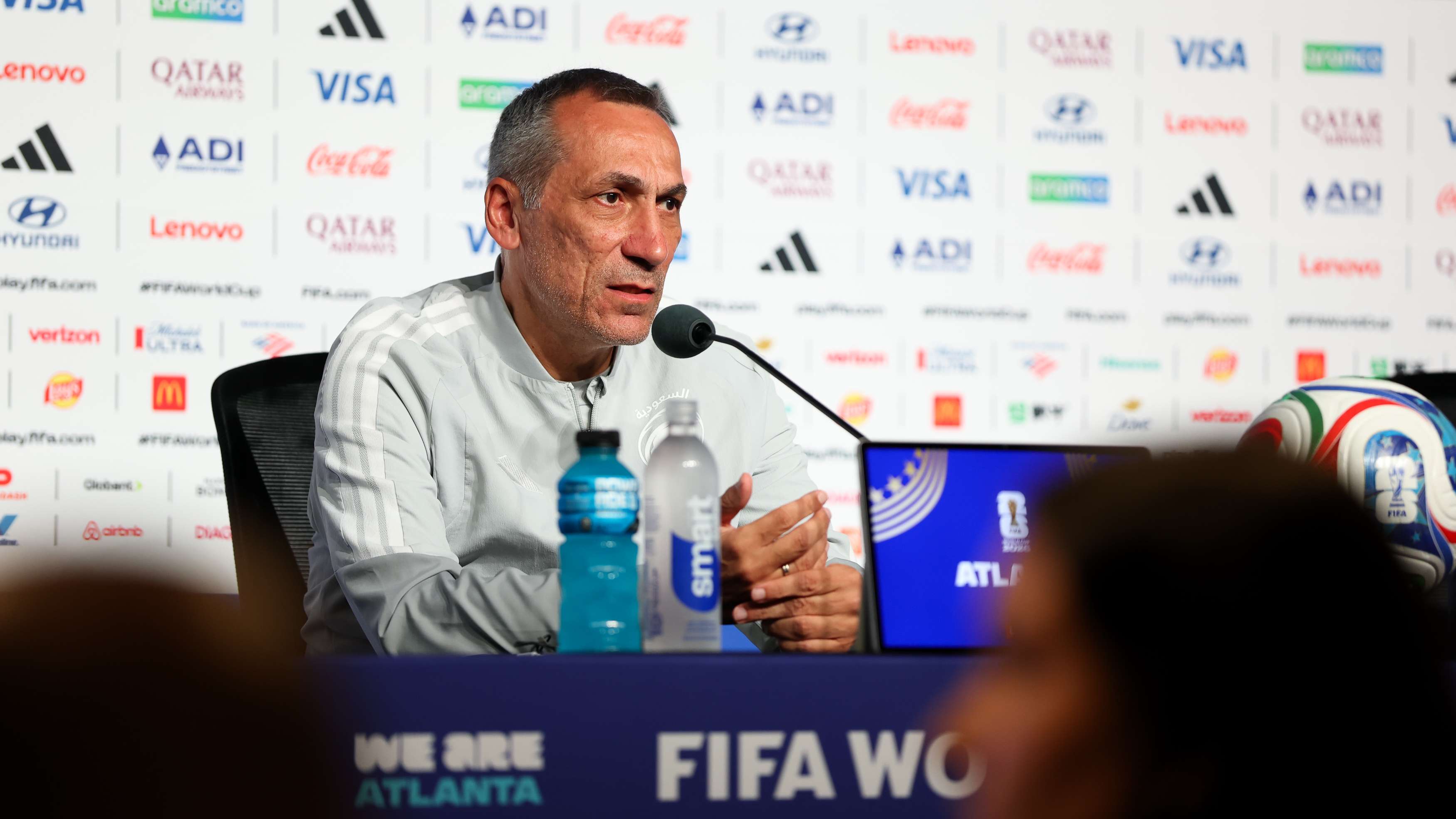
As Saudi Arabia continues to push forward in its ambitious football development plans, the spotlight increasingly falls on Greek coach Georgios Donis. Appointed as the head of the national team just a few months ago, Donis entered the scene with high hopes and bold promises. His vision was clear: to restore the attacking football that once characterized Saudi teams and to harness the immense talent within the kingdom’s football landscape. However, recent results and tactical decisions have cast a shadow of doubt over his leadership, raising critical questions about his true influence and the accuracy of predictions surrounding the team’s future trajectory.
Promising Beginnings: A Vision for Attacking Football
When Donis stepped into his role, he made it known that he was determined to bring a new technical identity to the Saudi national team—a team that could compete fiercely on the Asian and global stage. His confidence was palpable, and he emphasized the wealth of talent available in Saudi football, promising an era of attacking, entertaining football that would excite fans and restore national pride.
This optimism naturally fueled expectations. Football enthusiasts and pundits alike anticipated a revitalization of Saudi Arabia’s style of play, with predictions leaning toward a more aggressive, possession-based game that could challenge traditional powerhouses in Asia and beyond. Many believed that Donis’s experience and tactical acumen could turn the tide and bring tangible success to the team.
The Reality Check: Disappointing Results and Performance Struggles
Unfortunately, the reality has been far from the promising narrative. The recent performances at the FIFA World Cup served as a harsh wake-up call. Saudi Arabia’s campaign, which was highly anticipated, instead highlighted significant shortcomings. The team suffered a heavy 4-0 defeat to Spain, drew blank against Cape Verde, and managed only a single goal against Uruguay. These results not only dampened hopes but also exposed deeper issues within the squad’s attacking potency and tactical execution.
Beyond the numbers, the performances revealed a lack of clarity in offensive strategy and limited effectiveness in goal-scoring opportunities. Critics began scrutinizing Donis’s choices—his player selections, formation tactics, and match management—raising questions about whether his initial promises were realistic or merely aspirational rhetoric.
From Promises to Reality: The Gulf Cup and Player Selection Dilemmas
Following the World Cup setbacks, Donis’s leadership was put under further pressure during the Gulf Cup. The tournament, a crucial regional stage, became a litmus test for his tactical approach. Despite securing a narrow 1-0 victory against Kuwait, many fans and analysts felt the performance lacked the attacking dynamism Donis had vowed to restore. The result was seen as another missed opportunity to demonstrate progress.
As the team prepares for upcoming fixtures, including a highly anticipated match against Oman, speculation mounts about potential lineup changes—possibly up to six alterations. Such tactical tweaks are commonplace in football, yet the timing and rationale behind these decisions have sparked debate. Are these shifts driven by a genuine assessment of players’ performances, or are they reactive measures influenced by external criticism?
Contradictions and Leadership Under the Microscope
What complicates the narrative surrounding Donis is the apparent contradiction between his public statements and his on-field decisions. The coach consistently asserts that he holds full authority over team selections and tactical strategies. He emphasizes that he is the primary decision-maker and that his choices are rooted in objective technical analysis.
However, there are instances—such as the controversial selection of Salem Al-Dawsari during the World Cup—where perceptions of external influence or pressure seem to have played a role. Fans and pundits have voiced frustrations over certain selections, feeling they do not align with players’ current form or capabilities. Such controversies tend to undermine confidence in Donis’s ability to impose his technical vision independently.
This disconnect between rhetoric and reality raises important questions: Is Donis truly the steadfast leader with a clear footballing blueprint that Saudi football needs? Or is he vulnerable to external influences, compromising his authority and strategic consistency? The upcoming matches will be critical in demonstrating his capacity to lead with conviction and to translate promises into tangible results.
Handling Pressure and Expectations in a Transition Phase
National teams of Saudi Arabia’s stature are in a delicate phase of transition, striving to blend emerging talent with experienced players. During such periods, strong leadership and unwavering tactical discipline are essential. The team does not need a coach who merely delivers confident statements or engages in public spats—what it requires is a leader who owns his decisions and navigates the pressures of international football with resilience.
Donis’s ability to handle criticism while maintaining a clear project is under intense scrutiny. His responses to setbacks—whether about player selection, tactical adjustments, or performance expectations—will significantly influence the team’s development. Football prediction models and betting enthusiasts alike are watching closely, assessing whether his strategies will evolve into a consistent and effective approach on the pitch.
The Road Ahead: Restoring Confidence and Achieving Prediction Accuracy
As Saudi football fans and analysts look forward to upcoming fixtures, the focus shifts to the authenticity of Donis’s technical project. Will the lineup changes and tactical tweaks be rooted in genuine analysis? Can he restore the attacking identity that was promised? And most importantly, will the team’s performances begin aligning more closely with optimistic predictions?
Restoring confidence in the team requires more than words; it demands results, tactical clarity, and unwavering commitment. The next few months will be pivotal in determining whether Donis can bridge the gap between his initial promises and the realities faced on the field. For fans, pundits, and betting enthusiasts, this period will be crucial in shaping accurate football predictions and understanding of Saudi Arabia’s potential on the international stage.
Conclusion: A Coach at a Crossroads
In conclusion, Georgios Donis’s tenure as Saudi Arabia’s national team coach exemplifies the complex dance between public perception and tactical effectiveness. His journey reflects the broader challenges faced by emerging football nations: balancing talent development, strategic planning, and dealing with external pressures. The key to success lies in his ability to demonstrate consistent, results-driven leadership while staying true to his footballing philosophy.
As the team prepares for upcoming matches, including the critical clash with Oman, all eyes will be on Donis’s decisions and the team’s performances. Will the predicted tactical adjustments translate into a renewed attacking style and better results? Only time will tell. For now, the football community remains eager to see whether Donis’s predictions will be fulfilled or remain unfulfilled promises, shaping the future of Saudi football and its place in international prediction models.