
Gattuso’s Lazio Transformation: The Family Culture Behind a Stunning Win Over Juventus
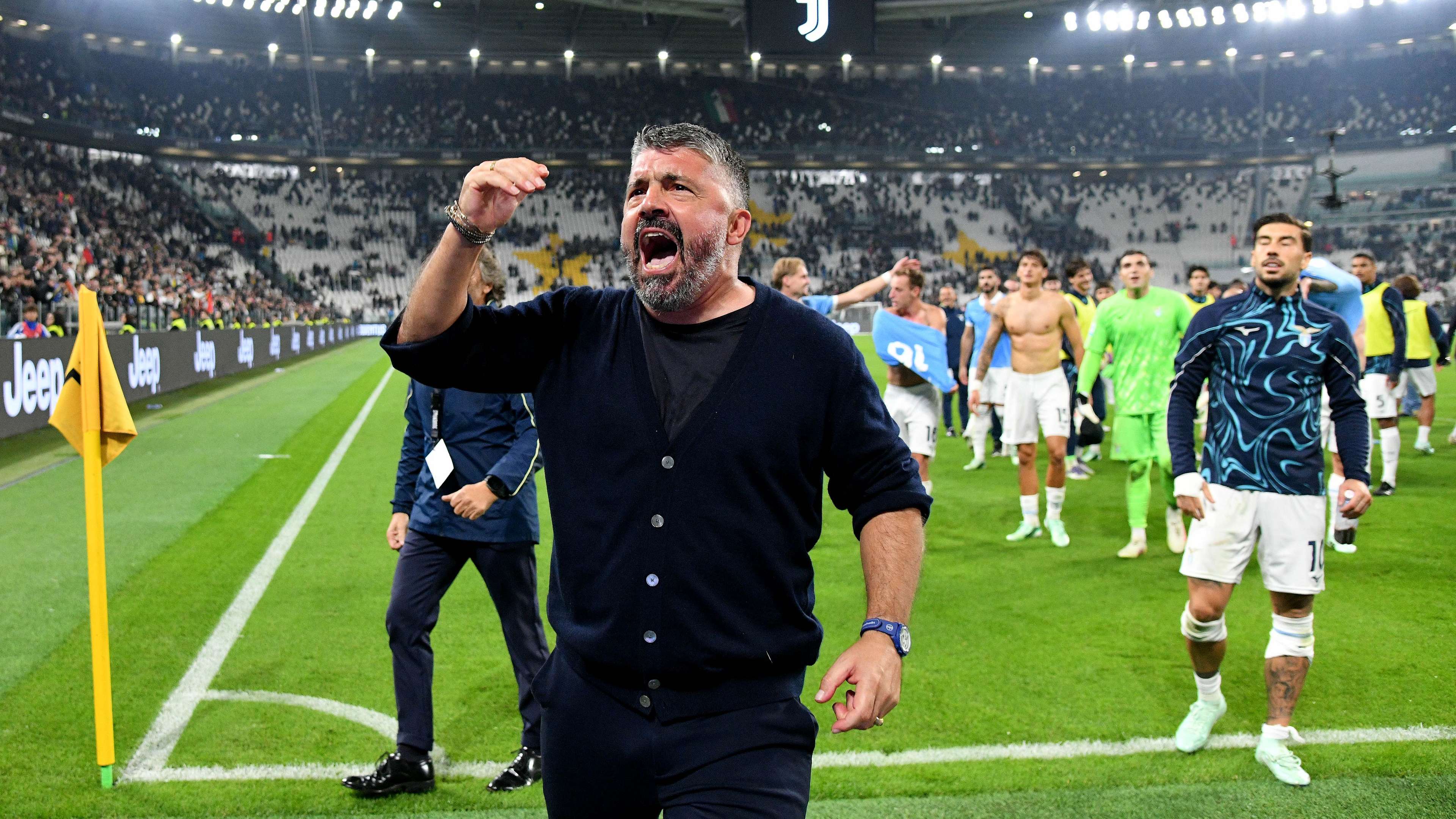
Lazio manager Gennaro Gattuso has offered a glimpse into the changing ideas behind his coaching after his side delivered a commanding 3-0 away victory over Juventus. The result was more than a memorable night in Turin: it highlighted how Lazio’s growing confidence, togetherness and tactical discipline have helped turn them into serious contenders in the football conversation.
For Gattuso, the performance reflected a broader shift in his approach to management. Once known primarily for his intense, uncompromising personality, he now places greater emphasis on understanding players as individuals and building an environment in which the squad can function as a close-knit family. That balance between high standards and personal connection, he suggested, has become central to Lazio’s progress.
A statement performance in Turin
Winning away to Juventus is a demanding task for any team. The hosts have a formidable reputation, strong support and the experience to punish even brief lapses in concentration. Lazio’s 3-0 triumph therefore carried significance beyond the scoreline. It was a result built on composure, collective effort and the ability to take advantage of key moments.
Rather than allowing the occasion to overwhelm them, Lazio played with conviction. Their players worked together without the ball, stayed organised under pressure and showed purpose when opportunities opened up. The clean sheet was just as important as the goals: it demonstrated that the team’s attacking ambition was supported by a disciplined defensive structure.
One result cannot decide a season, and Gattuso will know that the challenge is to reproduce this level consistently. But a dominant away win against a major rival can change how a squad views itself. It can strengthen belief in the manager’s methods and give players evidence that their preparation can succeed against the strongest opposition.
Why Gattuso is building a “family unit”
Gattuso’s description of Lazio as a family unit points to a culture that extends beyond match-day instructions. In a demanding season, players must cope with competition for places, changing roles, injuries and intense public scrutiny. A strong internal bond can help a squad manage those pressures without losing focus.
That does not mean lowering expectations or avoiding difficult conversations. A team culture built on trust can make honest feedback more effective, because players understand that criticism is intended to improve performance rather than undermine confidence. Gattuso’s challenge is to combine that sense of belonging with the accountability required at a club competing for major objectives.
There is also a practical football benefit. Players who communicate well and trust their teammates are often quicker to cover space, press together and recover after mistakes. Those details can be decisive in high-level matches, where a single hesitation may create a scoring chance for the opposition. Lazio’s coordinated display in Turin offered a persuasive example of how cohesion can translate into action on the pitch.
Adapting to modern players
Gattuso also acknowledged the importance of adjusting to the personalities and expectations of contemporary footballers. Modern squads bring together players from different backgrounds, with varied experiences and individual ways of responding to pressure. A manager who relies on one fixed style of communication may struggle to get the best from everyone.
Adapting does not require a coach to abandon authority. Instead, it means recognising that motivation is not identical for every player. Some respond to direct instruction, while others benefit from detailed explanation, reassurance or greater responsibility. Understanding those differences can help a manager deliver the same central message in a way that each individual can absorb.
For Gattuso, this evolution appears to be part of a wider development in his managerial career. His competitive instincts remain valuable, particularly when a team needs energy and resilience. But experience has also encouraged him to consider how relationships, communication and emotional awareness affect performance over a long campaign.
From a big win to genuine title ambitions
The 3-0 result has inevitably encouraged discussion about Lazio’s potential in the title race. A convincing victory over Juventus gives the club a high-profile reference point, but title challenges are shaped by more than one standout performance. Consistency against different styles of opposition, squad depth and the ability to respond to setbacks will all matter as the season develops.
That makes the team’s internal culture especially relevant. A long campaign tests more than tactical quality. It can expose divisions, fatigue and uncertainty, particularly when results become difficult. If Lazio can preserve the unity Gattuso has described, they may be better equipped to navigate those difficult stretches and maintain their challenge.
Supporters and football analysts will also be watching how the team handles expectations after such a prominent win. Opponents may adjust their approach, giving Lazio less space and placing greater emphasis on stopping their most dangerous players. Gattuso and his staff will need to keep refining the team’s plans rather than treating the Turin performance as a finished blueprint.
What the result could mean for Lazio’s season
There is no reliable prediction that can be made from one match alone, but Lazio’s performance provides encouraging signs. The team showed that it can remain organised in a difficult away environment, compete with a leading rival and turn its opportunities into a decisive result. Those qualities are essential for any side hoping to remain near the top of the table.
The next test will be whether Lazio can carry the same intensity into matches that attract less attention. Strong teams are judged not only by their biggest victories but also by their ability to collect points when the occasion is quieter and the opposition is determined to frustrate them. Maintaining concentration and togetherness across that range of fixtures will be crucial.
Gattuso’s evolving philosophy may ultimately prove as important as any tactical adjustment. By combining demanding standards with a more personal understanding of his players, he is trying to create a group that is both competitive and connected. Lazio’s emphatic win over Juventus suggests that the approach is gaining traction.
For now, the result has given the club momentum and strengthened belief in its ambitions. Whether Lazio can sustain a title challenge remains to be seen, but Gattuso’s message is clear: success is not built solely through formations or individual talent. It also depends on a squad that trusts one another, adapts to pressure and works as one. In Turin, Lazio showed what that kind of unity can produce.