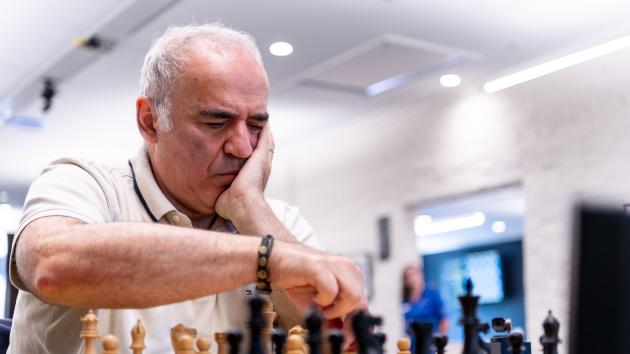

Unveiling the Shadows: The Threats Against Chess Legend Garry Kasparov and the Broader Context of Political Espionage
In a startling revelation that intertwines the worlds of international espionage, political dissent, and the timeless game of chess, former World Chess Champion Garry Kasparov has come under serious threat. According to recent reports, U.S. authorities warned Kasparov this summer that he was the target of a sinister plot aimed at his life. This alarming development not only highlights the peril faced by outspoken critics of Vladimir Putin but also underscores the increasingly dangerous environment for political dissidents and exiled opposition figures worldwide.
The Hidden Perils Behind the Chessboard: A Plot Uncovered
The report, published by Spain’s second-largest newspaper El Mundo on Wednesday, sheds light on a disturbing network allegedly linked to Russian intelligence agencies. This clandestine operation was reportedly planning targeted attacks against Kasparov and other prominent Russian dissidents living in exile. The network’s sinister aims reportedly extended to an assassination plot against Ilya Ponomarev, a former Russian lawmaker residing in the United States, who has been a vocal critic of the Kremlin.
While U.S. prosecutors have not officially named Kasparov as a direct target, sources close to the former world chess champion have confirmed that American authorities communicated to him that he was indeed considered a potential target. This revelation adds a chilling dimension to the ongoing conflict between Russian authorities and opposition figures abroad, revealing that the stakes are now life and death for those daring to challenge the regime.
Espionage and Assassination Plots: A Broader Threat to Russian Dissidents
The disturbing news follows a broader crackdown on Russian dissidents and opposition figures. On September 15, El Mundo reported that five individuals had been charged in connection with a clandestine operation involving surveillance and assassination plans targeting Russian exiles across Europe and the United States. Prosecutors indicated that these individuals had been recruited by a covert network linked to Russian intelligence, with ambitions to eliminate critics and destabilize opposition movements.
The indictment refers to one of the targeted individuals in the U.S. as “Victim-1,” identified by El Mundo as Ilya Ponomarev. According to official documents, the suspects had taken photographs and gathered information about locations associated with Ponomarev, with one of the defendants allegedly offering $40,000 to carry out the killing. Fortunately, the intended victim refused to cooperate, prompting the suspects to ask if someone else could be hired for the assassination. The five accused remain at large, and the case is still pending in court, highlighting the covert and complex nature of these operations.
Implications for the Global Chess Community and Beyond
Garry Kasparov, who was the reigning World Chess Champion from 1985 until 2000, is more than just a chess icon; he is a symbol of intellectual resistance and political activism. Since retiring from competitive chess in 2005, Kasparov has continued to influence the game and advocate for democracy and human rights. His involvement with the Saint Louis Chess Club, where he recently participated in a Chess960 match, underscores his ongoing passion for the game and his role as a global ambassador for chess innovation and education.
However, Kasparov’s outspoken criticism of Vladimir Putin and his support for democratic movements have made him a target in the eyes of the Russian government. His outspoken stance led to his arrest in Russia outside a Moscow court in 2012, and he subsequently left Russia in 2013 to escape political persecution. He co-founded the Free Russia Forum in Lithuania, a gathering of opposition leaders and activists working to promote democratic reforms in Russia. These activities have made him a prominent figure in the international chess community and a vocal critic of authoritarianism.
From the Chessboard to the Political Arena: Kasparov’s Continued Fight
Despite stepping back from professional competition, Kasparov remains an influential voice in global politics and chess. His recent participation in high-profile chess events, such as the Chess960 match, demonstrates his ongoing commitment to the game. Yet, the threats against him and other dissidents reveal the dangerous intersection of politics and espionage that now extends beyond conventional borders.
In 2022, Russia added Kasparov to its international wanted list, a move that reflects the Kremlin’s ongoing efforts to silence critics abroad. Russian state-controlled media reported in May that Kasparov had been placed on this list in December of the previous year, further illustrating the extent of the regime’s efforts to intimidate and eliminate opposition voices.
The Broader Significance: The Fight for Democracy and the Role of Chess
The case of Kasparov and the recent espionage plots highlight a broader narrative: the ongoing struggle between authoritarian regimes and democratic opposition. Chess, often seen as a metaphor for strategic thinking and intellectual resistance, now also symbolizes resilience in the face of political repression. The game’s principles—planning, foresight, patience—mirror the tactics used by dissidents who continue to challenge oppressive regimes despite the risks.
Furthermore, Kasparov’s story underscores the importance of international support for political dissidents. His experience demonstrates how the global chess community can serve as a platform for advocating human rights and democratic values. The threats he faces remind us that the fight for freedom and justice extends beyond the chessboard, encompassing real-world dangers that require vigilance, diplomacy, and solidarity.
Conclusion: A Call to Vigilance and Support
The revelations of assassination plots and espionage networks targeting figures like Garry Kasparov serve as a stark reminder of the peril faced by those who dare to oppose authoritarian regimes. As the chess community celebrates the intellectual and strategic beauty of the game, it must also recognize the courage of individuals like Kasparov who use their influence to promote democracy and human rights.
Ensuring the safety of opposition figures and promoting awareness of these threats are crucial steps in defending the values of freedom and justice worldwide. The world of chess, with its emphasis on strategic foresight and resilience, can inspire a broader movement of resistance against oppression—proving that even in the darkest times, the game of kings can symbolize hope and defiance.