
Cristiano Ronaldo’s Portugal Career: A Legendary Football Journey Marked by Conflict
For more than two decades, Cristiano Ronaldo’s Portugal career has been defined by extraordinary goals, historic victories and moments of intense drama. The forward became the country’s most recognisable football figure, wearing the captain’s armband through triumphs and disappointments alike. But his international journey was never simply a story of records: disagreements with managers, emotional reactions on the pitch and repeated controversies kept him at the centre of debate.
Now, following the announcement of his retirement from international football, Ronaldo’s 23-year spell with Portugal invites a closer look at the turning points that shaped it. Across 234 appearances, the “Don” helped deliver major trophies and inspired generations of supporters. At the same time, his relationship with coaches and teammates was tested at several defining moments—raising questions about leadership, authority and how a global superstar fits into a changing national team.
A turbulent final chapter with Portugal
The latest controversy unfolded during Portugal’s Nations League trip to Scandinavia. Ronaldo remained on the bench for the match in Oslo, ending a remarkable run: it was the first time in 6,678 days that he had not started a game for his country. After the final whistle, he headed straight down the tunnel rather than joining his teammates on the pitch to celebrate or acknowledge the supporters.
The tension continued as Portugal prepared for the next fixture against Denmark. Ronaldo left the team camp in Copenhagen on the eve of the match, adding to speculation about his status and influence within the squad. His suspension and subsequent retirement announcement brought a dramatic close to a career that had already featured several public clashes. The episode also became a talking point for football prediction and tournament discussions, with fans weighing how Portugal might perform without its long-time captain.
“Talk to Carlos Queiroz”: early friction with managers
Ronaldo’s relationship with Portugal’s coaches was not always difficult. His time under Luiz Felipe Scolari, who managed the national side from 2003 to 2008, was generally considered smooth. The atmosphere became more strained after Carlos Queiroz took charge in 2008.
One early sign of tension came in August 2009, when Ronaldo missed a friendly against Liechtenstein because of flu. The more consequential dispute emerged at the 2010 World Cup. Portugal were eliminated by Spain in the round of 16 after David Villa scored the only goal in the 63rd minute. Ronaldo appeared frustrated during the match, and, when asked about the defeat, offered a brief response that quickly became famous: “Talk to Carlos Queiroz.”
Queiroz left the job later that year. Paulo Bento, who succeeded him, subsequently acknowledged that his relationship with Ronaldo changed over time. In comments to Portuguese broadcaster Antena 1, Bento said the relationship was no longer as it had been at the beginning. He also stressed that maintaining a personal bond could not come at the cost of abandoning his principles, adding that a team needs clear hierarchies and respect for them.
The microphone incident and a European title
Ronaldo’s most memorable off-field outburst came during Euro 2016. Before Portugal’s decisive group match against Hungary in Lyon, he threw a microphone belonging to broadcaster CMTV into a lake. The incident drew headlines, but it did not define the tournament’s outcome.
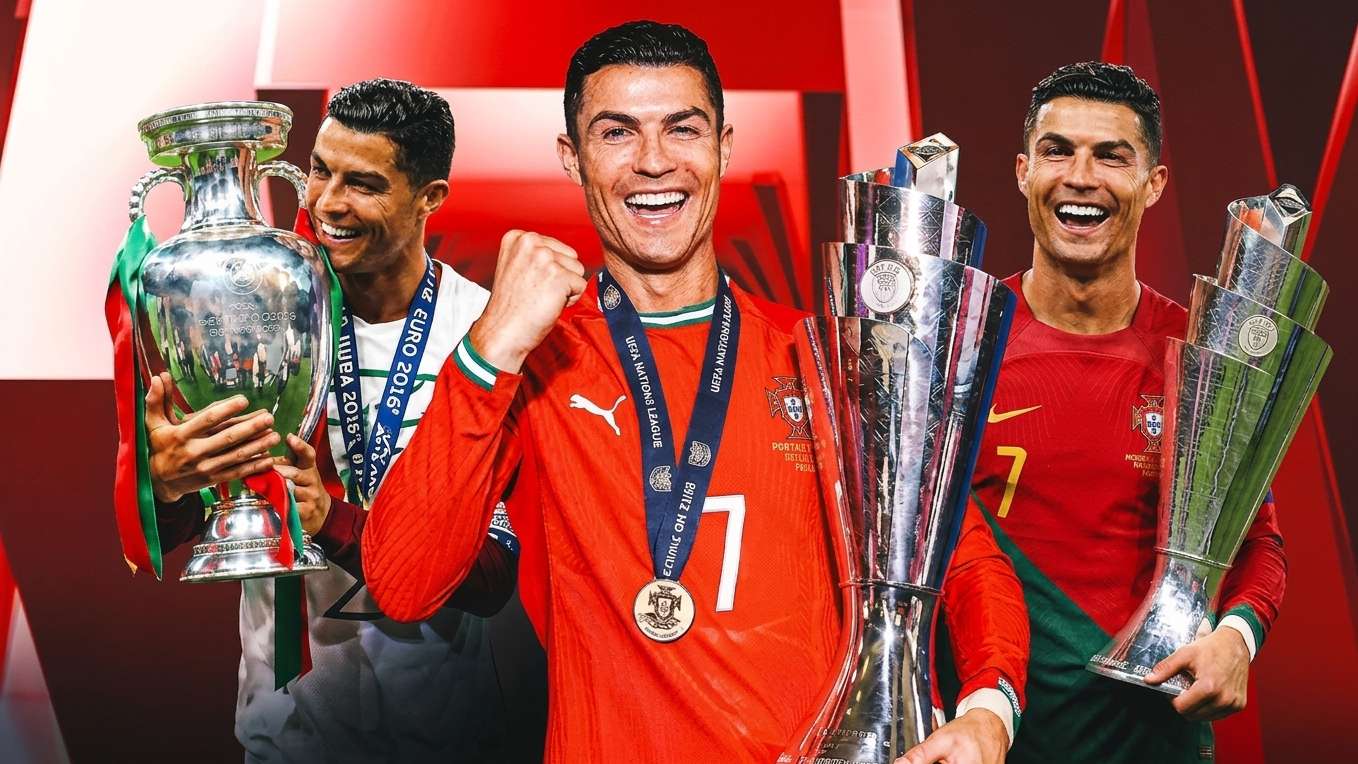
Portugal advanced despite a difficult group campaign and went on to win the European Championship, securing the country’s first major international trophy. Ronaldo’s tournament was interrupted by injury in the final against France, yet he remained an influential presence from the touchline as Portugal claimed a 1–0 victory. His relationship with manager Fernando Santos strengthened in the years that followed, and Portugal added the inaugural UEFA Nations League title in 2019.
That success offered a reminder that a tense moment does not necessarily determine a team’s future. Ronaldo and Santos had shared one of the greatest achievements in Portuguese football, even though their partnership would later face a much more serious test.
The captain’s armband becomes a symbol of frustration
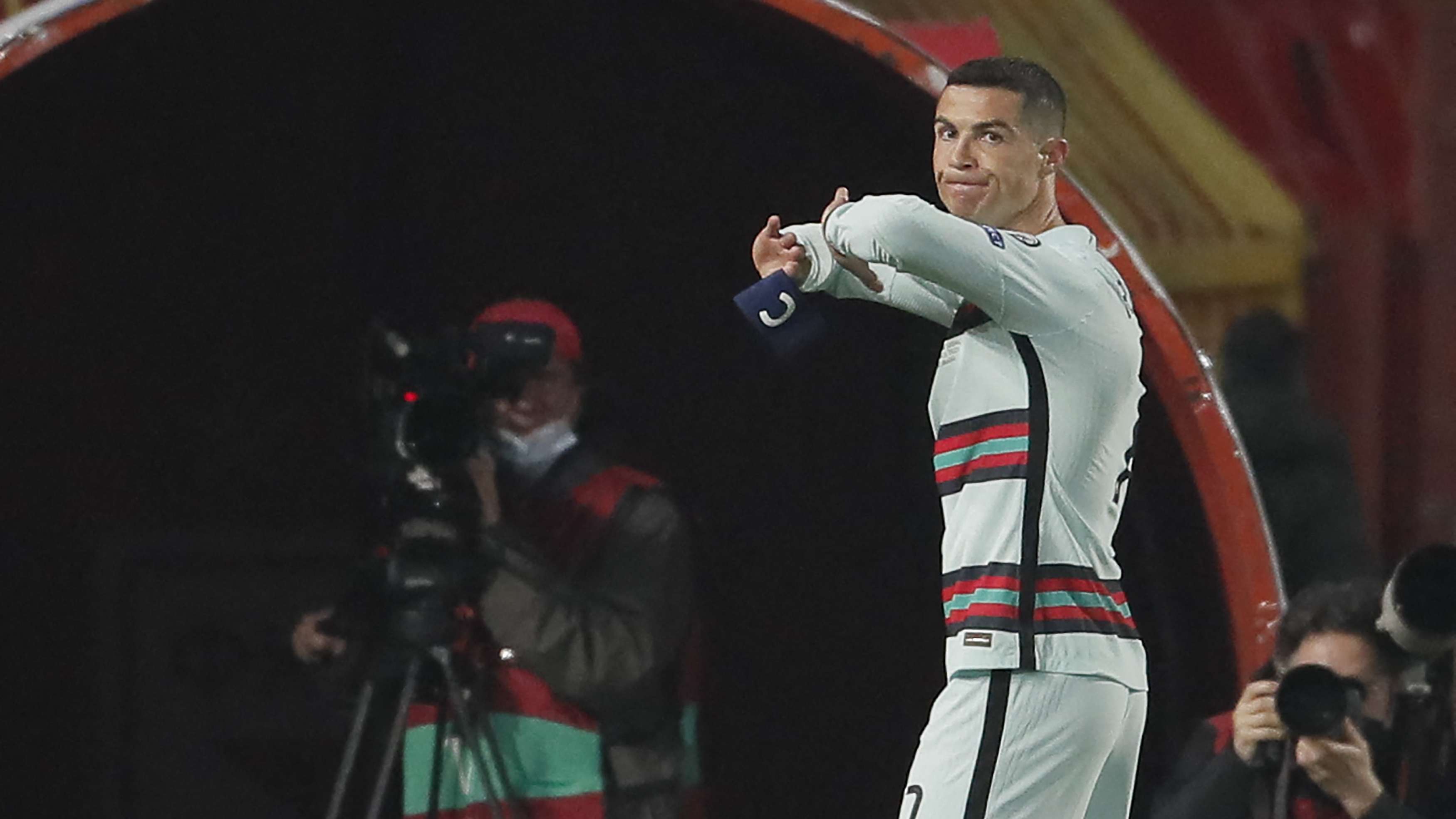
In 2021, two incidents involving the captain’s armband intensified scrutiny of Ronaldo’s emotional reactions. During a World Cup qualifying match against Serbia in March, he believed a late shot had crossed the goal line. The officials did not award a goal, and Ronaldo protested before receiving a yellow card. As he left the field, he threw the armband onto the pitch and walked towards the dressing room.
A similar scene followed Portugal’s 1–0 defeat to Belgium in the Euro 2020 round of 16. At the final whistle in Seville, Ronaldo dropped the armband and kicked it before a member of the support staff intervened. For critics, the moments raised concerns about composure and the responsibilities that come with being captain. For others, they reflected the frustration of a fiercely competitive player who believed his team had been treated unfairly.
World Cup selection dispute with Fernando Santos
The most consequential disagreement between Ronaldo and Santos came at the 2022 World Cup in Qatar. Portugal had already secured a place in the knockout rounds when Ronaldo started against South Korea. Santos substituted him in the 66th minute, and the captain appeared unhappy with the decision while watching the rest of the match from the bench.
Ronaldo was left out of the starting line-up for the last-16 tie against Switzerland. Gonçalo Ramos replaced him and scored a hat-trick in Portugal’s emphatic 6–1 win. Ramos retained his place for the quarter-final against Morocco, where Ronaldo entered as a substitute in the second half. Portugal lost 1–0, ending its campaign and Santos’s time as manager.
In 2023, Santos said the relationship with Ronaldo had suffered a serious blow after the Switzerland selection decision. He explained that he had spoken to the forward on the morning of the game about why he would not start, but Ronaldo had misunderstood the situation. Santos said he could understand the player’s reaction, while his account also highlighted the challenge managers face when balancing a star’s status with the needs of the team.
Legacy, leadership and the future of Portugal
Roberto Martínez took over after Santos and initially appeared to establish a calmer working relationship with Ronaldo. Yet the debate over the veteran forward’s role returned as Portugal looked towards the 2026 World Cup. A red card against Ireland in November 2025, followed by his absence from the subsequent 9–1 win over Armenia, added another episode to an already complicated final phase.
Ronaldo’s retirement closes an era, but it does not erase the scale of his contribution. He helped Portugal win Euro 2016 and the 2019 Nations League, set records for international appearances and goals, and remained a central figure across generations of players. His career also offers a broader lesson about elite football: leadership can inspire, but it is continually tested by selection decisions, changing responsibilities and the pressure to keep winning.
As Portugal moves forward without its long-time captain, attention will turn to who can fill the leadership gap and how the team adapts tactically. Supporters and analysts will continue to debate the best football prediction for Portugal’s next chapter, but one point is certain: Ronaldo’s influence on the national side will remain part of every conversation about the country’s modern football history.