
Karim Adeyemi’s Barcelona Minutes Dip as Germany Recall Slips Away
Karim Adeyemi’s latest omission from Germany’s squad has added another twist to a season that has yet to settle into a clear upward trajectory. The Barcelona winger returned to the national-team picture in September after a difficult spell at Borussia Dortmund, but coach Jürgen Klopp has left him out of the 24-player group for Germany’s upcoming matches against Serbia on 13 November and the Netherlands on 16 November.
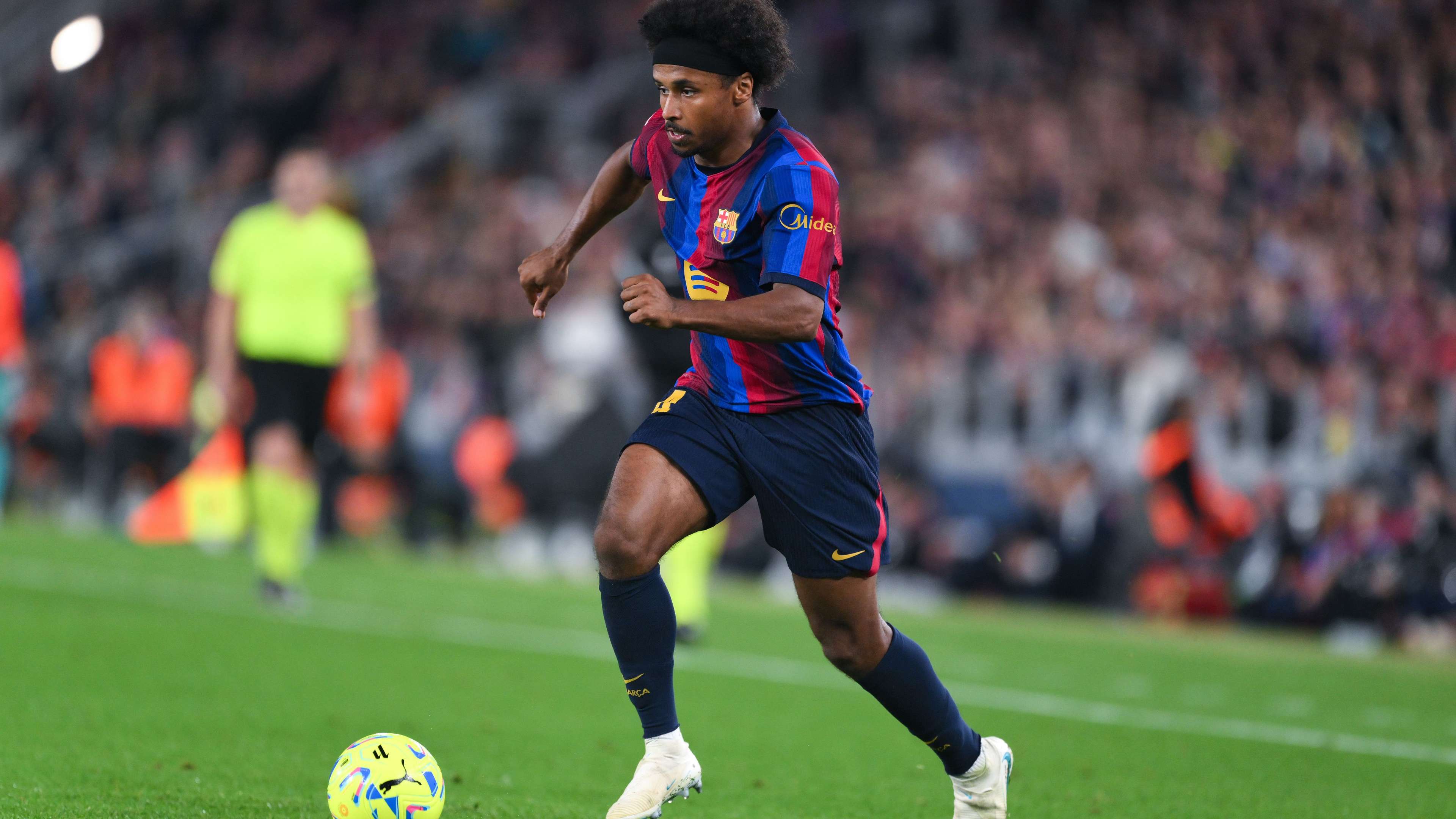
The decision is a setback for Adeyemi as he looks to re-establish himself in international football. It also reflects a wider challenge at Barcelona: despite flashes of attacking quality, he has not yet secured a regular starting place under Hansi Flick. His reduced involvement in recent matches, combined with a sharp drop in goal contributions, has made his position less certain.
A promising return followed by a quieter spell
Adeyemi’s path back into the Germany setup appeared to be taking shape last September. He was included in a 44-man squad during the early stages of Klopp’s tenure, a notable change after being overlooked following a disappointing season with Dortmund and missing out on Germany’s 2026 World Cup squad.
That recall offered a fresh opportunity, particularly as Adeyemi had begun his Barcelona campaign with encouraging attacking numbers. Across the club’s first eight matches, he scored three goals and supplied three assists. His pace, direct running and ability to attack space gave Barcelona another option in wide areas, while his versatility allowed Flick to use him in different attacking roles.
However, the momentum has slowed. In the seven official matches Barcelona played after the September international break—four in La Liga and three in the Champions League—Adeyemi scored only once. His goal came in the 4-1 victory over Galatasaray, leaving his recent output well below the level he showed at the start of the season.
Playing time falls during Barcelona’s toughest tests
The reduction in Adeyemi’s contribution is especially visible in his minutes. Across those seven games, Barcelona had 630 minutes of football available, and Adeyemi played 237—around 37 per cent. The figure suggests he remains part of Flick’s plans, but is not yet a consistent first-choice option when the stakes rise.
He started against Real Betis, playing until the 63rd minute, and against Alavés, where he remained on the pitch for the full match. His role changed during Barcelona’s European fixtures, however. Adeyemi came off the bench for 31 minutes against Galatasaray and 30 minutes against Paris Saint-Germain, but did not feature at all against Aston Villa.
His involvement was even more limited in the domestic meeting with Real Madrid, where he played only five minutes. He was also reported to have started Barcelona’s match against Atlético Madrid on the bench. Taken together, those selections indicate that Flick has preferred other attacking options for several of the club’s most demanding fixtures.
That pattern does not necessarily mean Adeyemi has fallen out of favour. Barcelona’s schedule has included high-profile contests against PSG, Real Madrid and Aston Villa, and coaches often choose players they consider best suited to a particular opponent. Still, the winger will need to turn his opportunities into more decisive performances if he is to move ahead in the competition for a regular starting role.
Why the Germany omission matters
For an attacking player, club minutes and international selection often reinforce one another. Regular appearances at Barcelona would give Adeyemi more chances to demonstrate his form, while strong performances for Germany could help restore confidence and momentum. Instead, his latest omission leaves him with a clear task: improve his impact at club level before the next selection window.
Germany’s upcoming fixtures against Serbia and the Netherlands provide important tests for Klopp’s squad as the team continues to assess its options. Adeyemi’s exclusion is not a final verdict on his international future, but it does show that his September return has not yet translated into a settled place in the group. Competition for attacking positions is intense, and recent form is likely to weigh heavily in future decisions.
For Barcelona, the key question is whether Adeyemi can make the most of the minutes available to him. His early-season record showed that he can contribute goals and assists, but consistency will be essential. More effective movement in the final third, sharper decision-making and a stronger influence in limited appearances could help him persuade Flick to trust him in bigger matches.
What comes next for Adeyemi?
The immediate outlook is mixed. Adeyemi still has the pace and attacking instincts to change a match, and his opening run at Barcelona demonstrated that he can produce tangible results. But the recent decline in playing time and scoring output has weakened his case for a regular role. His next stretch of performances could therefore be important for both his club standing and his Germany prospects.
Any prediction about his long-term place at Barcelona or with the national team should be treated cautiously. A short run of reduced minutes can change quickly, particularly during a crowded season in which injuries, rotation and tactical adjustments all affect selection. Yet the numbers provide a useful snapshot: Adeyemi has played less than two-fifths of Barcelona’s available minutes since the break and has scored once in that period.
To regain momentum, he will need to turn substitute appearances into visible contributions and make a compelling case when he starts. If he can recapture the productivity of his first eight matches, a Germany recall may again become realistic. For now, Klopp’s decision underlines the challenge facing the Barcelona winger: potential alone is not enough—consistent football, minutes and end product will determine how quickly he returns to the international spotlight.