
Lizarazu Questions Mbappé’s Team-First Attitude After Ballon d’Or Ceremony
Former France defender Bixente Lizarazu has criticised Kylian Mbappé over his conduct at the Ballon d’Or ceremony, accusing the Real Madrid forward of appearing overly focused on his own image rather than the achievements of those around him. His comments have added a fresh talking point to the debate over individual recognition, leadership and what it takes to turn personal brilliance into team success.
Speaking on French television programme Téléfoot, the 1998 World Cup winner said he was unimpressed by Mbappé’s behaviour during the event. Lizarazu argued that the forward’s actions came across as self-centred and lacking humility, suggesting the ceremony should have been an opportunity to recognise the wider football community as well as the leading contenders.
“He completely lost control during the Ballon d’Or ceremony,” Lizarazu said. “I didn’t like that at all. He descended into very selfish behaviour, lacked humility, and his focus was entirely on promoting himself, ignoring everyone around him. He gave the impression that he was the only important person, as if the others didn’t exist.”
Close Ballon d’Or result fuels the discussion
The criticism followed a tightly contested Ballon d’Or vote. England and Bayern Munich striker Harry Kane claimed the prize with 1,055 points, finishing just ahead of Mbappé, who collected 1,027. Barcelona’s teenage star Lamine Yamal placed third with 881 points.
The narrow gap between Kane and Mbappé made the result a major talking point among supporters and pundits. Ballon d’Or voting weighs individual performance, influence and achievement, but it also invites wider arguments about how much importance should be placed on goals, trophies, consistency and a player’s contribution to the team. In that context, Lizarazu’s remarks go beyond the ceremony itself: they question whether Mbappé’s public image reflects the collective leadership expected of a player of his stature.
Mbappé remains one of the most productive forwards in world football, and his scoring record is central to his reputation. But Lizarazu’s view is that goals alone do not define a player’s impact. For a leading attacker, the ability to help a team win—through movement, decision-making, pressing, creating chances and raising the level of teammates—can matter as much as personal statistics.
Lizarazu calls for a stronger collective focus
Lizarazu knows what it takes to succeed within a team. He played for Bayern Munich from 1997 to 2006, winning the Champions League, six league titles and five domestic cups. With France, he was part of the side that lifted the 1998 World Cup and the 2000 European Championship. Those experiences have shaped his emphasis on unity and shared responsibility.
He said Mbappé should demonstrate a stronger team-first approach when he returns to the France national team. In Lizarazu’s view, collective values are essential to the national side’s success, particularly when expectations are high and opponents are prepared to focus their defensive plans on stopping the team’s biggest star.
“He now needs to return to the France national team and show one-team spirit, because it is these collective values that lead the Blues to victories,” Lizarazu said. He also questioned whether Mbappé’s recent individual output had consistently translated into wins for the teams he has represented. “It’s true that he scores a lot of goals, but the most important thing is to lead his team to victory. That is what matters most.”
The comments reflect a familiar tension in elite football. A superstar is often expected to take responsibility, attract attention and deliver decisive moments, yet the same player can face criticism if that confidence is seen as overshadowing teammates. The challenge for Mbappé is to combine his individual ambition with visible leadership that brings others into the game.
Goal celebration draws attention after the awards
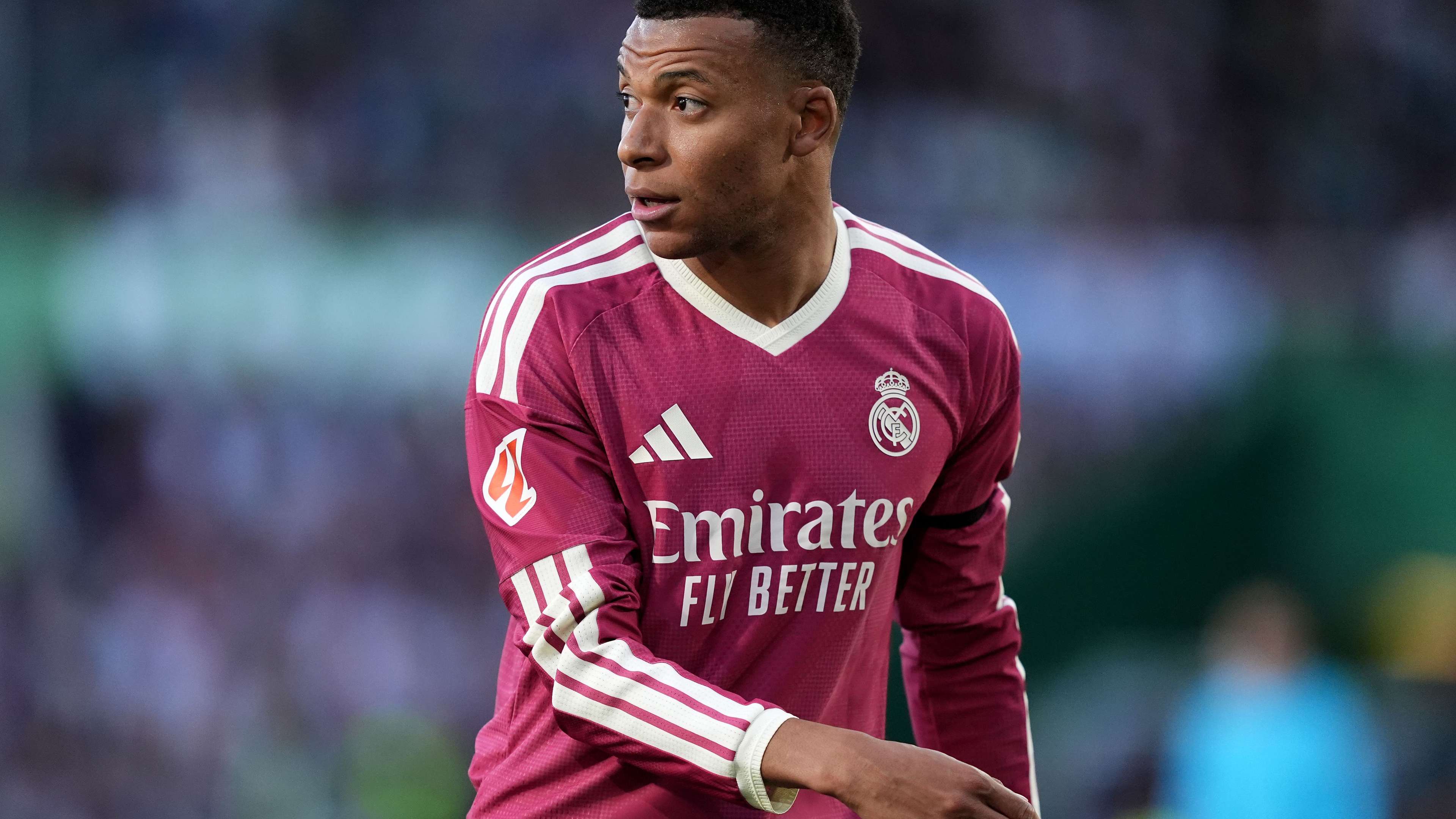
Mbappé was back on the scoresheet shortly after the Ballon d’Or ceremony, helping Real Madrid to a 3-0 La Liga victory over Racing Santander. His goal was followed by a celebration that quickly attracted attention: he pointed towards a television camera, a gesture some observers interpreted as a declaration that he considers himself number one despite missing out on the award.
That interpretation is not proof of Mbappé’s intention, but the timing ensured the celebration became part of the wider conversation. In the age of social media, a brief gesture can be replayed, analysed and given meaning far beyond the moment itself. For a player already under scrutiny after a major awards result, even a routine celebration can become a headline.
Whether the gesture was meant as a personal message or simply an expression of confidence, it highlights the fine line between self-belief and perceived arrogance. Top players need conviction to perform under pressure, but they also operate in a team environment where communication and trust matter. How Mbappé balances those qualities may influence how fans and analysts judge his leadership in the months ahead.
What comes next for Mbappé and Real Madrid?
For Real Madrid, the immediate priority is turning individual quality into consistent results across domestic and European competition. Mbappé’s goals will remain crucial, but the club’s ambitions depend on the entire squad functioning together. His relationship with teammates, his contribution when he is not scoring and his influence in difficult matches will all shape the assessment of his season.
France faces a similar question. Mbappé is a major attacking force, but international success requires more than one player’s finishing ability. The team must create balance, share responsibility and maintain a common purpose. Lizarazu’s criticism may therefore be understood as a challenge: not simply to score more, but to make his leadership unmistakably beneficial to the group.
The debate also gives supporters plenty to consider when making a football prediction about Mbappé’s next chapter. His talent and scoring record make him a constant threat, but trophies and team performances will ultimately carry more weight than a single ceremony or celebration. Whether he responds to Lizarazu’s remarks publicly or lets his performances answer them, the spotlight will remain on how effectively he turns individual excellence into collective victories.