
Paolo Condò Explains His Ballon d’Or Vote After Harry Kane’s Victory
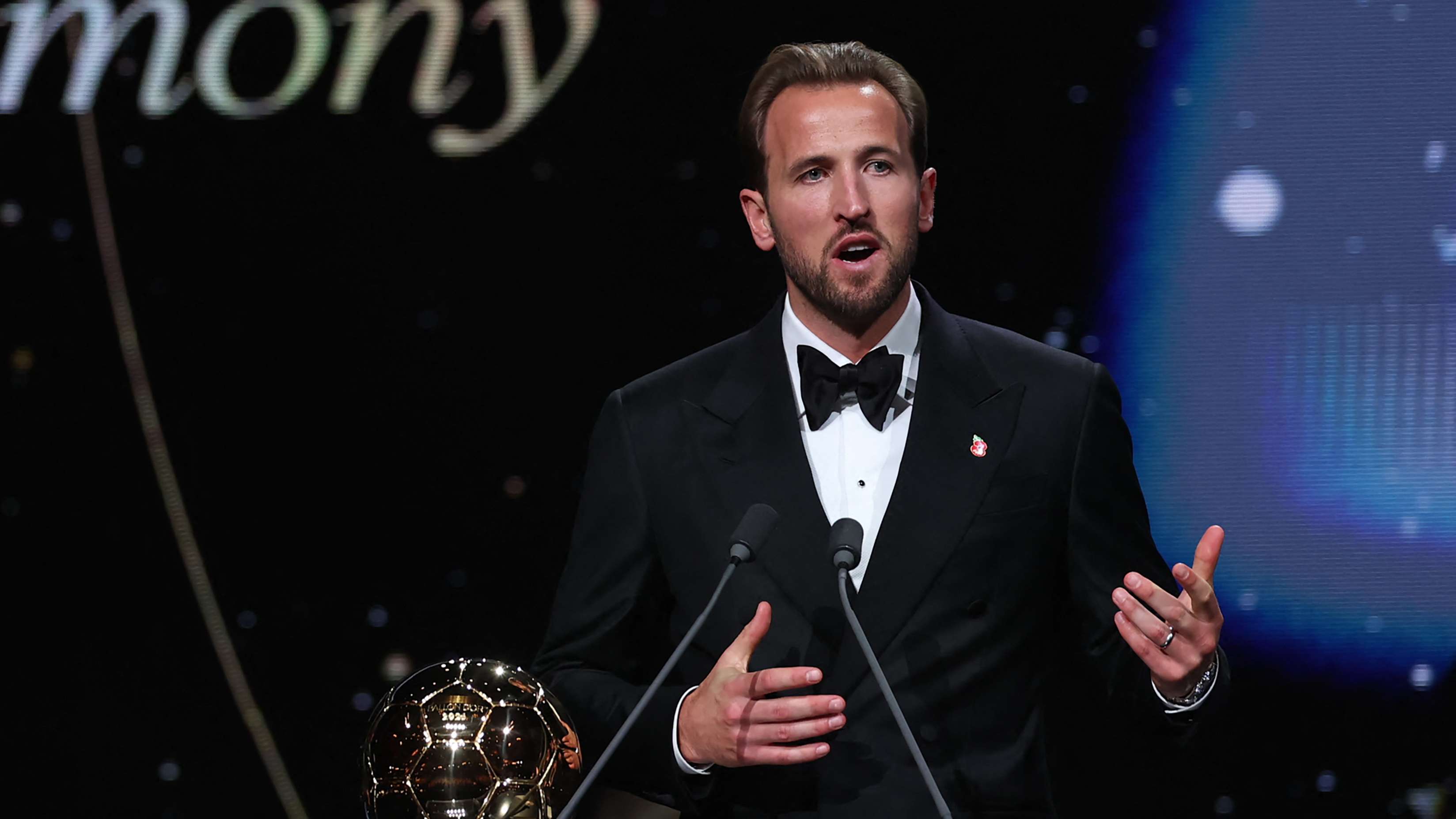
Italian journalist Paolo Condò has explained the reasoning behind his Ballon d’Or selections after Harry Kane claimed the award, finishing ahead of Kylian Mbappé and Lamine Yamal. Condò, Italy’s representative in the voting, published his account in Corriere della Sera, outlining his choices across several categories, including the leading player, goalkeeper, team and coach.
The result has sparked discussion among football supporters, not only because of Kane’s win but also because of the arguments voters used to rank the leading contenders. Condò placed Mbappé at the top of his ballot, a decision he presented as a recognition of the French forward’s exceptional ability and standing in the game. But his explanation has also drawn scrutiny over how he compared Mbappé’s performances with Kane’s in the competitions they contested against one another.
Why Condò Put Mbappé First
Condò’s central argument was that a player of Mbappé’s calibre should not finish his career without winning the Ballon d’Or. The forward has spent years among the most celebrated players in world football, earning recognition for his pace, finishing, creativity and ability to influence major matches. In Condò’s view, those qualities made Mbappé a worthy choice for the top spot, even in a season when Kane ultimately received the award.
That reasoning reflects a broader debate about what the Ballon d’Or should reward. Some voters focus primarily on a player’s achievements during the season under review, including trophies, decisive performances and statistical output. Others also consider sustained excellence, individual reputation and the sense that a particular campaign represents a player’s best opportunity to secure football’s most prestigious individual honour.
There is a case for weighing both. A player’s overall quality can help explain why voters admire him, but the award is generally understood as a judgment of performance over a defined period. That distinction matters when comparing two elite forwards whose seasons included high-profile meetings and contrasting team outcomes.
The Comparison With Kane Raises Questions
One part of Condò’s explanation has attracted particular attention. He argued that Mbappé outshone Kane in the two competitions in which their teams faced each other. However, the results cited in the account point in the opposite direction: Bayern Munich eliminated Real Madrid from the Champions League, while England defeated France in the third-place play-off at the 2026 World Cup.
Those results do not, by themselves, settle the debate over which player performed better. Football is a team sport, and a match outcome cannot be treated as a complete measure of an individual’s contribution. A forward may create chances, stretch a defence or deliver a strong performance without his side progressing. Likewise, a team victory does not automatically mean that every player on the winning side outperformed his direct rival.
Still, the outcomes make Condò’s wording difficult to reconcile with the competitive record. When a voter uses head-to-head meetings as evidence, readers naturally expect the explanation to account for the final results as well as the players’ individual displays. Without further detail about the specific performances he had in mind, the claim risks appearing inconsistent with the most visible evidence from those contests.
What Voters Consider in a Ballon d’Or Prediction
Ballon d’Or voting often involves more than comparing goals and assists. Voters may assess a player’s influence in decisive moments, consistency across the season, contribution to team success and performance against the strongest opposition. International tournaments can also carry considerable weight, particularly when a player leads his country deep into a major competition.
That range of criteria helps explain why predictions can differ sharply. One voter may prioritise individual brilliance, while another gives greater importance to trophies or sustained impact. A third may place emphasis on the pressure of high-stakes matches. These differences are part of what makes every Ballon d’Or prediction a subject of debate, but they also make clear explanations essential. Readers want to understand not just who a journalist selected, but how the evidence supports that choice.
Kane’s victory suggests that voters saw his season as the strongest overall package. His success also underlines the importance of evaluating a campaign on its own terms rather than relying solely on a player’s reputation or previous achievements. Mbappé’s status as one of the world’s most gifted attackers remains unquestioned, but the award’s final ranking indicates that the electorate judged Kane’s body of work more favourably this time.
Why Condò’s Full Ballot Matters
Condò also named his choices for best goalkeeper, team and coach, offering a wider view of how he assessed the season. Those categories can reveal whether a voter’s thinking is based on individual excellence, collective achievement or a combination of both. A team that performs consistently across several competitions may strengthen the case for its standout players, while a coach’s success can provide additional context for the season’s biggest stories.
Publishing the reasoning behind a ballot is valuable because it makes an often opaque process easier to examine. Supporters can compare the voter’s criteria with the performances and results they watched, while journalists and analysts can challenge arguments that appear unsupported. In this case, Condò’s explanation has encouraged precisely that kind of scrutiny: his admiration for Mbappé is clear, but his head-to-head comparison with Kane invites questions about how he interpreted the key matches.
A Debate That Extends Beyond One Award
The discussion surrounding Condò’s ballot reflects a familiar tension in football awards: should recognition go to the most talented player, the most successful player, or the individual who delivered the strongest season? There is no universally accepted formula, and different answers can be defensible. But persuasive voting arguments need to distinguish between long-term reputation and season-specific performance.
Kane’s Ballon d’Or triumph, Mbappé’s second-place finish and Yamal’s place among the leading contenders provide plenty for fans to debate. Condò’s vote adds another layer, showing how personal judgment can shape the final conversation. His explanation offers a clear endorsement of Mbappé’s extraordinary quality, yet the results of the teams’ direct encounters complicate his claim that the Frenchman had the better of Kane in both competitions.
Ultimately, the Ballon d’Or is both an award and an annual football argument. Kane has the honour, while the reasoning behind individual ballots remains open to discussion. For supporters assessing the next prediction, the episode is a reminder to look beyond reputation: trophies, individual performances, consistency and the details of major matches all matter when deciding who truly had the best season.