
Frenkie de Jong Insists He Is a Midfielder Despite Barcelona’s Defensive Experiments
Frenkie de Jong has made his position clear: he is willing to help Barcelona wherever the team needs him, but he does not see himself becoming a defender in the long term. The Dutch international has recently been used at centre-back and right-back by Barcelona coach Hansi Flick, largely as a temporary solution to injuries and squad absences. De Jong says he will accept those instructions when required, while remaining firmly committed to his natural role in midfield.
“If the coach asks me to play in defence, I will,” De Jong said in an interview with ESPN. “But that won’t be the case in the long term. Everyone knows I’m a midfielder.” His comments settle speculation about whether Barcelona’s tactical adjustments could signal a permanent change of position for the 29-year-old.
Defensive Duties Are a Temporary Solution
Flick has shown a willingness to move players around as Barcelona manage their squad, and De Jong’s composure on the ball makes him a practical option in deeper positions. A midfielder who can receive under pressure, read passing lanes and play forward from the back can help a team maintain possession even when its usual defenders are unavailable.
That flexibility, however, does not mean De Jong considers himself a centre-back or full-back. He has taken on defensive responsibilities before, including during spells at Ajax and Barcelona. Former coaches Ronald Koeman and Xavi also deployed him in defence on occasion, giving him experience that can be useful when circumstances demand it.
For Barcelona, the arrangement offers tactical cover without necessarily changing De Jong’s long-term role. His ability to step into the back line can help the team cope with injuries or adjust its build-up, while his preferred position remains in the middle of the pitch, where he can connect defence and attack.
De Jong Reports He Is Fit and Ready to Build Match Rhythm
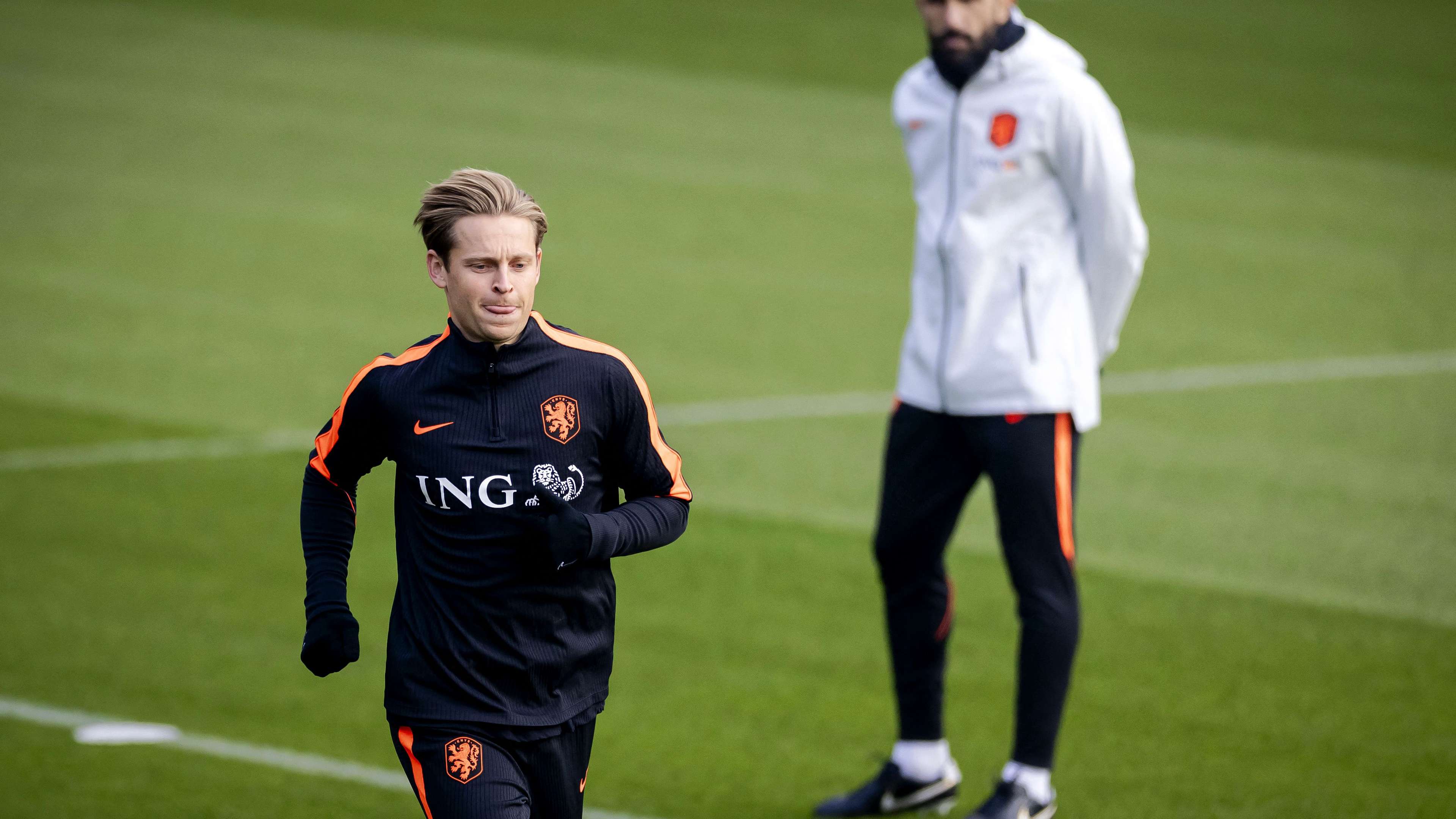
The midfielder’s comments came after he joined the Netherlands squad ahead of UEFA Nations League fixtures against Greece and Germany. De Jong said he had recovered from injury and was feeling strong, although he acknowledged that returning to full competitive sharpness may take time.
“I feel good and strong, I just need to regain my match rhythm,” he said. Asked whether he could play a full 90 minutes, he offered a measured response: “We’ll see. I feel good.” That distinction matters for a player returning from a fitness setback. Feeling healthy in training is encouraging, but match endurance and sharpness are often rebuilt through competitive minutes.
The Netherlands will be monitoring his workload as they prepare for their upcoming international matches. For Barcelona, too, his fitness will be important as the club moves through a demanding schedule. De Jong’s return could give Flick more options in midfield and, if necessary, additional cover in defence.
Why De Jong Believes His Contribution Is Underrated
De Jong also addressed the gap between the praise he receives from fellow professionals and the criticism he sometimes faces from supporters. He suggested that many viewers judge players through highlights or headline statistics rather than watching the full match and examining how a player influences the game.
“People don’t watch matches regularly. Few are those who follow the full 90 minutes,” he told ESPN, arguing that some spectators may miss the reasons behind a player’s positioning, movement or decision-making. In his view, understanding a midfielder’s performance requires more than checking the score sheet.
That argument reflects a wider challenge in football analysis. Goals and assists are easy to count and compare, but they do not capture every contribution. A midfielder may help a team escape pressure, maintain possession, cover space for a teammate or move the ball into a more dangerous area without recording a direct goal involvement.
De Jong acknowledged that his own numbers in goals and assists are relatively modest. Yet a player’s value can also be measured through control, positioning and the quality of decisions made during possession. Those less visible aspects may help explain why coaches and teammates continue to trust him, even when public assessments focus heavily on attacking statistics.
Could De Jong Captain the Netherlands?
With Virgil van Dijk absent, De Jong has indicated that he could be considered for the Netherlands captaincy. He did not claim the role outright, noting that the decision belongs to the national team coach, Xavi Hernandez. “The coach has to announce that, but it’s possible,” he said.
Taking the armband would add another responsibility during a period in which De Jong is working his way back to full match rhythm. His experience at club and international level, along with his central role in the team, could make him a credible option. The final choice will depend on the coach’s plans and the leadership structure within the squad.
What De Jong’s Comments Mean for Barcelona
De Jong’s position offers a clear message for Barcelona supporters: tactical flexibility should not be mistaken for a permanent career shift. Flick can continue to use him in defence when circumstances call for it, but the player himself expects to return to midfield as his primary role.
That approach could benefit both club and player. Barcelona retain a versatile footballer capable of adapting to emergencies, while De Jong avoids uncertainty about where he sees his long-term future. His ability to fill in at the back may prove valuable during a congested season, but his influence is likely to be greatest when he can operate in midfield and shape the team’s play.
Prediction: If De Jong continues to regain match fitness without setbacks, he is likely to feature primarily in midfield for Barcelona, with defensive appearances reserved for specific tactical needs or injury-related gaps. For the Netherlands, his availability and leadership could also become increasingly important as the Nations League campaign progresses.