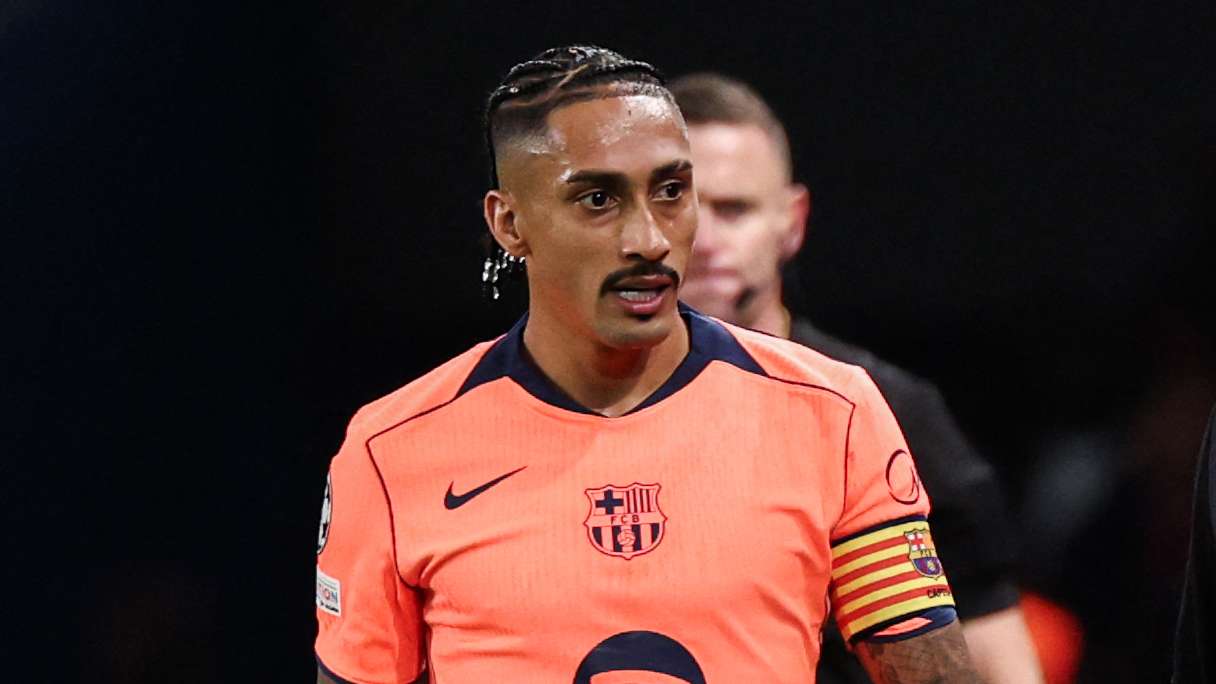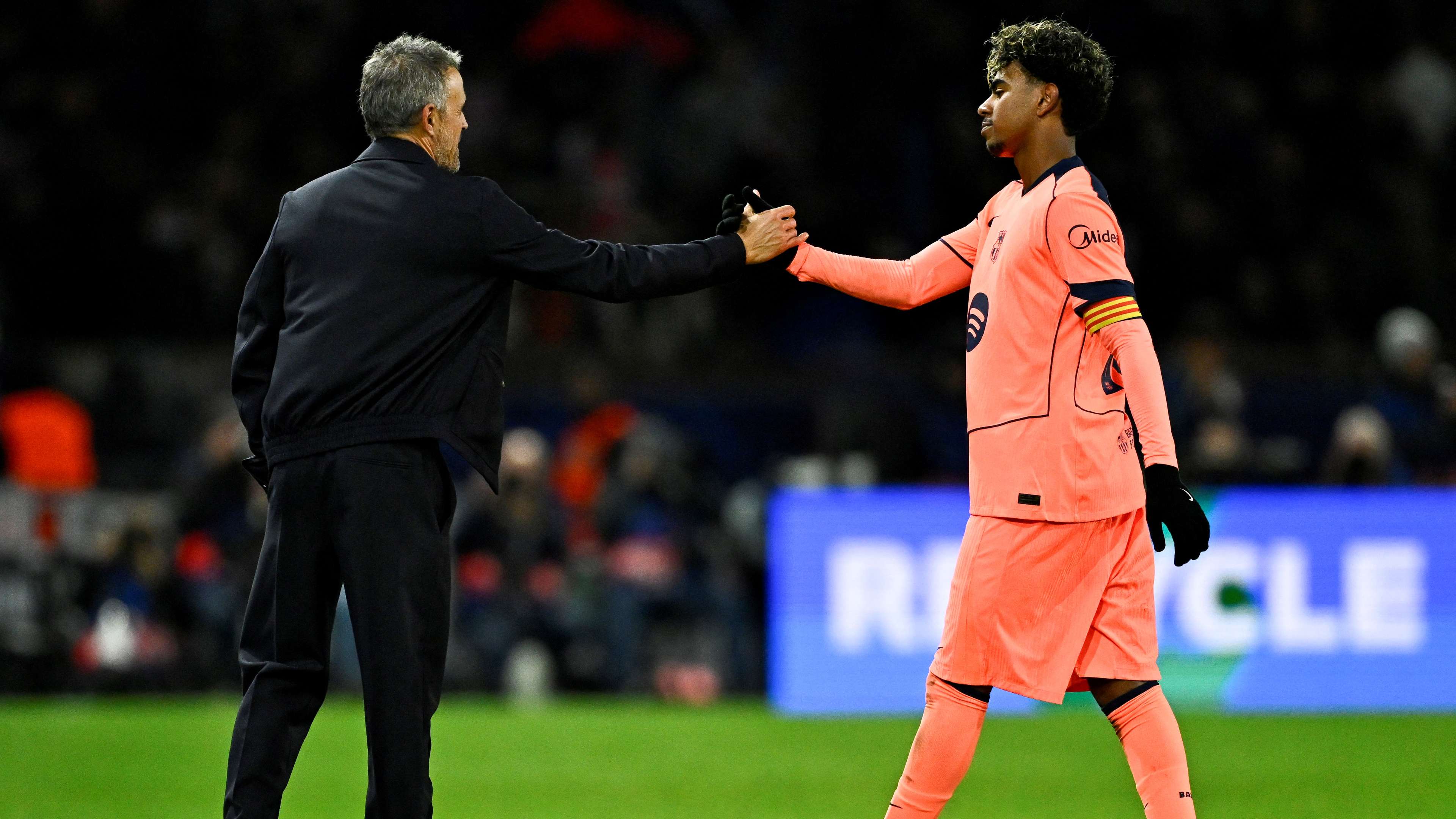

Lamine Yamal’s PSG Test Ends in Frustration Despite Barcelona Goal
Lamine Yamal arrived at Barcelona’s Champions League meeting with Paris Saint-Germain surrounded by expectation. The teenage winger had begun the season in electrifying form, combining close control, fearless dribbling and sharp finishing to become one of the Catalan club’s most dangerous attacking players. After his latest display in La Liga, many supporters and observers expected him to make another major impression on Europe’s biggest stage.
Instead, Yamal endured a difficult evening as Barcelona suffered a 4-2 defeat. He did score in the closing stages, but the goal could not disguise a performance that fell short of his recent standards. French newspaper L’Équipe was particularly critical, describing the winger as far from his best and highlighting how effectively PSG defender Lucas Hernandez contained him.
Lucas Hernandez Disrupts Barcelona’s Young Winger
Yamal’s game is built around taking on defenders, creating space with quick changes of direction and turning one-on-one situations into opportunities for Barcelona. Against PSG, however, those familiar strengths were difficult to find. Hernandez stayed close, read the winger’s movements and repeatedly limited his room to accelerate or cut inside.
The defensive duel was especially challenging before half-time, when Yamal struggled to influence the match. His usual tricks did not consistently unsettle the PSG back line, and Barcelona found it difficult to turn his presence on the flank into a reliable source of attacking momentum. For a player who has often made difficult situations look effortless, the contest offered a reminder that elite opponents can prepare specifically to neutralise his most dangerous qualities.
That does not mean Yamal lacked effort or potential. Rather, PSG’s approach reduced the time and space he needs to make decisions. When a defender can prevent a winger from facing forward or force him towards less threatening areas, even an exceptional dribbler can be pushed out of the game. Hernandez’s performance demonstrated how individual defending, supported by a compact team shape, can disrupt a high-profile attacking threat.
A Late Goal Could Not Change the Overall Story
Yamal found the net in the 79th minute, scoring Barcelona’s second goal and offering a reminder of the quality that had made him one of the most anticipated players on the pitch. The finish mattered on the scoreboard, but it did not erase the difficulties he had encountered throughout the match. By then, PSG had already established control of the contest, and Barcelona ultimately went down 4-2.
A goal can be an important contribution without turning a subdued performance into a dominant one. In this case, Yamal’s strike provided a positive moment late in the evening, but it did not alter the broader impression of a player who had been unable to impose his usual influence. L’Équipe argued that the finish did little to change the assessment of his display, particularly given his struggles in the direct battle with Hernandez.
For Barcelona, the result also underlined a wider challenge: individual talent must be supported by movement and options around the ball. When opponents double up on a winger or close down passing lanes, teammates need to create space through overlapping runs, quick combinations and movement into the penalty area. Without those supporting actions, a player such as Yamal can find himself isolated against a well-organised defence.
Betis Brilliance Raised Expectations
The anticipation surrounding Yamal had intensified after Barcelona’s 5-2 La Liga victory over Real Betis. He scored a superb goal in that match, reinforcing the sense that he was in the kind of form capable of producing a decisive moment against any opponent. His recent displays had encouraged a simple prediction among many fans: if Yamal received the ball in dangerous areas, he could change the game.
That forecast did not come true against PSG. The contrast between his performance against Betis and the more frustrating European outing illustrates how quickly the demands of football can shift from one match to another. Domestic opponents may offer different defensive spaces, while Champions League sides often devote considerable attention to stopping a team’s most influential players. PSG’s focus on limiting Yamal’s freedom helped turn a potentially spectacular individual showcase into a demanding tactical examination.
It is also worth remembering that expectations can become unusually high when a young player produces a run of outstanding performances. Yamal has already shown remarkable composure and creativity for his age, but no attacker can be expected to dominate every match. A difficult night against an experienced defender is not evidence that his form has disappeared; it is part of the learning process faced by players adapting to the physical and tactical demands of top-level competition.
What the Performance Means for Barcelona
Barcelona will want to respond to the defeat by examining how they can help Yamal remain involved when opponents target him. Faster switches of play, closer support from midfield and well-timed overlapping runs could give him more options and make it harder for defenders to focus solely on his dribbling. If rivals continue to assign extra attention to the teenager, that attention may also create opportunities for Barcelona’s other attackers.
For Yamal, the match offers useful experience. He has now encountered a defender who was able to anticipate his preferred moves and restrict his influence over long stretches. Reviewing those moments can help him vary his approach, release the ball earlier when the space is closed and choose more carefully when to take on a marker. Developing those alternatives could make him even harder to defend in future European fixtures.
The final score and the late goal will be part of the match report, but the more lasting story is the contrast between expectation and execution. Yamal entered the PSG clash as one of Barcelona’s most exciting attacking prospects, yet he was largely contained before finding a late breakthrough. His performance did not match the standard set by his recent form, and Hernandez deserves credit for helping to limit his threat.
Still, one difficult night should be viewed in context. Yamal remains a major part of Barcelona’s footballing future, and the experience may prove valuable as he continues to face elite defenders. The next test will be how quickly he and his team respond: whether the winger can adapt to tighter marking, and whether Barcelona can create the support needed to bring his best qualities back into the game.