
PSG’s Dembele Rotation Raises Fresh Questions Ahead of Barcelona Clash
Paris Saint-Germain’s approach to managing Ousmane Dembele’s playing time has renewed debate about whether the French champions enjoy a workload advantage over their Champions League rivals. After Manchester City’s 4-2 defeat to PSG at the Etihad Stadium, manager Enzo Maresca suggested that Luis Enrique can keep his leading players fresher by resting them more often in domestic competition.
The claim points to a wider difference between the demands of France’s Ligue 1 and the Premier League. PSG have dominated French football in recent seasons, while also competing for Europe’s biggest prize. Their ability to rotate key players without regularly sacrificing domestic results may be significant—particularly as the knockout stages approach. But the numbers behind Dembele’s minutes offer a more precise view of how that strategy is being applied.
Dembele’s Minutes Tell a Clear Story
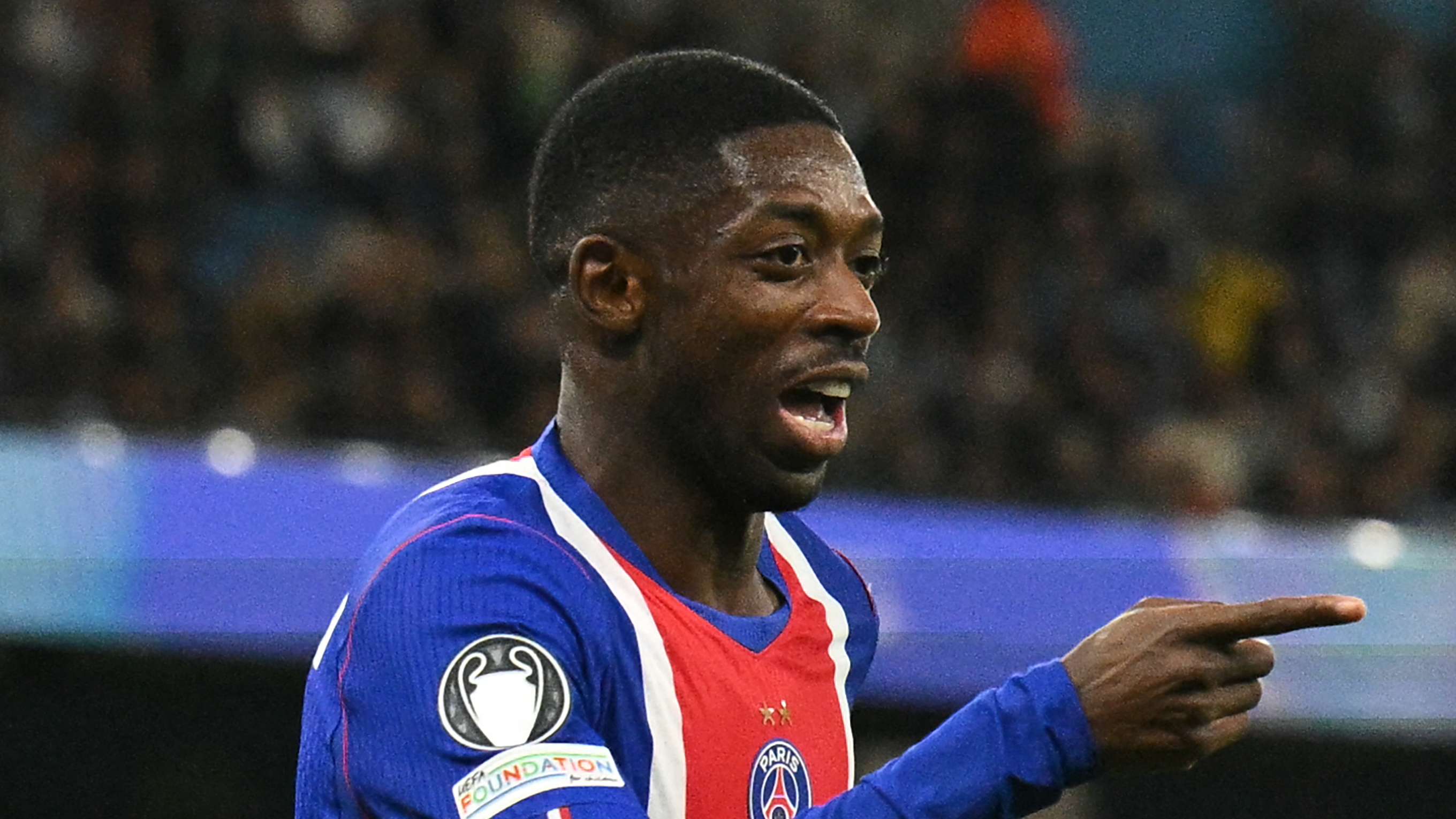
Dembele has made a bright start to the campaign, scoring four goals and providing six assists across nine appearances. His recent contributions included a goal against Manchester City and another against Strasbourg, with an assist in each match. Yet his overall totals conceal a notable split between his domestic and European workload.
According to figures cited by Spanish newspaper Sport, Dembele has played 140 minutes across two Champions League matches, averaging 70 minutes per appearance. In Ligue 1, he has accumulated 238 minutes in five games—an average of 47.6 minutes. The contrast is especially striking because he has recorded three goals and three assists in his two European outings, suggesting PSG have been able to preserve his energy for the competition’s biggest tests.
His domestic appearances have been carefully distributed: 45 minutes against Rennes, 22 against Monaco, 65 against Brest, 78 against Marseille and 27 against Strasbourg. That is 238 minutes from a possible 630, or 37.8% of the available league playing time, based on Transfermarkt data.
Dembele missed the 2-2 draw with Lille through injury, but much of his other time out of the team appears to have been deliberate. Enrique left him out of the squad entirely for the match against Le Mans after the international break. Dembele had played 172 minutes for France across three matches, making rest a practical consideration as well as a tactical choice.
How PSG Compare With Manchester City
Maresca’s argument gains force when PSG’s domestic rotation is compared with the demands placed on Manchester City’s regular starters. Erling Haaland had played 620 of a possible 630 Premier League minutes at the point covered by the figures—98.4%. Ruben Dias, Marc Guehi and goalkeeper Gianluigi Donnarumma had each played every available minute for City.
PSG’s Ligue 1 workload is more varied. Goalkeeper Matvey Safonov is the only Paris player listed as having completed every domestic minute. Among outfielders, Warren Zaire-Emery leads the way with 503 minutes, or 79.8% of the total. Vitinha has played 496 minutes (78.7%), while Joao Neves has logged 451 (71.6%).
Several other important players have had lighter league workloads. Khvicha Kvaratskhelia has played 377 minutes, or 59.8% of the available total. Desire Doue is on 355 minutes (56.3%), Fabian Ruiz on 326 (51.7%), and Nuno Mendes on 217 (34.4%). These figures do not prove that Ligue 1 is easy, but they do show how Enrique has distributed minutes across his squad.
Barcelona’s Key Players Carry More League Minutes
Barcelona arrive at their meeting with PSG in strong form, but their leading players have generally been more involved in La Liga. Lamine Yamal has played 741 minutes across nine matchdays, equivalent to 91.5% of the 810 minutes available. Raphinha, who missed two matches after returning from international duty, has accumulated 575 minutes from a possible 720, or 79.9%.
The workload extends beyond Barcelona’s attacking stars. Goalkeeper Joan Garcia has played 675 minutes (83.3%). Pedri and Espart have each logged 620 minutes, around 76.5% of the available total, while Eric Garcia has played 603 (74.4%). Gerard Martin is on 571 minutes (70.5%), and Fermin Lopez has recorded 538 (66.4%).
Rodri has appeared for 517 minutes, or 63.8%, with Pau Cubarsi close behind on 512 minutes (63.2%). The comparison suggests that Barcelona have relied on a broader group of regulars to maintain their domestic rhythm, while PSG have had more room—or have chosen—to rotate particular stars.
Will Rest Become a Champions League Advantage?
Freshness can influence a football match in subtle ways. Players who have accumulated fewer minutes may be better equipped to press, sprint into space and recover quickly during a demanding European tie. Dembele’s pace and ability to create chances make him especially dangerous when he is rested and available to attack defenders at full speed.
However, lower minutes do not automatically guarantee better performance. Regular football can help players maintain rhythm, sharpness and understanding with teammates. Barcelona’s heavier use of Yamal and Raphinha may reflect the importance of their roles in Hansi Flick’s system, rather than simply a lack of rotation. Injuries, international commitments, tactical choices and the timing of each match also shape the totals.
That makes the upcoming PSG-Barcelona contest an intriguing test of two different approaches. Enrique has managed Dembele’s domestic workload carefully, while Flick’s leading players have carried a larger share of La Liga minutes. Whether that difference will affect the result remains uncertain, but it adds an important layer to any pre-match prediction.
For supporters assessing the tie, the key question is not just which team has the stronger starting lineup. It is whether PSG’s rotation can translate into greater intensity when the pressure rises—and whether Barcelona’s heavily used stars can maintain their form on a major European night. At the Parc des Princes, fitness, tactical execution and individual quality may all prove decisive.