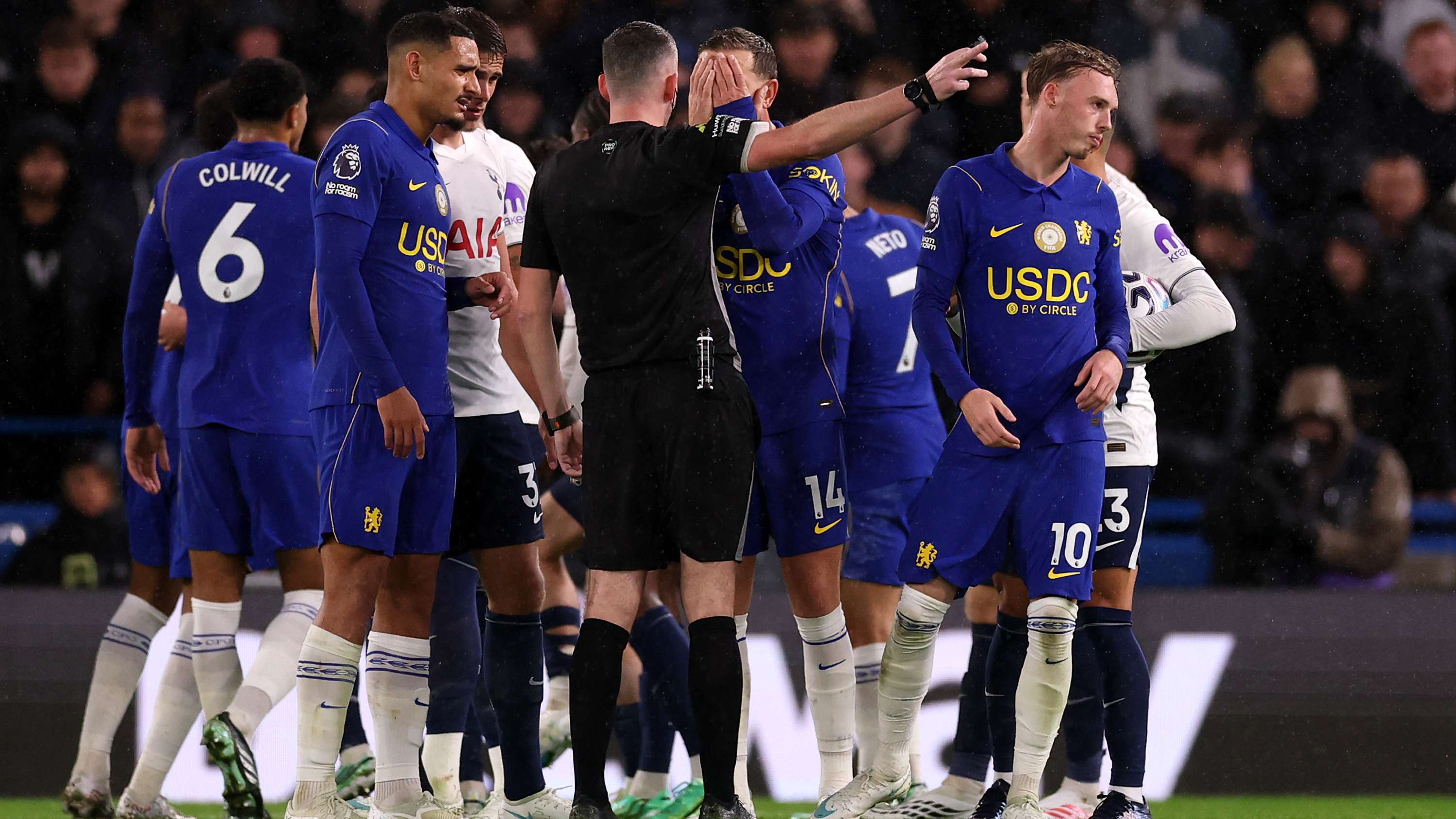

Tottenham stun Chelsea in London derby as Palmer sees red
Tottenham Hotspur claimed a dramatic 2-0 win over Chelsea at Stamford Bridge, turning a tense, goalless London derby into a damaging afternoon for the hosts. A late own goal opened the scoring, Cole Palmer’s dismissal left Chelsea with 10 men, and Mathys Tel struck in the closing stages to secure a second consecutive Premier League victory for Spurs.
The result delivered a major shift in momentum during the eighth round of the league season. Chelsea had controlled much of the contest but could not find a breakthrough, while Tottenham stayed patient and took advantage of two defining moments in the final 15 minutes. For supporters following the football standings and the race for European qualification, the result carried consequences for both clubs: Spurs gained breathing room, while Chelsea missed an opportunity to strengthen their position near the top four.
A tight contest turns on a costly goalkeeping error
For more than an hour, the derby was marked by urgency and tension rather than clear-cut chances. Chelsea sought to make home advantage count, while Tottenham defended in numbers and looked to threaten when possession changed hands. With neither side able to score, the match appeared headed for a late scramble or a draw.
The deadlock finally ended in the 77th minute following a Tottenham corner. Chelsea goalkeeper Mike Penders, making his first Premier League start because first-choice keeper Emiliano Martinez was injured, came under pressure in the crowded penalty area. Tottenham’s Jan Paul van Hecke disrupted his attempt to deal with the delivery, and Penders punched the ball into his own goal.
Centre-back Maxence Lacroix tried to rescue the situation, clearing the ball only after it had crossed the line. The goal was a cruel turn for Penders on his league debut, and a significant reward for Spurs, who had continued to press for an opening from set pieces. In close matches, a single corner can decide the outcome—and this one changed the entire shape of the derby.
Cole Palmer dismissal compounds Chelsea’s problems
Chelsea’s task became considerably harder three minutes later when Palmer was sent off. The England international had received his first yellow card less than 10 minutes earlier. He then picked up a second booking for a rough challenge on Conor Gallagher, forcing the Blues to finish the match with 10 players.
Palmer’s dismissal removed one of Chelsea’s most influential attacking players at precisely the moment the team needed a response. The hosts were already chasing the game, and the red card limited their ability to commit players forward without leaving space for Tottenham to exploit. It also gave Spurs a numerical advantage that they quickly turned into a second goal.
For Chelsea, the sequence will prompt questions about discipline and game management. The side had kept the match level for 77 minutes, but the combination of a defensive error and a costly sending-off left little time or room to recover.
Mathys Tel seals the win for Spurs
Tottenham made their extra-man advantage count in the 87th minute. Former Bayern Munich striker Mathys Tel produced an impressive individual run before finishing to make it 2-0. His late goal put the result beyond doubt and capped an effective display from the visitors, who showed patience before delivering when Chelsea’s defence was under mounting pressure.
Tel’s contribution was especially valuable because it gave Spurs more than a narrow win: it provided a clear finish to a match that had demanded concentration and resilience. Tottenham had not been able to break through during the opening stages, but they remained alert to opportunities in the closing minutes. The goal also underlined how quickly a derby can change once one side is forced to chase the game with fewer players.
What the result means for the Premier League table
The victory marks a sharp improvement in Tottenham’s recent league form. Spurs had failed to win their first six Premier League matches, leaving them under pressure to turn performances into points. They have now won two in a row, following a 3-1 home victory over newly promoted Coventry City on Monday.
Tottenham move up to 12th place with nine points, creating some distance between themselves and the clubs below them. While there is still considerable ground to make up after the difficult start, consecutive wins can help restore confidence and provide a platform for a more stable run. The derby victory may also prove important psychologically, particularly because it came away from home against a London rival.
Chelsea remain fourth on 13 points, but the defeat represents a missed opportunity in the contest for Champions League places. Their standing could change as the rest of the round’s fixtures are played, and the team will need a quick response to avoid allowing rivals to close the gap. The scoreline also masks the fact that the game remained level deep into the second half, making the late collapse all the more frustrating for the Blues.
Next fixtures and prediction
Chelsea’s next listed match is a Carabao Cup meeting with Liverpool on October 29, before they return to Premier League action against Crystal Palace on November 1. Tottenham will look to build on their derby win in their upcoming league schedule and maintain the momentum generated by back-to-back victories.
Any prediction for Chelsea’s next outing will depend on how quickly the team can recover from the loss and whether its key players are available. The Blues have shown enough quality to compete near the top of the table, but they will need greater composure in decisive moments. Tottenham, meanwhile, can take confidence from their ability to stay organised, exploit a set-piece opportunity and finish strongly.
The final score may read 2-0, but the match was shaped by a narrow margin: one misjudged punch, one red card and one excellent late run from Tel. For Tottenham, it was a derby win that could help restart their season. For Chelsea, it was a reminder that control of a football match is not enough unless it is matched by discipline and clinical execution.