
AZ’s Penalty Appeal Against Feyenoord Sparks VAR Controversy
Former professional footballer and analyst Kees Kwakman believes AZ were denied a penalty during their high-profile meeting with Feyenoord after the referee was not shown the clearest available replay of a first-half collision. The incident, involving AZ forward Mexx Meerdink and Feyenoord goalkeeper Tjark Ernst, has prompted fresh questions about how video footage is selected and presented during a VAR review.
The disputed moment came shortly before half-time at De Kuip. Meerdink and Ernst made contact as the AZ attacker moved towards the ball, and AZ appealed for a spot-kick. Referee Danny Makkelie reviewed the incident at the pitchside monitor, but the footage shown to him was reportedly limited to side-on angles. After watching the available images for several minutes, he decided there was not enough evidence to award a penalty.
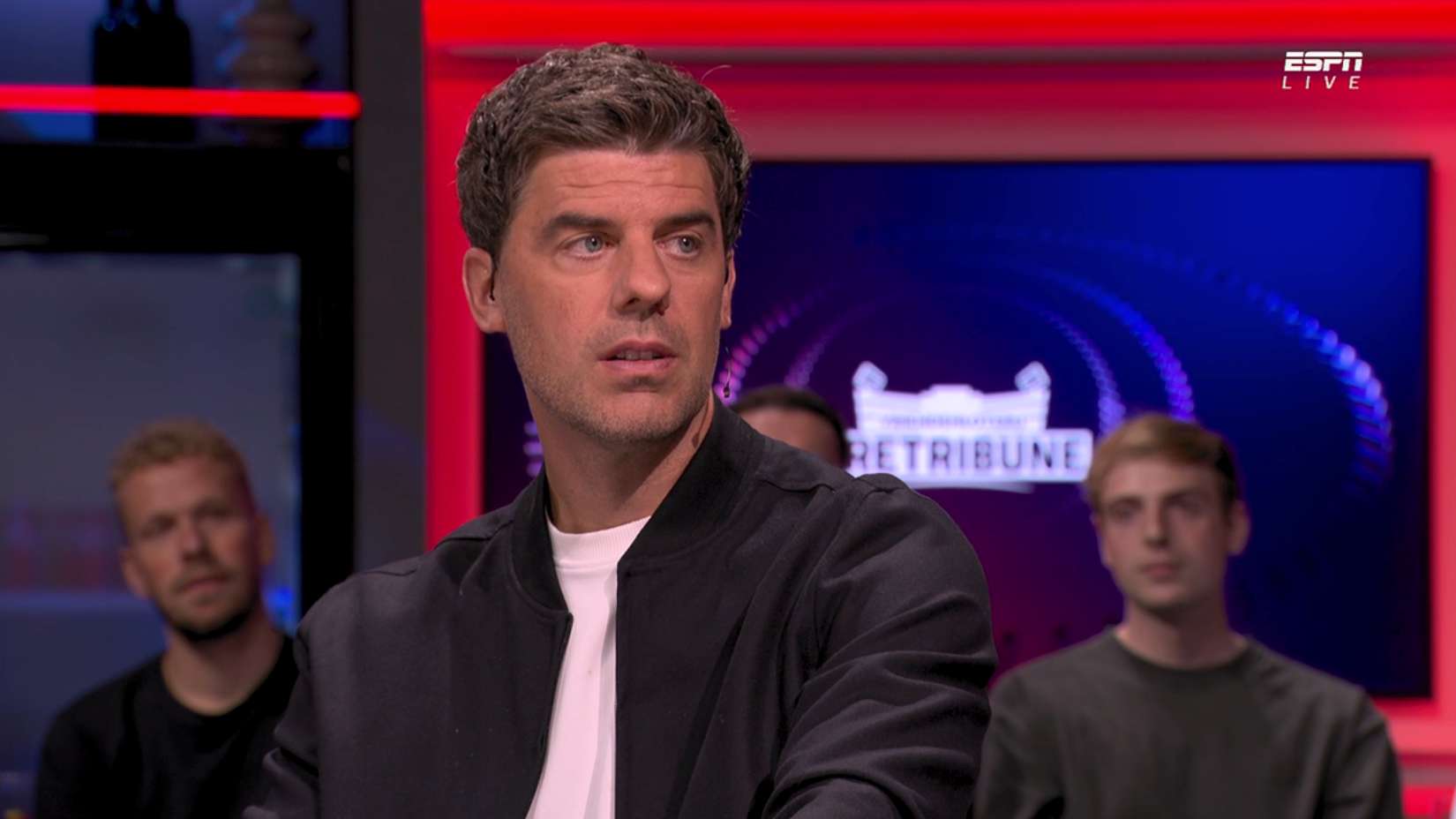
However, footage that emerged after the match appeared to show the players’ feet making contact more clearly. That difference between the replay available to viewers and the images shown to the referee became the focus of Kwakman’s criticism on ESPN’s De Eretribune.
Kwakman questions the footage shown to Makkelie
“How can it be that Makkelie was not shown that footage?” Kwakman asked during the broadcast. His concern was not simply that the referee reached a decision he disagreed with, but that the review process may not have given Makkelie access to the most useful angle.
Presenter Jan Joost van Gangelen suggested that VAR official Erwin Blank may not have seen the clearer footage either. That possibility led Kwakman to question where the breakdown occurred. If the images existed but were not brought into the review, he argued, the problem may have involved the process for identifying and selecting replays rather than the referee’s judgement alone.
Aletha Leidelmeijer explained that the footage was available, but was not shown to Makkelie at the time. Kwakman then raised a practical question about how replay angles are managed in the VAR booth. The selection process, he suggested, may involve support staff as well as the VAR official, making it important to understand who is responsible for locating and presenting the most relevant images.
Kwakman’s view was that the clearer angle could have changed the outcome. “I think if Makkelie had seen this footage, he would have let the penalty stand,” he said. He also suggested that, had VAR reviewed the relevant image properly, Blank might not have needed to send the referee to the monitor at all—or might have reached a different conclusion about the incident.
Ernst explains the referee’s reasoning
After the match, Ernst said he had spoken briefly with Makkelie about the decision. According to the Feyenoord goalkeeper, the referee acknowledged that some contact may have occurred but did not consider it sufficient to award a penalty.
“After the match I spoke briefly to the referee, and he said that there may well have been slight contact, but that it was not enough for a penalty,” Ernst told ESPN. He added that he could see his foot move slightly in the footage, while stressing that he had not felt anything during the incident itself.
Ernst also described the factors Makkelie had considered: the contact appeared slight, and the ball was moving out of play. Those details may have influenced the referee’s assessment of whether the challenge had a meaningful impact on Meerdink’s attempt to reach the ball. Still, the debate has centred on whether the official could properly weigh those factors without seeing the clearest available angle.
Why the VAR process matters
VAR decisions often depend on more than the final image shown to fans. Officials must identify the relevant moment, compare available angles and decide whether the on-field decision should be reviewed or changed. When one camera view appears to show contact more clearly than another, the choice of footage can shape the entire assessment.
That does not automatically mean every instance of contact should result in a penalty. In football, referees must judge the nature and consequence of a challenge, not simply whether two players touched. The central question in this case is whether Makkelie had the information needed to make that judgement—and whether the VAR team adequately supported his review.
The incident also highlights a recurring challenge for video review: viewers at home may see multiple angles, slow-motion replays and close-ups that are not necessarily presented to the referee in the same sequence. A decision can therefore appear difficult to understand even when the officials are working within the review process. Clearer communication about which angles were available and why particular footage was selected could help reduce confusion after controversial calls.
What the incident could mean for AZ and Feyenoord
For AZ, the episode is likely to be remembered as a major missed opportunity in a demanding match against one of the Eredivisie’s leading sides. A penalty before the break could have altered the scoreline, the momentum and the tactical choices available to both teams. That does not prove the result would have changed, but it explains why the decision has drawn so much attention.
For Feyenoord, Ernst’s comments offer a glimpse into the referee’s reasoning, while stopping short of settling the wider argument. His acknowledgement that there may have been contact is notable, but the key issue remains whether that contact was enough to constitute a foul—and whether the best evidence was considered.
Any prediction about how similar incidents will be handled in future matches depends on whether officials clarify their replay procedures. The broader lesson for Dutch football is that VAR must be not only accurate, but transparent and consistent. When a clear angle exists, teams and supporters will expect it to be part of the review. Until the process is better explained, controversial penalty decisions are likely to keep generating debate long after the final whistle.