
The Golden Duo’s International Farewell: Ronaldo and Messi Choose Different Final Chapters
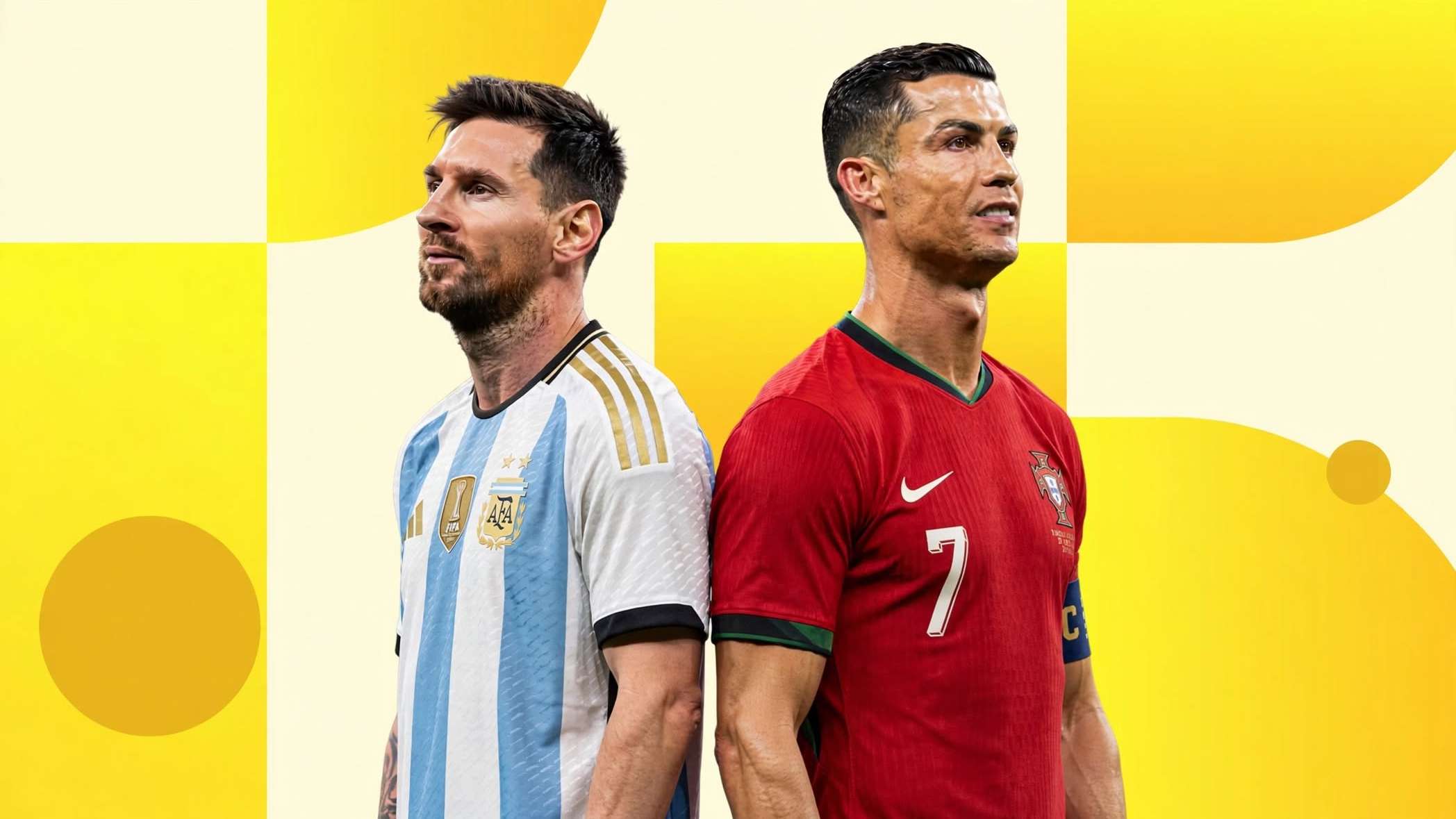
For nearly two decades, Cristiano Ronaldo and Lionel Messi defined the highest level of international football. Their careers with Portugal and Argentina brought extraordinary goals, unforgettable victories and painful setbacks, creating a rivalry that shaped conversations among fans around the world. Yet when the time came to leave the international stage, the two icons took strikingly different paths.
Ronaldo announced the end of his international career on November 5, sharing the news through a video posted on his official accounts. Messi’s farewell had arrived earlier, on October 6, in a very different setting: surrounded by his family and celebrated by thousands of Argentina supporters. The dates were separated by roughly a month, but the contrast between the two moments was far more significant than the calendar suggests.
Two careers that changed international football
Ronaldo and Messi’s national-team journeys were never simply extensions of their club careers. Each carried the expectations of an entire country, often while being compared with the other. They were asked to deliver trophies, produce decisive moments and embody national pride—demands that made every tournament a test of both ability and resilience.
Ronaldo became the defining figure of Portugal’s modern era. His leadership and goals helped the national team reach new heights, including its historic triumph at Euro 2016. For a country that had spent generations pursuing a major international title, that victory represented a landmark achievement. Ronaldo’s role in Portugal’s football story cannot be measured only by statistics; his ambition and belief helped establish a new standard for the team.
Messi’s relationship with Argentina followed a more turbulent route. His international career included painful defeats and periods of intense criticism, as supporters questioned whether his achievements with Barcelona could be matched in national colours. That pressure eased dramatically when Argentina won the 2021 Copa América. The success was followed by the 2022 FIFA World Cup, giving Messi the defining international title that had long eluded him and completing one of football’s most compelling career arcs.
Ronaldo’s private announcement
Ronaldo’s November 5 announcement was notable for its direct, personal format. Rather than making the declaration in a stadium or during a public ceremony, the Portugal captain addressed supporters through a video on his official channels. The choice placed the announcement in the digital age, where a star can speak to a global audience immediately and on his own terms.
That approach may have felt unexpected to fans who imagined a farewell surrounded by supporters, teammates and national colours. But a video message also gave Ronaldo control over how he communicated a major decision. It allowed him to reflect on a career that spanned multiple generations of Portuguese players, while acknowledging the significance of representing his country for so many years.
For Portugal, the announcement opened a new question: how does a team move forward after losing its most recognisable leader? The answer will not come from one player alone. Younger footballers will need to share responsibility, while the coaching staff must build a team identity that remains strong without relying on Ronaldo’s presence. His departure marks a transition, not the end of Portugal’s ambitions.
Messi’s farewell in front of Argentina
Messi’s October 6 goodbye was shaped by public celebration and shared emotion. With his family nearby and Argentina supporters gathered to honour him, the occasion offered a visible tribute to a player whose story had become closely connected with the country’s hopes. The scene was not only about an individual career; it was also a celebration of the long journey between early disappointment and eventual triumph.
That setting carried particular meaning because Messi’s international legacy was built through perseverance. His career with Argentina had included moments when the distance between expectation and achievement seemed impossible to overcome. By the time supporters gathered to salute him, the narrative had changed. The player once judged by what he had not won was being recognised for leading Argentina back to the summit of world football.
A public farewell also gave fans the chance to express gratitude directly. In international football, supporters often feel a powerful connection to players who represent their country, and Messi’s tribute reflected that relationship. The celebration offered a sense of closure while recognising that his influence would remain part of Argentina’s sporting identity long after his final appearance.
Different goodbyes, shared legacy
The contrast between Ronaldo’s video announcement and Messi’s public send-off should not be read as a measure of how much either player cared about his country. Farewells are personal, and the circumstances surrounding a decision can shape how it is delivered. One chose a controlled, direct message; the other was honoured in a collective moment with supporters. Both approaches reflected different personalities and different stages in two remarkable careers.
Their departures also carry wider significance for international football. For years, the Ronaldo–Messi debate gave the sport a familiar point of reference, with fans comparing goals, records, trophies and playing styles. Their international careers added another layer to that discussion, showing how even the most celebrated stars can face setbacks when the demands of national-team football are involved.
Now, Portugal and Argentina must begin a new chapter. Their next generations will be judged on their own performances, rather than simply being asked to replace two players who are impossible to duplicate. The challenge is to preserve the standards Ronaldo and Messi helped establish while allowing new leaders to emerge.
What comes next for fans and teams?
The immediate focus will shift to upcoming fixtures and the evolving shape of both national sides. Portugal’s friendly against Uruguay on November 14, 2026, offers a chance to assess the team’s direction in a new era. Argentina’s schedule includes a demanding UEFA Nations League A meeting with Denmark on November 15, 2026, a fixture that will test the squad’s depth and adaptability.
For supporters looking ahead, each match brings fresh questions: who will take responsibility in key moments, how will the teams replace the leadership of their departing icons, and which younger players can turn potential into consistent international performances? Any football prediction about the future of Portugal or Argentina must account for those uncertainties. Talent remains plentiful, but building a successful team requires more than individual ability.
Ronaldo and Messi may have chosen very different ways to step away, but their legacies share a common foundation: longevity, relentless ambition and an ability to make national-team football feel like a global event. Their farewells close one of the sport’s most remarkable chapters. The next chapter belongs to the players who follow—and to the fans who will continue to measure every new achievement against the extraordinary standards these two legends set.