
Football Predictions and Controversies Spark Debate: Max Eberl’s Critique of Lamine Yamal’s Ballon d’Or Aspirations
The world of football is no stranger to intense debates, especially when it comes to individual awards like the prestigious Ballon d’Or. Recently, a fiery exchange has ignited discussions among fans, analysts, and insiders about what truly determines the winner of this coveted accolade. Central to this controversy are Bayern Munich’s sporting director, Max Eberl, and Barcelona’s promising young star, Lamine Yamal. Their comments have not only highlighted differing perspectives on football prediction criteria but also shed light on broader debates about merit, popularity, and the true essence of greatness in football.
Max Eberl’s Indirect Shot: A Defense of Authenticity in Football Performance
Following Bayern Munich’s commanding 7-0 victory over Union Berlin last Friday, Eberl made some pointed remarks in the mixed zone that have since captured headlines. In particular, he subtly criticized the claims of Lamine Yamal, the 16-year-old Barcelona prodigy, regarding what should influence the decision in awarding the Ballon d’Or. Eberl’s stance was clear: “The best players are those who do not need a promotional campaign.”
This statement can be interpreted as a critique of players whose candidacies are perceived to be bolstered more by media hype and marketing strategies than by consistent, standout performances on the pitch. Eberl’s comments resonate with many football fans and analysts who argue that true football greatness should be rooted in tangible achievements — such as impactful performances, consistency, and leadership — rather than visibility or hype.
The Rising Star Lamine Yamal and His Perspective on Football Excellence
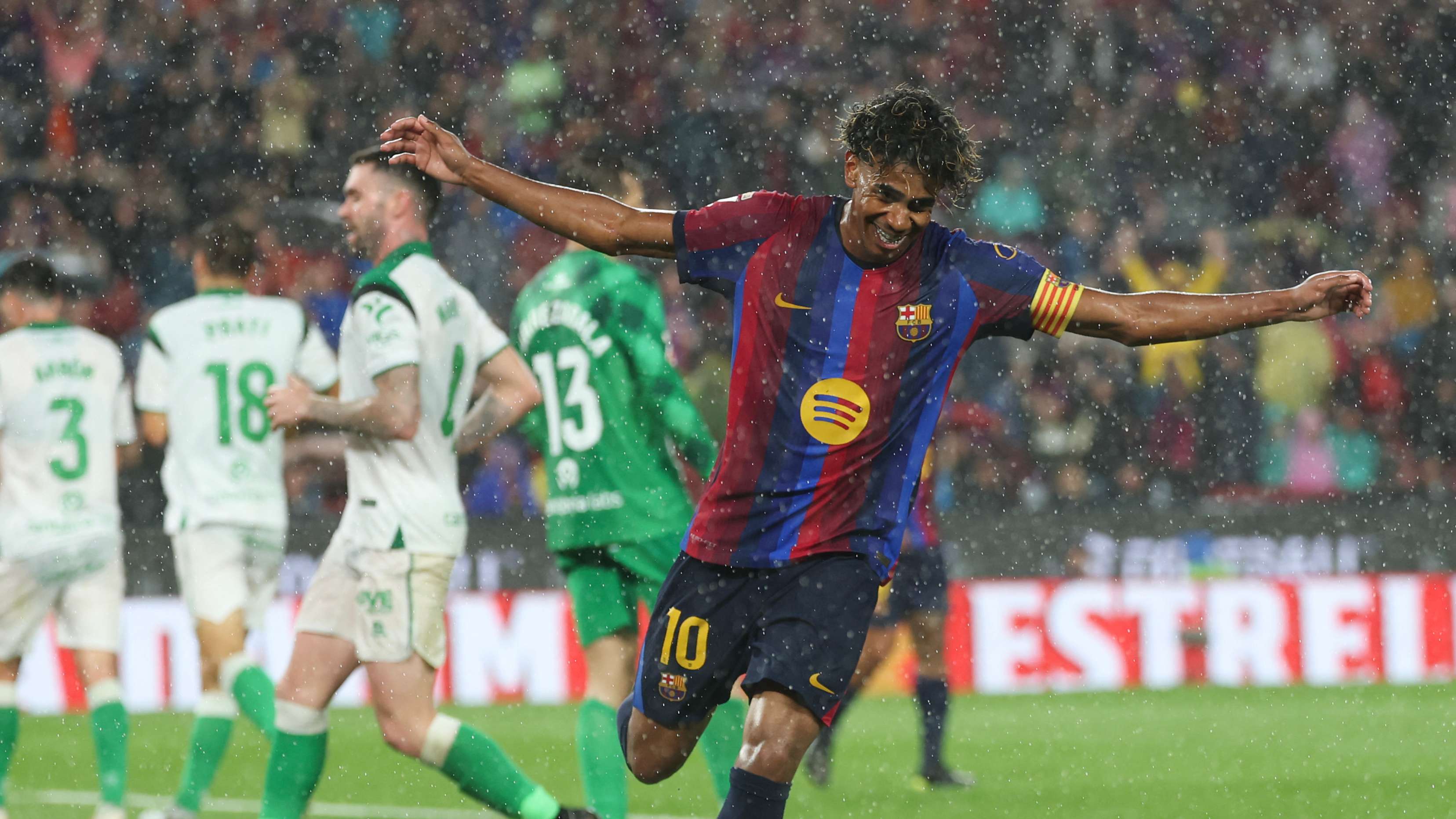
Lamine Yamal, Barcelona’s young sensation, has rapidly gained attention for his technical skills, vision, and maturity beyond his years. In an interview with “Movistar Plus,” Yamal articulated his view on what the Ballon d’Or should represent. He emphasized that the award should go to the “best player in the world,” not necessarily the top goal scorer.
Yamal argued that scoring a high number of goals, while impressive, should not be the sole criterion. Instead, he advocates for recognizing players who are outstanding in their overall gameplay — those who excite spectators with their style, creativity, and influence during matches. “The best player in the world is one you follow during a match as a commentator and enjoy watching. You see him and think: this is a player who is clearly different from all the others,” he explained.
This perspective underscores a broader debate in football prediction circles about the qualities that make a player deserving of individual awards. Is it purely about statistical dominance, or should it encompass artistry, consistency, and the ability to elevate team performance?
Max Eberl’s Endorsement of Michael Olise: A Surprise Contender?
Adding an intriguing twist to the debate, Eberl highlighted Crystal Palace’s Michael Olise as a potential Ballon d’Or candidate. Olise, who recently scored a spectacular hat-trick against Union Berlin, has been gaining recognition for his creativity, dribbling, and playmaking skills. Eberl’s endorsement of Olise signals a desire to broaden the conversation beyond traditional heavyweights like Messi, Ronaldo, or even Harry Kane, who is currently making headlines in Bayern’s squad.
By spotlighting Olise, Eberl appears to be advocating for a more merit-based and performance-centric approach to the award, emphasizing that football prediction should be rooted in actual on-field impact rather than reputation or media campaigns. This stance invites fans and pundits alike to reconsider who truly deserves the recognition and whether emerging talents can challenge established giants for football’s most prestigious individual accolade.
The Role of Football Prediction in Award Selection and Public Discourse
The ongoing debate also touches on the broader role of football prediction in shaping perceptions of player greatness. As fans and experts analyze performances, statistics, and highlight reels, there’s an inherent challenge in balancing objective data with subjective impressions of a player’s influence and artistry.
In recent years, football prediction algorithms and analytical tools have become increasingly sophisticated, providing deeper insights into player contributions. However, awards like the Ballon d’Or still heavily depend on voting by journalists, coaches, and national team captains, whose opinions can be influenced by media narratives and popularity contests.
This dynamic raises questions about the fairness and transparency of the selection process. Does it favor players with larger fanbases or those who perform in high-profile leagues? Or should football prediction criteria evolve to prioritize consistent impact and technical excellence over mere goal tallies or media attention?
Implications for Future Football Predictions and Award Contenders
As the season progresses, football prediction enthusiasts and pundits will continue to analyze player performances through various lenses — from advanced metrics to traditional stats. The debate over what truly qualifies a player for individual awards is unlikely to settle soon but will undoubtedly influence how fans perceive emerging stars and established icons alike.
Young talents like Lamine Yamal and Olise are challenging conventional wisdom, suggesting that football prediction must evolve to recognize skills that might not always be reflected in goal counts or assists. Meanwhile, seasoned players with proven track records remain favorites, but the landscape is shifting towards valuing overall influence, creativity, and consistency.
Conclusion: A Reflection on Football’s Evolving Standards for Excellence
The recent remarks by Bayern Munich’s Max Eberl and Barcelona’s Lamine Yamal highlight a fundamental question in football: What truly defines greatness? Is it statistical dominance, artistic flair, or a combination of both? As football prediction continues to grow more sophisticated, the criteria for individual awards like the Ballon d’Or may also need to adapt, embracing a more holistic view of player impact.
Ultimately, this debate enriches the sport, encouraging fans and analysts to look beyond surface-level statistics and consider the deeper qualities that make football a beautiful and unpredictable game. Whether predicting the next Ballon d’Or winner or analyzing a team’s chances in upcoming fixtures, understanding these nuanced perspectives enhances the appreciation of football’s complexity and wonder.
Stay tuned to our coverage for the latest insights on football prediction, player assessments, and the dynamic debates shaping the beautiful game.