
Infantino Faces a Defining Test as FIFA Power Struggle Intensifies
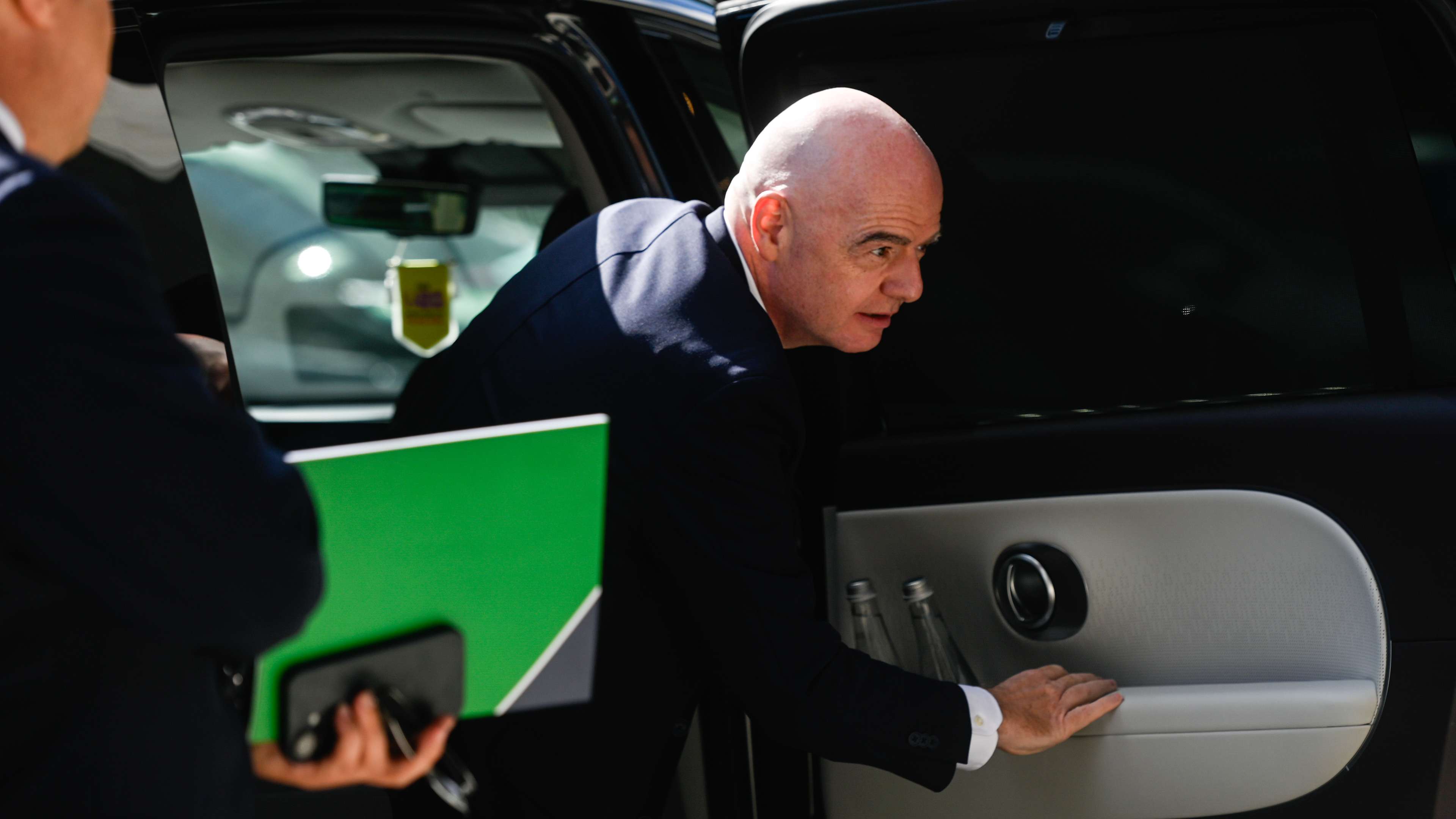
Gianni Infantino is heading into one of the most consequential meetings of his presidency. At Thursday’s FIFA Council gathering in Zurich, the FIFA president is expected to confront senior figures who have openly questioned his leadership following the collapse of a controversial proposal to bring outside investment into the governing body’s major competitions, including the World Cup.
The meeting comes as pressure builds from within football’s most powerful institutions. Three major confederations have called for change at the top of FIFA, creating an unusually public challenge to Infantino’s authority. While his opponents may not yet have a clear successor ready to take his place, the dispute could still reshape how power, money and oversight are handled across world football.
Three Confederations Unite in Call for Change
The opposition includes UEFA president Aleksander Ceferin, Asian Football Confederation (AFC) president Sheikh Salman bin Ibrahim Al Khalifa and CONCACAF president Victor Montagliani. Their shared position is that “the time has come for change at the top of FIFA,” with representatives expected to raise their concerns directly during the Council meeting.
Their alliance is significant because FIFA’s leadership depends on maintaining support across a broad network of regional confederations and national associations. A coordinated challenge from three major blocs signals more than a disagreement over one policy. It points to a wider argument about governance, decision-making and whether FIFA’s president has accumulated too much influence.
Infantino’s position is also being tested against the approaching election cycle. He is expected to seek re-election in March 2027, with the contest scheduled to take place in Rabat, Morocco. Candidates must submit nomination papers by 18 November, giving potential challengers a limited window to secure the backing needed to enter the race.
Potential Challenger Emerges, but the Election Remains Uncertain
Former Switzerland and Tottenham defender Ramon Vega has announced that he intends to run for the FIFA presidency. However, an announcement alone does not make a candidacy official: Vega must obtain the support of five national football associations to meet the entry requirement.
His possible campaign highlights a central problem for Infantino’s critics. They may agree that change is needed, but building a credible alternative is a separate challenge. A successful candidate would need to unite associations with different priorities, regional interests and expectations about FIFA’s role in funding the game.
That uncertainty could shape the strategy of Infantino’s opponents. Rather than relying solely on an immediate leadership change, they may seek to limit his authority and strengthen institutional checks. In that scenario, Thursday’s discussions could become an early contest over the rules and structures that will govern FIFA long after the meeting ends.
Infantino Works to Preserve Support
Infantino is not standing aside. He has been working to maintain backing among national associations and regional leaders. Last week, he received a warm welcome and enthusiastic applause at a meeting with African football leaders in Cape Verde. He is also expected to count on support from South American representatives in Rabat.
Although criticism from AFC leadership has sharpened, Infantino retains influential supporters within Asia. A number of Arab football associations have publicly backed him, illustrating that opposition within a confederation does not necessarily translate into a unified voting bloc.
For FIFA’s president, the challenge is therefore to turn visible support into lasting political backing. For his critics, the task is to show that their calls for reform extend beyond opposition to one individual and offer a practical plan for improving accountability across the organisation.
Funding Proposal at the Centre of the Dispute
The immediate trigger for the crisis was Infantino’s proposal to sell a stake in FIFA’s major tournaments to external investors. The plan collapsed, but the debate over FIFA’s finances has continued. Under the proposal, member associations could have received $20 million in development funding, with the possibility of an additional $20 million.
UEFA and CONCACAF responded with a different demand: that FIFA distribute $10 million directly to each of its 211 member associations. The competing proposals raise a broader question about how the sport’s enormous revenues should be shared. FIFA has substantial financial reserves, but associations vary widely in their resources, infrastructure and ability to develop local football.
That makes the distribution system a high-stakes issue. Funding can support youth programmes, women’s football, facilities and coaching, but decisions about who receives money—and under what conditions—also influence political relationships within the organisation. Council members may therefore use the meeting to press for clearer criteria, stronger oversight and more transparent reporting.
Governance and the FIFA Peace Prize Also in Focus
Thursday’s agenda is expected to reach beyond the failed investment plan. Council members may discuss FIFA’s reserves, the allocation of funds, internal governance arrangements and disciplinary procedures. These issues are closely connected: financial transparency depends on effective oversight, while credible disciplinary systems require rules that are applied consistently.
Another sensitive subject is FIFA’s “peace prize,” controversially awarded to US President Donald Trump last year. The award has attracted scrutiny and may add to questions about how FIFA chooses to use its public profile and whether its decisions are guided by clear, independent standards.
For fans, these debates can seem distant from matchday football. Yet governance decisions affect how resources reach clubs and communities, how competitions are managed and how much confidence supporters can place in the institutions overseeing the sport. The outcome may also influence the wider debate over FIFA’s future direction and the next World Cup cycle.
Calls for Independent Review Meet Deep Skepticism
Emanuel Medeiros, founder and chief executive of the Sport Integrity Global Alliance, said the football world would be watching closely. He argued that the Council should use the meeting to launch a genuinely independent, comprehensive and transparent review of FIFA’s governance, adding that the organisation has an opportunity to create new momentum.
Miguel Maduro, a lawyer and former chair of FIFA’s governance committee, offered a more cautious assessment. Maduro, who was removed from the role in 2016, said he would be surprised if the meeting produced anything meaningful. He warned that FIFA could announce a task force or an independent review without giving it enough authority to make a real difference.
For Maduro, credibility would depend on independence and enforceability. Without those safeguards, a review could be seen as a response to public pressure rather than a serious attempt to reform the organisation.
What to Watch After the Zurich Meeting
There is no guarantee that Thursday’s confrontation will lead to an immediate leadership change. Infantino still has supporters, while his opponents face the difficult task of building a united alternative. But the meeting could reveal whether the dispute is moving towards a direct election battle or a longer campaign to redistribute power within FIFA.
The clearest prediction is that the debate will not end in Zurich. The handling of FIFA’s reserves, development funding and governance review could determine whether the Council can restore confidence—or deepen divisions ahead of the 2027 presidential election. For the global football community, the stakes extend beyond Infantino’s future: they concern who controls the game’s resources and how responsibly that power is used.