
Brazil’s National Team Set for Tactical Revamp Under Carlo Ancelotti: A New Strategy Inspired by Barcelona’s Success
The Brazilian national football team, renowned for its rich history of attacking flair and technical prowess, is on the cusp of a significant tactical transformation. Under the guidance of head coach Carlo Ancelotti, a seasoned tactician with a winning pedigree at club level, Brazil is reportedly preparing to overhaul its playing style to optimize team performance and elevate its prospects on the international stage. This strategic shift is believed to draw inspiration from the successful footballing blueprint implemented by FC Barcelona over the past decade, emphasizing fluid attacking moves, positional flexibility, and innovative roles for key players.
Carlo Ancelotti’s Vision: Emulating Barcelona’s Tactical Mastery
Carlo Ancelotti, known for his pragmatic yet flexible approach to football tactics, has long admired Barcelona’s ability to dominate matches through a combination of possession-based football and versatile positional play. Barcelona’s style, often characterized by quick passing, high pressing, and the integration of creative attacking midfielders, has historically set the standard for modern football excellence. Ancelotti’s plan is to adapt these principles to the Brazilian setup, aiming to craft a more dynamic, unpredictable, and cohesive attacking system that leverages the unique talents of Brazil’s squad.
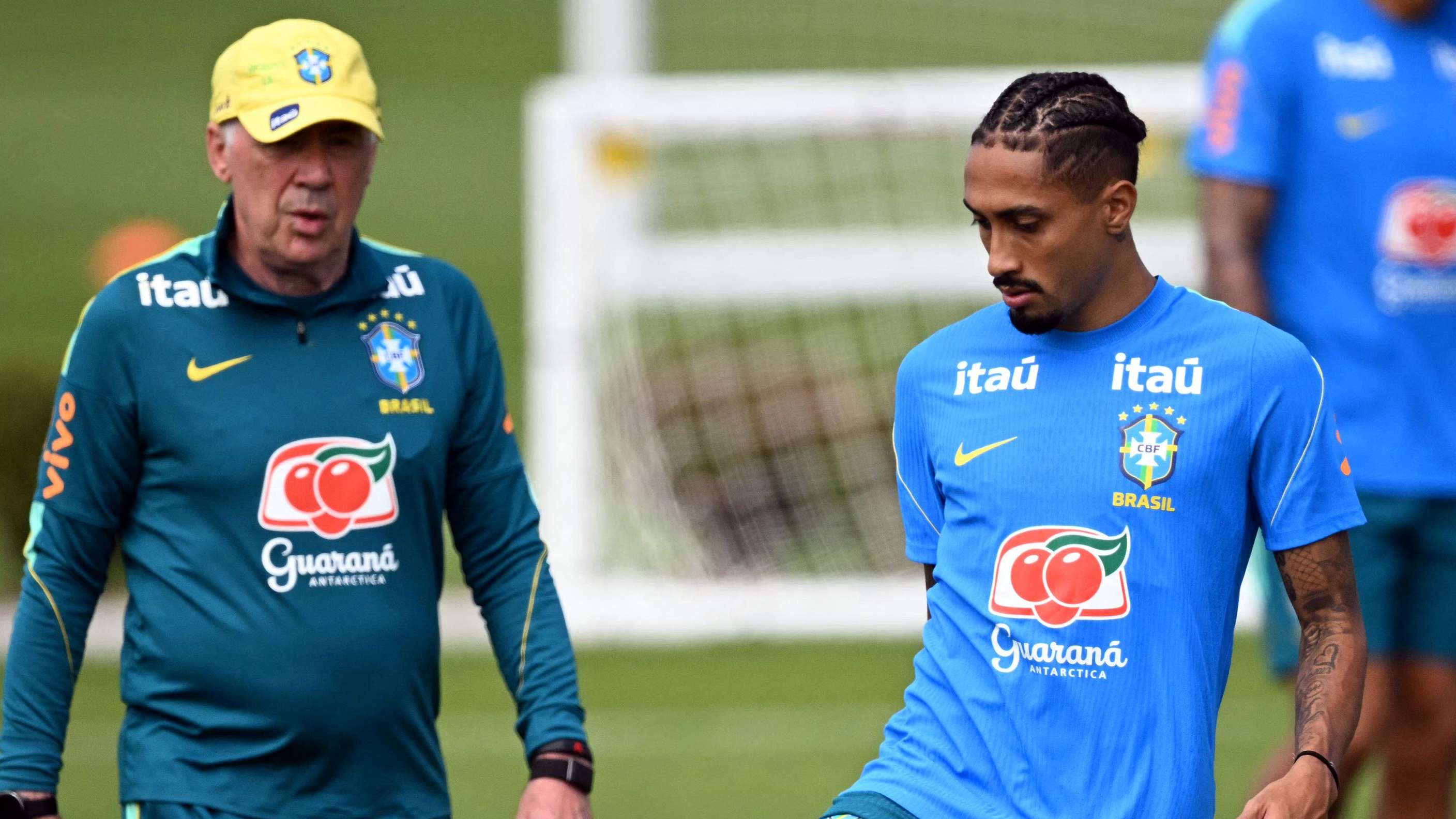
Sources close to the Brazilian camp suggest that Ancelotti is meticulously analyzing Barcelona’s tactical frameworks, particularly how they utilize flexible formations and player roles to create scoring opportunities. The Italian tactician is exploring ways to incorporate similar concepts into Brazil’s game plan, with an emphasis on maximizing the offensive potential of key players, especially winger-turned-attackers like Raphinha.
Transforming Raphinha’s Role: From Winger to Central Attacker
One of the most intriguing aspects of Brazil’s impending tactical shift involves Raphinha, the talented winger who has made a significant impact at FC Barcelona and in international football. Traditionally deployed as a wide attacking threat, Raphinha’s natural dribbling ability, quickness, and precise finishing make him a versatile asset. Under Ancelotti’s new plans, the Brazilian forward is expected to be repositioned into a more central attacking role, akin to the false nine or a creative number nine, to unlock his full offensive potential.
This strategic move aims to exploit Raphinha’s playmaking skills and close control in tight spaces, enabling him to operate behind the main striker or even as a secondary playmaker. By shifting him into a more central position, Brazil hopes to create more scoring opportunities through intricate link-up plays, quick one-twos, and intelligent runs into the box. This adjustment could also help stretch opposing defenses, providing more space for other Brazilian attackers to exploit.
Implications for Brazil’s Football Prediction and Future Performance
Football fans and analysts closely monitoring Brazil’s tactical evolution are eager to see how this new approach will influence the team’s prediction in upcoming international fixtures. The shift towards a more possession-oriented, fluid attacking system aims to bolster Brazil’s offensive output and reduce predictability—a critical factor when facing disciplined defenses in major tournaments.
Moreover, this tactical overhaul could significantly impact Brazil’s chances in upcoming competitions such as the Copa América or World Cup qualifiers. A more adaptable and unpredictable style of play often confers a competitive edge, especially when combined with the technical brilliance of players like Raphinha, Neymar, Vinícius Jr., and others. Football prediction models are increasingly factoring in these strategic changes, with many experts suggesting that if the system clicks, Brazil could be a formidable contender with a high likelihood of success.
Broader Context: Why Tactical Flexibility Matters in Modern Football
The evolution of football tactics has been a defining feature of the sport’s modern era. Teams that embrace tactical flexibility—shifting formations, assigning unconventional roles, and adopting innovative pressing schemes—often outperform opponents who rely solely on traditional systems. Ancelotti’s intention to emulate Barcelona’s approach illustrates a broader trend where international teams seek to incorporate club-level tactical sophistication into their strategies to gain a competitive edge.
Furthermore, Brazil’s move reflects a recognition that the global football landscape is increasingly competitive, with European and South American teams adopting more sophisticated, possession-based, and high-pressing styles. By integrating Barcelona’s blueprint, Brazil aims to develop a more resilient and adaptable team capable of controlling matches and creating scoring opportunities from multiple angles.
Additional Insights: Preparing for the Next Generation of Football Predictions
As tactical shifts become more prevalent, football prediction algorithms and betting markets are adjusting their models to account for these strategic nuances. Analysts now consider teams’ tactical flexibility, player roles, and recent coaching changes when forecasting match outcomes. Brazil’s proposed overhaul, if successfully implemented, could improve their odds of winning future fixtures and tournaments.
In particular, the repositioning of Raphinha into a central attacking role offers a fresh dimension to Brazil’s offensive dynamics. His ability to operate between lines and create scoring chances could make Brazil a more dangerous team in football prediction models, especially when combined with the technical mastery of their other stars.
Conclusion: A New Era for Brazil’s Football Strategy
Brazil’s national team is on the brink of an exciting tactical transformation, driven by Carlo Ancelotti’s innovative vision inspired by Barcelona’s footballing philosophy. The planned role change for Raphinha exemplifies the strategic depth of this overhaul, aiming to unlock the team’s attacking potential and enhance their performance in upcoming international competitions.
As football enthusiasts and prediction experts watch closely, this evolution symbolizes a broader shift towards more sophisticated, adaptable, and unpredictable styles of play at the highest levels of the sport. If successful, Brazil’s new tactical blueprint could set a precedent for future national teams seeking to blend tradition with modern innovation—ultimately elevating the beautiful game to new heights.