
Toni Kroos Names Luka Modrić the Greatest Midfielder in Football History
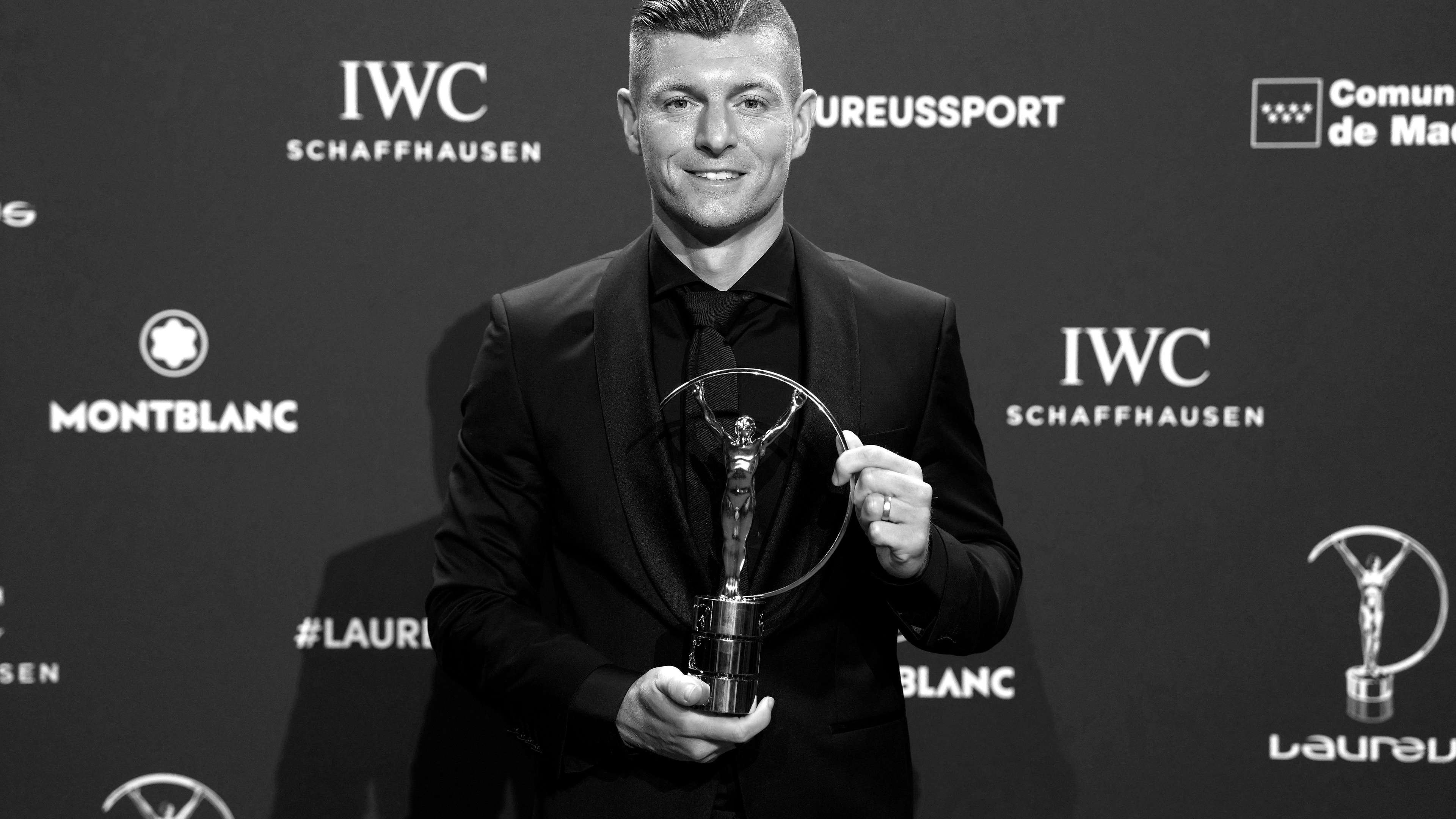
Former Germany and Real Madrid star Toni Kroos has revealed his personal ranking of the five greatest midfielders in football history, placing longtime teammate Luka Modrić at the top. The list, shared on Wednesday during the podcast Einfach mal Luppen, offers a glimpse into how one of the modern game’s most accomplished midfielders assesses the players who shaped the position.
Modrić, now with AC Milan, takes first place ahead of Spain’s Andrés Iniesta and Xavi Hernández. England captain Steven Gerrard ranks fourth, while German great Michael Ballack completes Kroos’s top five. The choices span different generations and styles, from the control and creativity of Barcelona’s midfielders to Gerrard’s driving runs and Ballack’s power and leadership.
Kroos puts his former Real Madrid partner first
Modrić’s position at the summit is especially significant because he and Kroos spent a decade sharing the Real Madrid midfield. Kroos joined the Spanish club from Bayern Munich in 2014, and the pair remained teammates until the German retired in 2024. Their partnership became one of the defining features of Madrid’s success during that period.
Alongside Brazilian defensive midfielder Casemiro, Kroos and Modrić formed a balanced three-man unit. Casemiro provided protection and ball-winning, while Kroos dictated the rhythm with his passing and Modrić linked defence to attack through movement, close control and inventive distribution. The trio’s different strengths allowed Madrid to adapt to opponents without losing their composure in possession.
Their influence was reflected in the club’s remarkable European record. Real Madrid won five Champions League titles during the period in which Kroos, Modrić and Casemiro formed the core of the midfield. Those triumphs were not built solely on individual brilliance: the unit’s tactical understanding, experience and ability to manage pressure were central to the team’s achievements.
A ranking shaped by vision, control and influence
Kroos’s list is a personal judgment rather than an official football ranking, but it highlights the qualities that make midfielders stand out across eras. Modrić is renowned for his ability to escape pressure, carry the ball into advanced areas and create openings with either foot. His work rate and awareness have also helped him remain effective at the highest level well into his late thirties.
Iniesta, placed second, was celebrated for his balance, close control and ability to find space in crowded areas. His performances for Barcelona and Spain made him a symbol of possession-based football, particularly during a period when both teams enjoyed sustained success. Xavi, third in Kroos’s selection, was the metronome of those sides, using precise passing and constant movement to control matches and dictate where play developed.
Gerrard’s fourth-place ranking brings a different profile into the conversation. The former Liverpool captain combined passing range with physical strength, late runs into the box and a capacity to influence major games. Ballack, fifth, was similarly imposing, blending technical quality with aerial ability, leadership and a knack for arriving in dangerous positions.
The variety in the five names reflects how broad the role of a midfielder can be. Some players organise possession, others break lines with dribbling or passing, and some provide a direct goal threat. The best midfielders often combine several of these responsibilities, adjusting their approach to the needs of the team and the demands of each match.
Numbers underline the Madrid partnership
Kroos made 465 appearances for Real Madrid after arriving in 2014, contributing to a period in which the club became a dominant force in Europe. Modrić’s Madrid career began two years earlier, in 2012, and continued until 2025. He made 597 appearances for the club, a total that reflects both his longevity and his importance across multiple generations of the squad.
Although Kroos chose to retire in 2024 while still performing at an elite level, Modrić continued his career after leaving Madrid. Their paths since separating underline a central difference between the two: Kroos stepped away at the peak of his form, while Modrić extended his playing journey and remained a prominent figure in top-level football.
Retirement at the summit is rare in a sport where many players continue until age or injury forces a decision. Kroos’s choice followed a final season in which he remained a key part of Madrid’s midfield. His departure also marked the end of a partnership that had become familiar to supporters, built on an understanding developed over years of competing in Spain and Europe.
What Kroos’s choice says about modern football
There is no single formula for ranking the greatest midfielders. Supporters may prioritise trophies, technical ability, leadership, longevity or influence on the game’s tactical evolution. Kroos’s selection is notable because it comes from a player who operated in the same demanding position and shared a dressing room with Modrić during some of the most successful seasons in Real Madrid’s history.
For fans considering a football prediction ahead of a major match, midfield matchups often provide a useful starting point. A team that can control central areas may dictate the tempo, limit an opponent’s chances and create more opportunities for its attackers. The Kroos-Modrić partnership offered a textbook example: one player could set the passing rhythm while the other disrupted defensive lines with movement and creativity.
That does not mean midfield dominance guarantees a result. Football remains shaped by defensive errors, finishing, tactical adjustments and moments of individual inspiration. But Kroos’s list is a reminder that the players in the middle of the pitch can determine how a match unfolds, even when their contribution is less visible than a goal or save.
By naming Modrić as his greatest midfielder, Kroos has paid tribute not only to a former teammate but to a player whose career combined technical excellence, resilience and extraordinary consistency. Whether fans agree with the order or would place another legend first, the ranking has renewed discussion about football’s finest midfielders—and about the partnership that helped define Real Madrid’s modern era.