
A New Escalation: UEFA Loses Trust in FIFA President Gianni Infantino
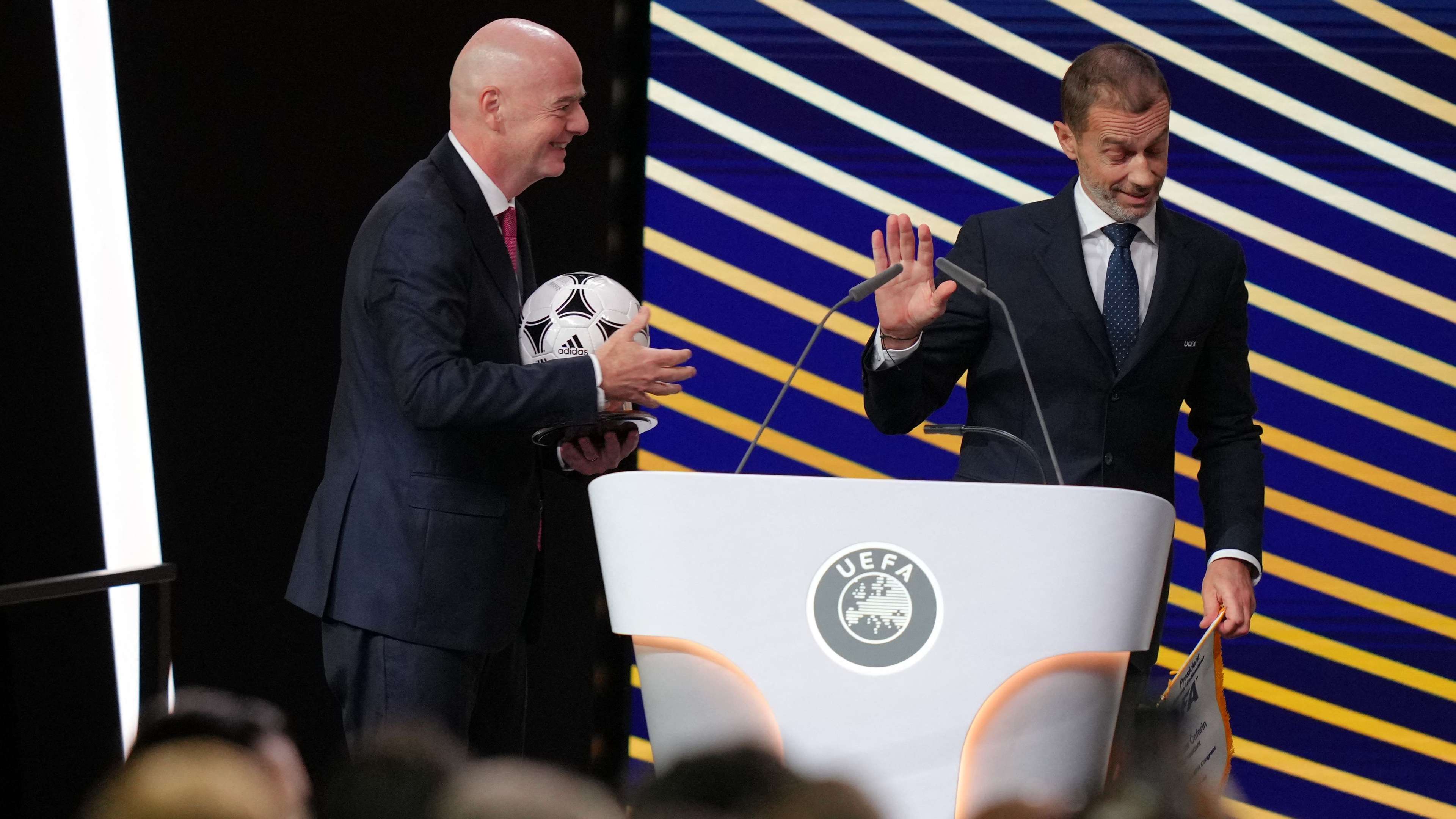
UEFA has taken a bold stance against FIFA President Gianni Infantino, expressing their lack of trust in him following his controversial plan to sell stakes in FIFA competitions, including the prestigious World Cup. The plan, which aimed to sell a 3.1 billion pound stake in the World Cup to private investors led by Josh Kushner, ultimately fell apart, leading to widespread criticism.
Pressure Mounts on Infantino
Infantino’s scheme faced intense backlash, particularly from European football’s governing body, UEFA, who released a scathing statement expressing their loss of confidence in his leadership. The statement highlighted UEFA’s rejection of the proposal to sell stakes in FIFA competitions to private parties, emphasizing their mission to protect the integrity of football.
UEFA’s statement read, “We cannot continue in this manner with secret schemes on rapid timelines orchestrated by unknown individuals. We must identify those responsible and hold them to account.”
Rebuilding Trust
UEFA emphasized the need for transparency and accountability within FIFA, pointing out that Infantino had failed to fulfill his promises of transparency and using FIFA’s funds for the betterment of the game. With reserves exceeding 5 billion dollars, UEFA called for a new approach to distributing resources through the FIFA Forward program to support grassroots football development worldwide.
While celebrating the victory of quashing the controversial proposal, UEFA stressed that the task of rebuilding trust in FIFA was just beginning. The statement concluded with a commitment to work with partners and stakeholders to ensure that FIFA’s resources are utilized effectively for the growth and sustainability of football globally.
The Road Ahead
As the fallout from Infantino’s failed plan unfolds, the football community awaits the next steps from UEFA and FIFA. The focus now shifts towards restoring faith in FIFA’s leadership and ensuring that decisions made align with the best interests of the sport.
While the recent events have showcased the power of collective action within the football community, the real test lies in the continued efforts to uphold transparency, accountability, and integrity within the governing bodies of the sport.
As stakeholders reflect on the recent turmoil, one thing remains clear: the future of football hinges on the commitment to ethical practices, fair governance, and the protection of the game’s core values.
Impact on Global Football Landscape
The rift between UEFA and FIFA has sent shockwaves across the global football landscape, raising concerns about the governance and direction of the sport. With two of the most influential bodies in football at odds, the repercussions of this dispute could have far-reaching implications for the future of the game.
Questions have arisen about the transparency and decision-making processes within FIFA, as well as the prioritization of commercial interests over the integrity of competitions. The failed attempt to commercialize the World Cup has ignited a debate about the balance between financial gain and the fundamental values of football.
Lessons Learned
One of the key takeaways from this controversy is the importance of strong leadership and ethical governance in sports organizations. The incident has underscored the need for clear communication, accountability, and a commitment to upholding the principles of fair play and integrity.
Moving forward, both UEFA and FIFA must work together to rebuild trust and demonstrate their dedication to serving the best interests of the sport. This episode serves as a cautionary tale for the football community, highlighting the dangers of prioritizing profit over the essence of the game.
Reimagining the Future
The current situation presents an opportunity for UEFA and FIFA to reevaluate their strategies and priorities, placing a renewed emphasis on the development of grassroots football, youth programs, and community engagement. By refocusing on the core values of the sport, they can regain the trust of fans, players, and stakeholders alike.
Collaboration between the two organizations could lead to innovative initiatives that promote inclusivity, diversity, and sustainability within football. By working together towards a common goal, UEFA and FIFA can steer the sport towards a more equitable and ethical future.
Looking Ahead
Despite the challenges and controversies that have arisen, there is optimism for the future of football. The resilience of the football community in standing up for the integrity of the game demonstrates a shared commitment to preserving its essence and values.
As UEFA and FIFA navigate the aftermath of this conflict, the focus remains on restoring trust, fostering transparency, and ensuring that decisions are made with the best interests of football at heart. By learning from past mistakes and embracing a spirit of cooperation, the footballing world can emerge stronger and more united than ever before.
In conclusion, the recent events surrounding UEFA’s loss of trust in FIFA President Gianni Infantino serve as a pivotal moment in the ongoing evolution of football governance. Through collective action, a renewed dedication to ethical practices, and a commitment to upholding the sport’s core values, UEFA and FIFA have the opportunity to shape a future where football thrives as a beacon of integrity and unity.